
What Are You Looking For?
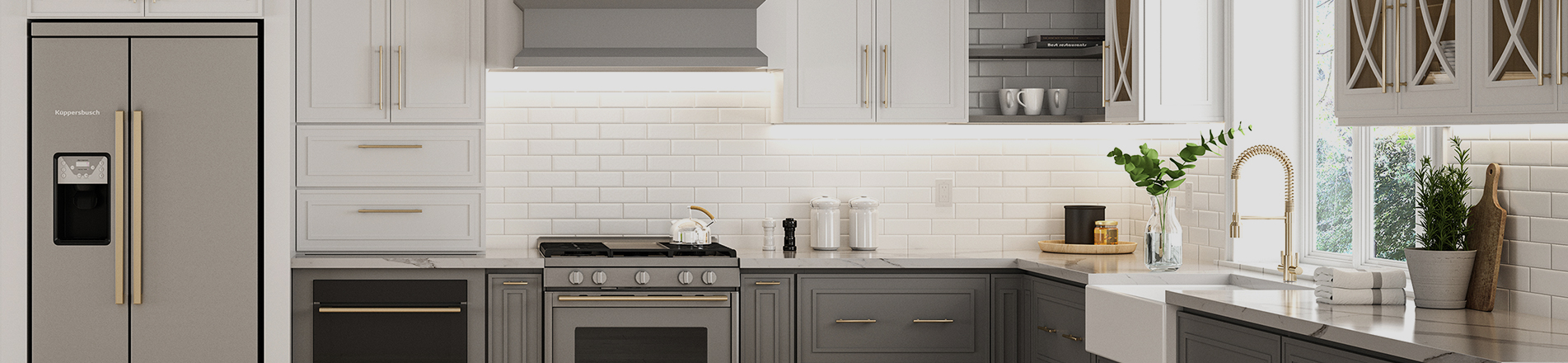
Cabinet overlay is a frequently overlooked structural detail. Different overlay styles for cabinet doors not only define the aesthetic of kitchens and bathrooms but also influence hardware options, ease of cleaning, and long-term durability. Choosing the right overlay style ensures your cabinets perform well for years to come.
Cabinet overlay refers to how much the door or drawer front covers the cabinet face frame or box when closed. As a Vietnamese cabinet wholesaler, Union Woods supplies all overlay types in compliance with industry dimensional standards and structural logic: Inset Overlay, Partial Overlay, and Full Overlay. Each type comes with unique advantages, drawbacks, and application scenarios.
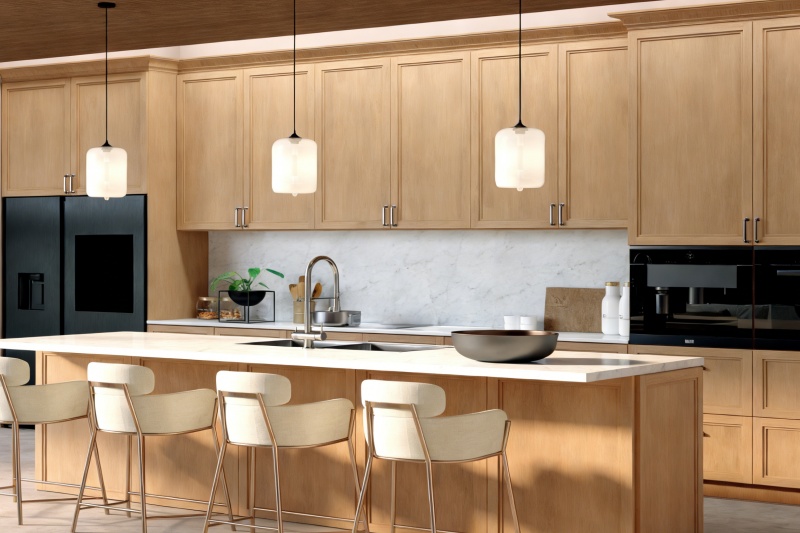
1. Inset Overlay – High-End Precision Construction
Inset overlay represents the premium overlay style and has grown popular in recent years. It features a zero-overlap flush design. The door sits fully inside the cabinet box; when closed, the door surface aligns perfectly with the face frame for a seamless, refined look. Compared with full and partial overlay doors, modern light oak inset style kitchen cabinets deliver a more upscale and sophisticated appearance, ideal for luxury, American traditional, or retro styles.
Pros of Inset Overlay
Cons of Inset Overlay
It demands extremely high manufacturing and installation precision, leading to higher labor and production costs. Installation requires pinpoint accuracy; even minor dimensional errors create unsightly gaps between doors and frames, leaving very little margin for error. Additionally, the inset structure occupies internal cabinet volume, slightly reducing usable storage space compared to full overlay cabinets.
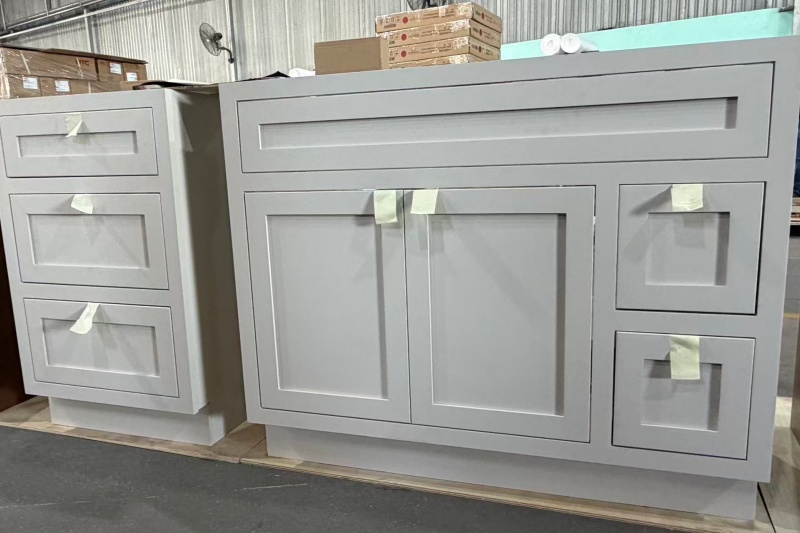
2. Partial Overlay / Half Overlay – Traditional Universal Overlay
Partial overlay, also known as half overlay or standard overlay, is the industry’s classic, most cost-effective overlay option. Doors cover roughly half of the cabinet face frame, leaving an evenly exposed frame border around each door and drawer front. Two adjacent doors share one middle stile, with doors mounted on the exterior of the cabinet. Consistent gaps and defined frame lines create distinct layered visuals. It uses low-cost hinges and allows simple installation with looser tolerance, suitable for mass standardized production.
Pros of Partial Overlay
Cons of Partial Overlay
Exposed frame sections create more gaps, resulting in weaker sealing when doors close. Dust and grease easily accumulate in crevices, increasing routine cleaning work. The limited door coverage reduces visual continuity, making it less ideal if you seek a fully seamless minimalist aesthetic.
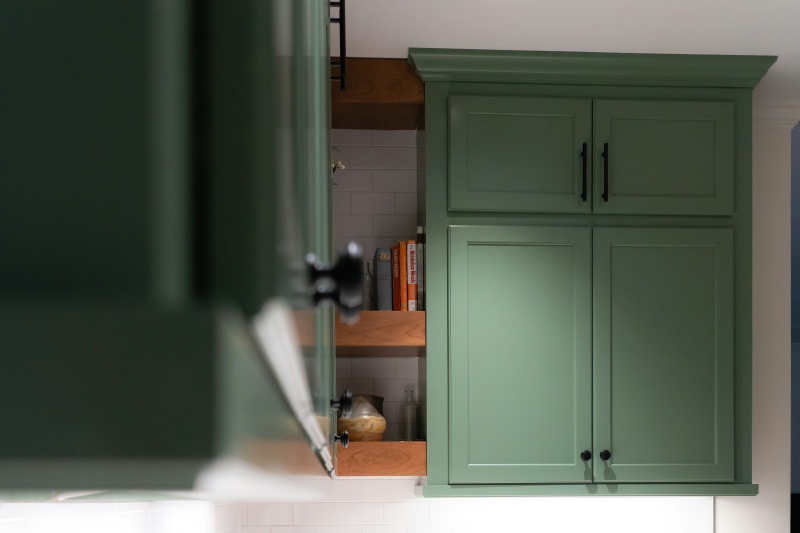
3. Full Overlay – Dominant Minimalist Overlay
Full overlay, sometimes called European overlay, is the mainstream overlay type for modern ready-to-assemble and custom cabinets. It is an upgraded version of partial overlay. Doors cover nearly the entire face frame, leaving only small, uniform gaps between adjacent doors. This improves visual appeal and moisture resistance, with barely any exposed face frame for a smooth, integrated cabinet appearance.
Pros of Full Overlay
Cons of Full Overlay
Full overlay doors require hinges with higher load capacity and wider adjustability. Premium hinges are mandatory to prevent door sagging or incomplete closure, which raises hardware costs.
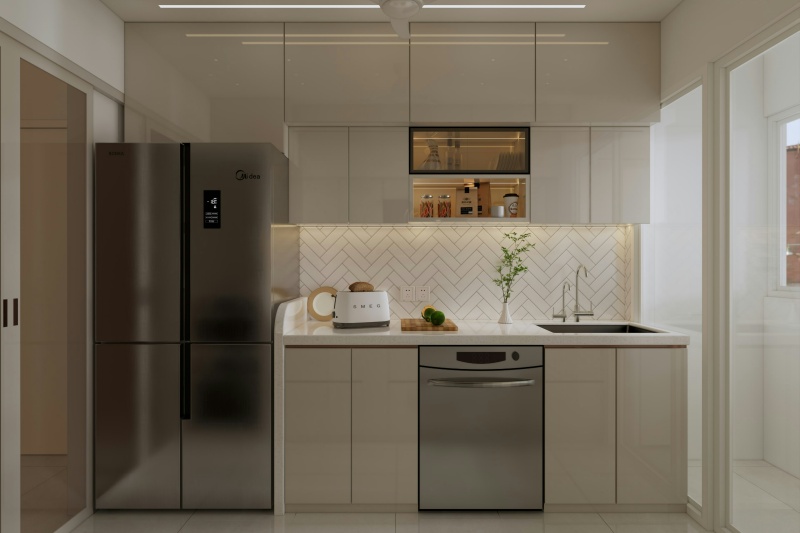
Comparison of the Three Cabinet Overlay Types
| Overlay Type | Face Frame Coverage | Installation Tolerance | Cleaning Difficulty | Cost Level | Appearance Style |
| Inset Overlay | 0% (Flush inset) | Extremely strict | High (dust buildup in gaps) | Highest | High-end classic, seamless flush |
| Partial Overlay | Approx. 50% | Loose, high tolerance | High (many exposed frames) | Lowest | Traditional classic, defined frame lines |
| Full Overlay | Over 90% (near-full coverage) | Moderately strict | Low, fewer gaps, flat surface | Medium-High | Modern minimalist, integrated flat finish |
Cabinet Overlay Selection Guide
1. Select by design style
Modern minimalist, luxury, and industrial styles prioritize full overlay for smooth integrated visuals. American retro and farmhouse styles suit partial overlay to highlight layered frame lines. High-end custom and neoclassical projects use inset overlay to elevate quality.
2. Select by budget and maintenance requirements
Low-budget commercial builds and rental renovations: Partial overlay for low cost and simple maintenance. Mid-to-high-end residential custom jobs: Full overlay balances aesthetics and cost. Luxury mansion custom projects: Inset overlay for premium craftsmanship. Households prioritizing easy cleaning should avoid partial and inset overlay due to more crevices for dirt buildup.
3. Select by cabinet structure
Traditional face-frame cabinets support all three overlay styles. European frameless cabinets only accommodate full overlay. Irregular and built-in cabinets are recommended for full overlay to conceal material imperfections.
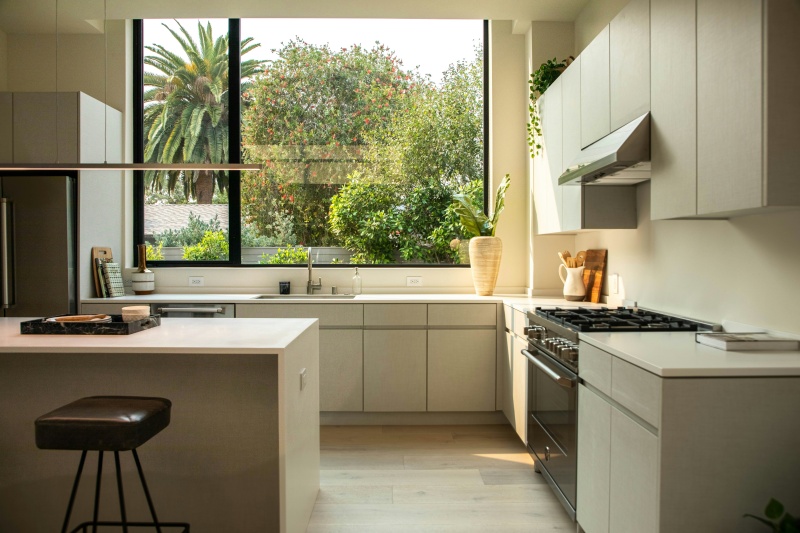
Final Summary
Cabinet overlay is far more than a cosmetic choice; it represents a systematic structural design covering manufacturing standards, hardware matching, space utilization, and long-term maintenance. The three primary cabinet overlay types are partial overlay, full overlay, and inset overlay. Partial overlay is a cost-effective traditional option; full overlay is the preferred solution for modern residential builds; inset overlay signifies premium custom craftsmanship. When designing and customizing cabinets, select the most suitable overlay type by comprehensively evaluating design style, budget, cabinet structure, and daily usage needs to balance aesthetics, practicality, and durability.


 Newsletter
 Español
 IPv6 network supported