
What Are You Looking For?
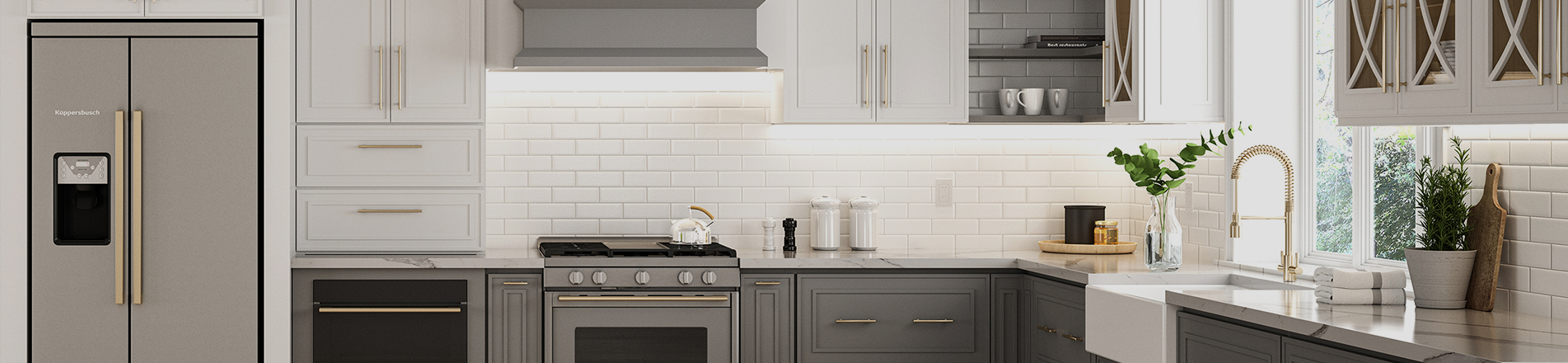
As an essential component of a kitchen, cabinet material selection directly impacts aesthetics, durability and user experience. There is a wide range of cabinet substrates, each with unique performance, price points and ideal applications. Among them, certain wood species have gained great popularity.
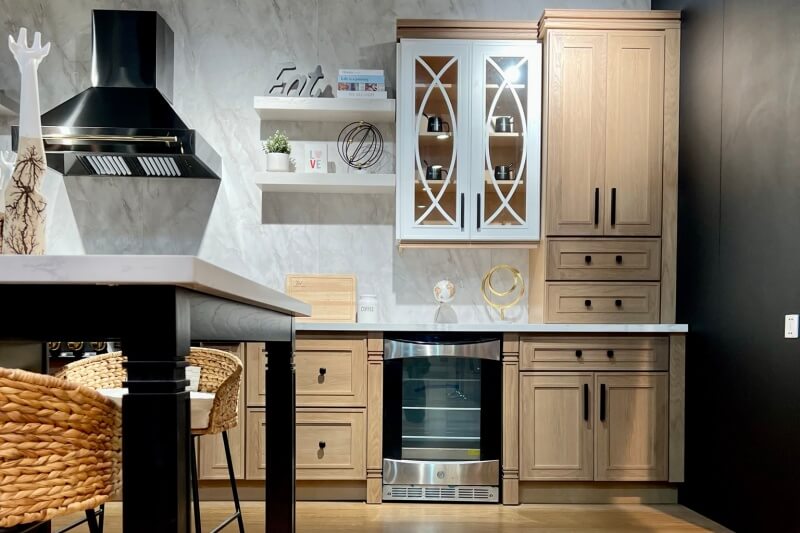
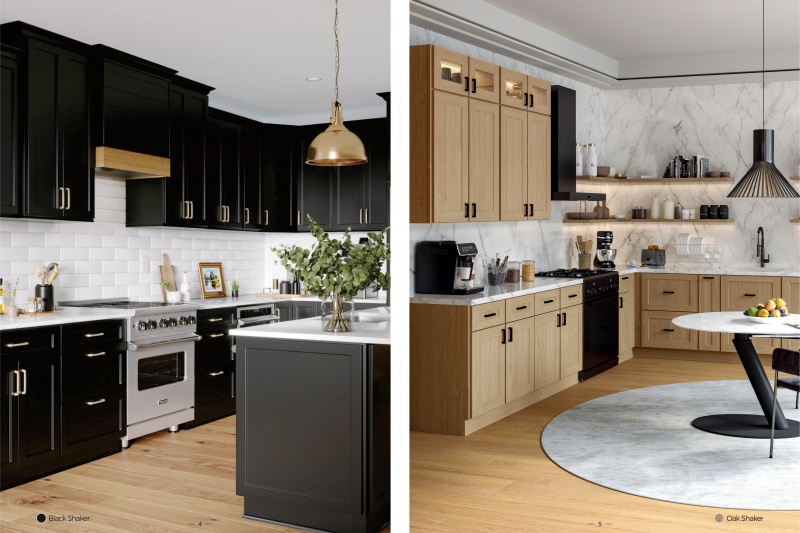
White oak is currently the most popular solid wood for cabinets. Boasting distinctive natural grain and outstanding durability, it delivers premium visual appeal. Widely adopted in high‑end cabinetry, it is favored by customers pursuing natural texture and stands out among other hardwood options such as rubberwood and birch.
Why Is White Oak So Popular?
White oak leads the cabinet wood market thanks to its inherent moisture resistance, high hardness, attractive grain and versatile neutral tone. Kitchens are exposed to humidity, heat and frequent door operation, and natural white oak kitchen cabinets perform exceptionally well under these conditions.
1. Versatile Grain and Color
White oak features distinct grain patterns, including iconic cathedral figuring. Compared with red oak, its texture is finer and more subdued. Its warm hue ranges from light tan to wheat, creating a clean, understated look. It fits seamlessly into modern minimalist, Scandinavian, Japanese, farmhouse and mid‑century designs, with few restrictions when pairing hardware and countertops.
2. Moisture and Rot Resistance
Tyloses fill the vessel structure of white oak, blocking water penetration — the very reason white oak is the primary material for premium wine barrels. It works reliably near sinks, in bathrooms, and in coastal regions with fluctuating humidity, resisting mold and warping far better than many veneered alternatives.
3. Hard, Wear‑Resistant and Long‑Lasting
White oak has a high density and a Janka hardness rating of 1360 lbf. It makes sturdy cabinet doors and drawer fronts that resist dents and scratches from daily use and impacts. With proper care, white oak cabinetry can remain stable for 10 to 20 years, holding up well in busy households with children and pets.
Comparison of Mainstream Cabinet Hardwoods
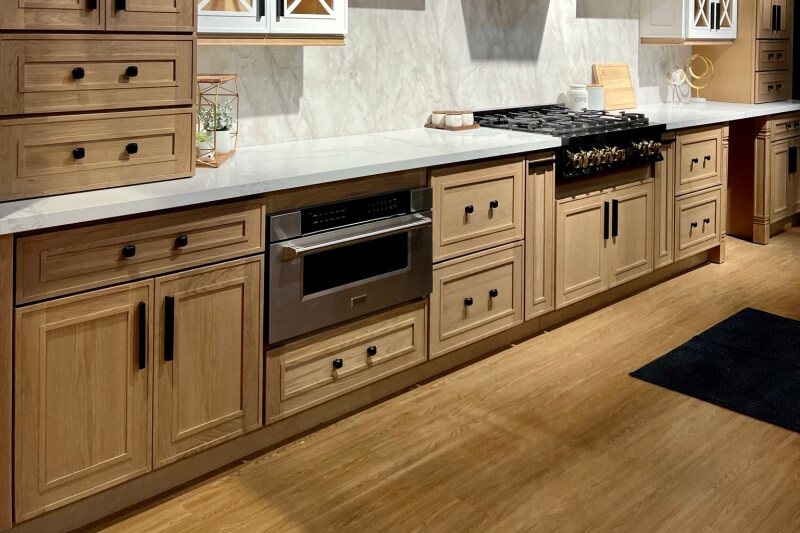
White oak is not the only solid wood suitable for cabinetry. Other hardwoods have loyal customer bases, with their own strengths in pricing and hardness.
| Wood Species | Janka Hardness (lbf) | Grain & Texture | Natural Base Tone | Suitable Styles | Humidity Response | Relative Price Level |
| White Oak | 1360 | Open linear grain; quarter‑sawn exhibits straight grain and medullary ray flecks; medium texture | Light golden brown to taupe, neutral grey undertones | Contemporary, transitional, modern farmhouse, Japanese, mid‑century | Tyloses present (closed‑cell structure), excellent moisture resistance | Mid‑high; quarter‑sawn stock costs 20–35% more |
| Hard Maple | 1450 | Fine, uniform grain; premium stock offers bird’s‑eye and curly figure | Creamy white to pale golden, consistent tone | Minimalist, Shaker, painted traditional, inset cabinetry | Stable once sealed; smaller pores than oak | Mid‑high |
| Red Oak | 1290 | Bold, dramatic cathedral grain with heavy texture | Pinkish beige to warm reddish brown | Traditional, classic farmhouse, artisan, rustic | Open pores; full sealing required; higher risk of movement in humid environments | Mid‑range, 25–40% cheaper than white oak |
| Black Walnut | 1010 | Straight or gently wavy grain, luxurious feel | Deep chocolate brown with pale sapwood | Luxury, mid‑century, Art Deco, high‑end residential | Stable after proper sealing | High |
| Black Cherry | 950 | Fine, tight pores, smooth surface | Pale pinkish brown; ages to rich red patina under light | Traditional, vintage, historic home renovation, refined kitchens | Full sealing required around sinks and dishwashers | High |
| Hickory | 1820 | Bold grain, extreme contrast between sapwood and heartwood | Light tan to deep brown | Rustic, cabin, rugged residential | Highly wear‑resistant; open pores require sealing; prone to movement with humidity swings | Mid‑high |
| Yellow Birch | 1260 | Straight, moderately uniform grain | Pale yellow‑white to light gold; takes stain evenly | Universal, modern, transitional, painted commercial projects | Stable once coated; bare wood is sensitive to moisture | Mid‑range |
| Alder | 590 | Soft, subtle, plain grain, easy to machine | Light brown with pink undertones, darkens over time | Casual rustic, Southwestern, budget stained lines | Soft, prone to edge dents; avoid high‑impact areas | Mid‑range |
| Ash | 1320 | Bold straight grain, visually similar to oak, paler base | Creamy pale brown with minimal red cast | Modern, Scandinavian, light‑toned wood kitchens | Wear‑resistant; coating controls movement | Mid‑range |
| Rubberwood | 960 | Straight grain, moderately coarse texture; short dark vessel lines visible | Pale creamy white, light gold to tan | Rustic, modern minimalist, Scandinavian natural kitchens | Greatly stabilized after kiln drying; open pores need sealing | Low |
Advantages of Popular Cabinet Materials
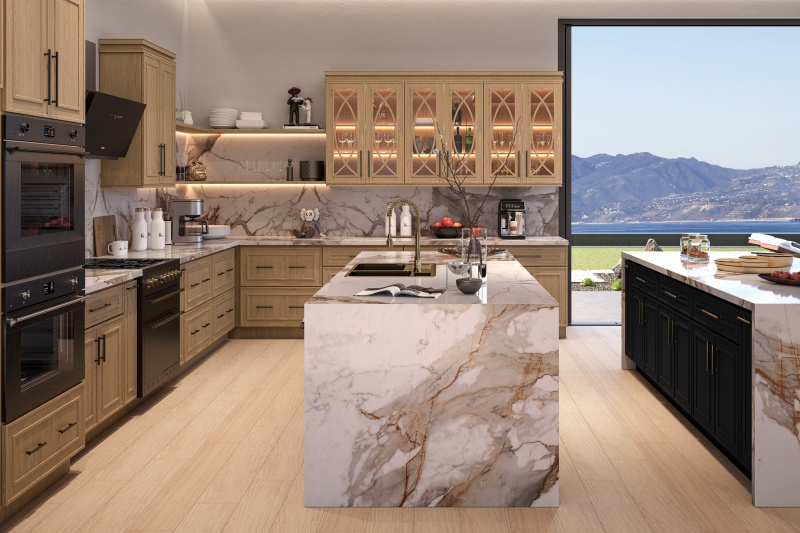
While white oak stands as the leading solid wood choice, engineered substrates including plywood, MDF and particleboard account for the largest shipment volumes for cost‑focused projects. Matching material strengths to project budgets and requirements streamlines material selection.
1. Solid Wood Cabinets
2. Plywood Cabinets
3. MDF Cabinets
4. Particleboard Cabinets
In‑Depth Guide to White Oak
If you select white oak, understanding cutting methods, staining and performance in humid climates helps set clear expectations for your cabinets.
1. Three Common Sawing Methods
| Sawing Type | Grain Appearance | Stability & Cost | Suitable Styles |
| Plain‑Sawn (Flat‑Sawn) | Classic cathedral swirl grain, widest planks, highest log yield | Lowest cost; more prone to movement across grain; good for stained finishes | Farmhouse, traditional, rustic, budget stained projects |
| Quarter‑Sawn | Straight grain with distinctive ray fleck (tiger figure); rich texture | More stable than plain‑sawn; premium pricing due to higher waste | Transitional, artisan, custom vintage builds |
| Rift‑Sawn | Fine, consistent vertical grain, minimal fleck; strongest modern aesthetic | Best stability, highest price, lowest yield | Modern minimalist, mid‑century, slab doors, contemporary Shaker |
2. Finishing Options That Transform Appearance
3. High‑Humidity Zones: Florida, Gulf Coast, Bathrooms & Kitchens
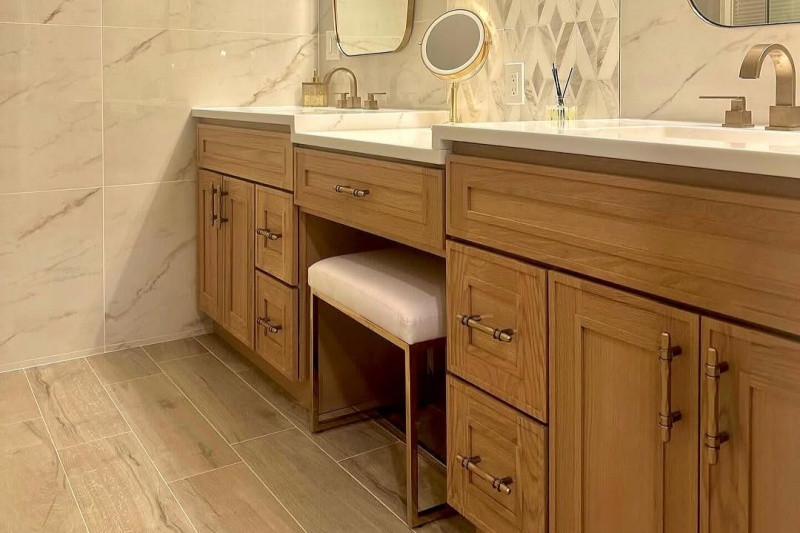
Wood expands and contracts with ambient moisture in coastal climates. White oak’s closed‑cell structure gives it a natural advantage, but proper material specification matters more than the species itself. Opt for kiln‑dried white oak for door frames, pair with oak‑veneered moisture‑resistant plywood boxes, add ventilation for sink bases and use UV‑cured coatings for superior protection in humid locations. Build adjustment tolerance into hinge and door settings, and install soft‑close hinges to accommodate minor seasonal movement.
Closing Thoughts
White oak is undoubtedly the hottest cabinet wood right now, driven by the industry shift toward organic texture and low‑saturation natural wood aesthetics. Still, “most popular” does not equal “best fit.” Plywood, MDF and particleboard are often more practical for multi‑family, apartment and rental projects.
Your final cabinet material choice should always align with project budget, design style, local climate, maintenance capacity and long‑term durability goals. White oak is a premium solid wood solution focused on texture, while engineered panels remain dependable options for most mid‑range and economy commercial orders.


 Newsletter
 Español

 IPv6 network supported