What Are You Looking For?
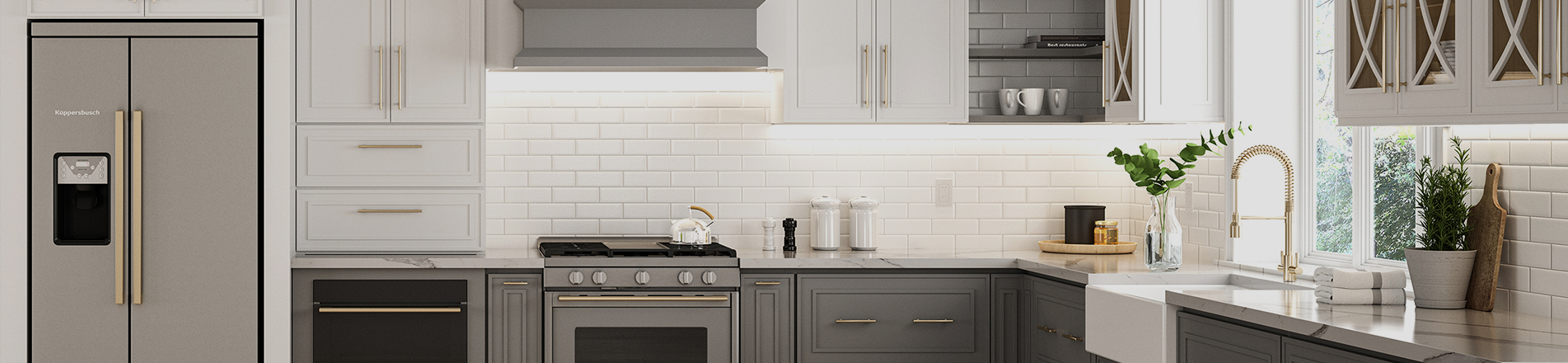
In-frame kitchen cabinets originated as a niche craft of British joinery and have now become one of the most sought-after premium cabinetry solutions for custom kitchens across Europe and North America. Unlike overlay cabinets where doors cover the cabinet face frame, in-frame doors sit inside the visible wooden frame. This difference brings far more than aesthetic appeal — it also reshapes load-bearing mechanics and hinge mounting methods.
Many clients wonder what benefits in-frame kitchen cabinets offer compared with traditional overlay cabinets. Behind this question lies a practical consideration: whether these advantages justify the extra budget. While the merits of in-frame construction are genuine, its specialised craftsmanship means it carries a higher price tag than conventional overlay kitchen cabinets. Careful evaluation is essential before making a selection.
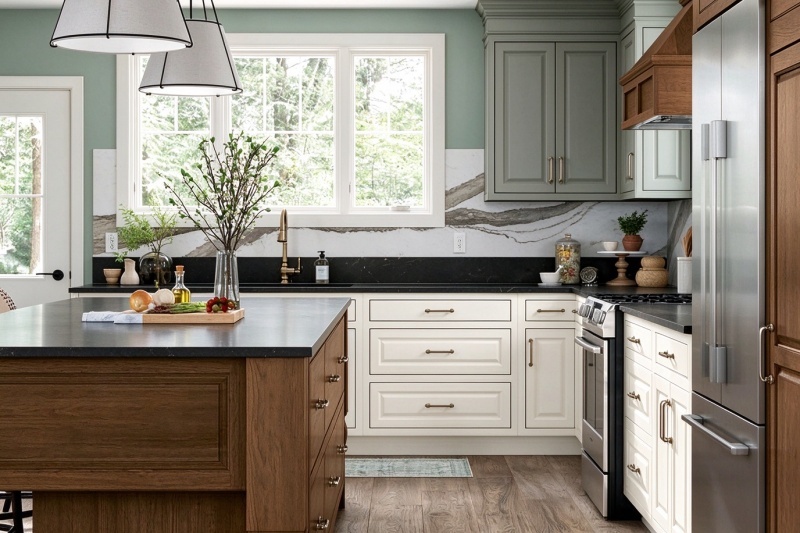
1. Structural Benefit: The Face Frame Acts as a Load-Bearing Member
Most people only notice the striking appearance of in-frame cabinets and overlook their mechanical strengths. The face frame is a closed rectangular assembly of solid-wood stiles and rails, bonded and dowelled to the front of the cabinet box. Structurally, it functions like a continuous reinforcing beam running along the bank of cabinetry, resisting distortion caused by load, transportation or installation on uneven flooring.
Frameless cabinets rely solely on panel thickness and back panels to resist warping. This approach works, but stresses are distributed across thin sheet materials. In-frame cabinets secure a rigid solid-wood frame to the front, with doors hung within the opening, adding rigidity exactly where forces concentrate. This delivers key benefits:
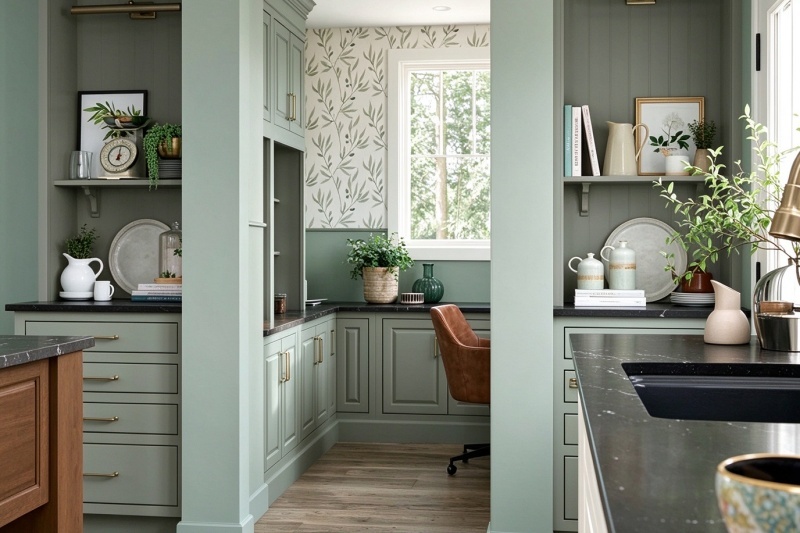
2. Hardware Fastens into Solid Wood, Not Panel Edges
Hinges and drawer runners on in-frame cabinets are mounted into the solid wood face frame — a 45–70 mm thick timber substrate that provides secure screw engagement. On frameless cabinets, hinges are fixed into the 18 mm panel edge, a zone vulnerable to moisture and repeated cyclic loading. Screw holes easily strip after repeated adjustments. This design delivers three practical advantages:
The same logic applies to drawers. Runners fixed to solid wood rails remain parallel over time. Runners mounted on thin panel edges tend to drift out of alignment, a common reason drawers become crooked on low-cost cabinetry after several years.
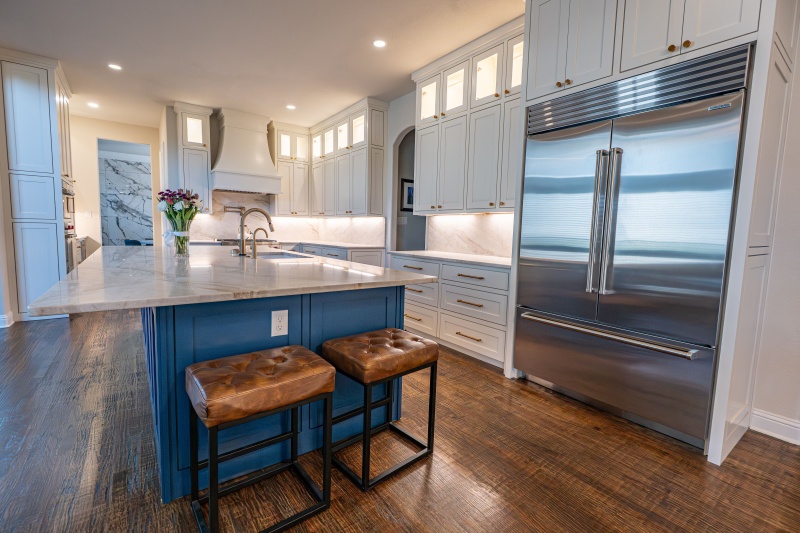
3. Unmatched Visual Depth & Refined Detail
If frameless cabinets are a product of modern industrial manufacturing, in-frame cabinetry embodies traditional joinery artistry. Its aesthetic benefit creates rich, dimensional visual interest.
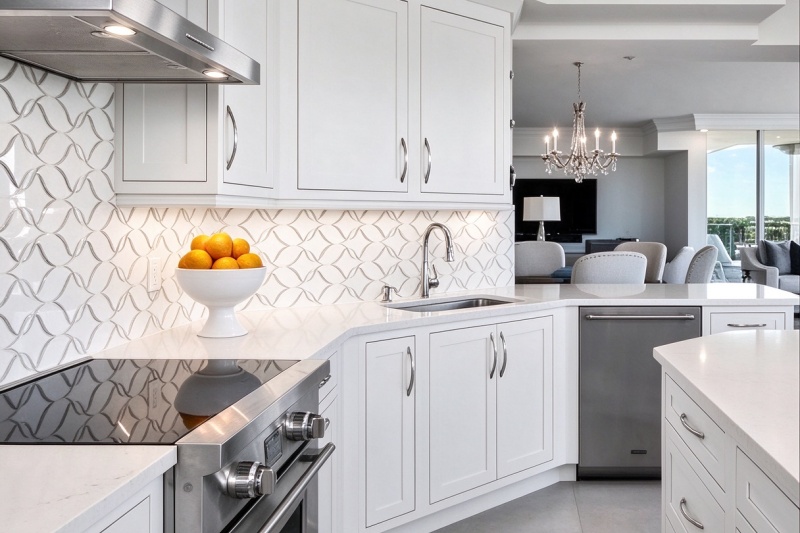
4. Greater Installation Tolerance
Many older homes across Europe and North America have out-of-plumb and out-of-square walls. Frameless cabinets require extensive shimming and trimming to straighten the front plane, and filler panels used to correct irregularities remain exposed and visually disruptive.
In-frame cabinetry conceals these corrections behind the face frame. Shims, levelling strips and trim are set back, hidden by the timber frame. Installers set the frame as the primary reference, then fit doors into the pre-calibrated openings. Outcomes include faster completion on challenging sites, fewer call-backs for remedial work, and a clean, cohesive finished front elevation, rather than exposed filler patches.
This characteristic makes in-frame cabinets highly valuable for two groups: general contractors and project managers, who benefit from tolerance to site deviations and reduced finishing work; designers and dealers, who achieve consistent high-quality photography on real residential projects, not just perfect showroom walls.
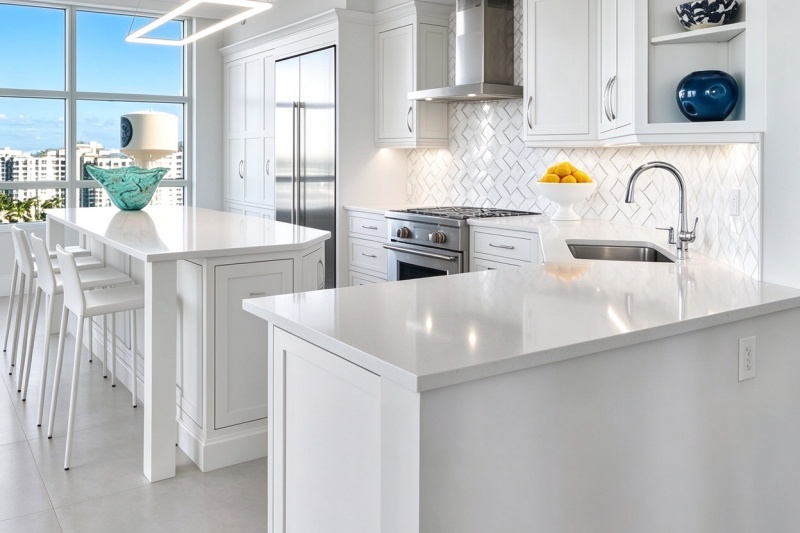
5. Resale Value & Property Appeal
From real estate and interior design perspectives, in-frame cabinets are recognised as a value-adding feature.
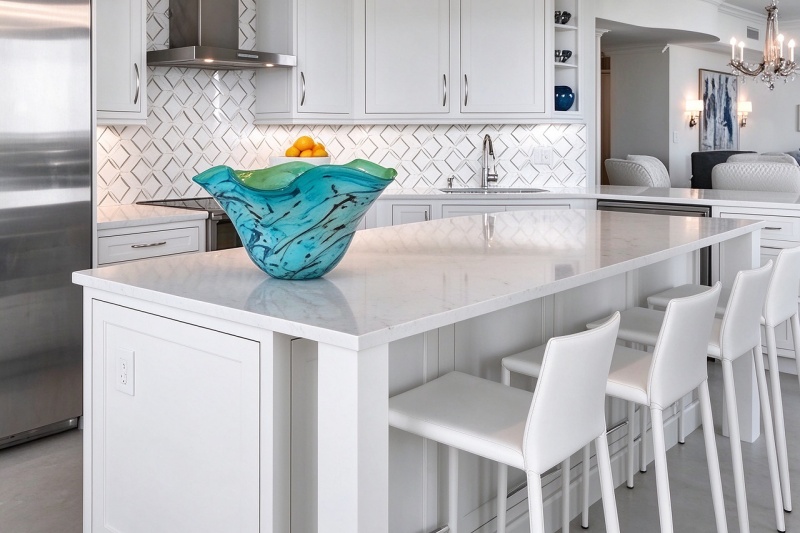
6. Trade-offs to Consider Alongside the Advantages
For balanced evaluation, it is important to understand the drawbacks alongside benefits, as inset kitchen cabinets command a premium. Buyers need clear visibility on compromises:
7. Suitable Applications: When In-Frame Works, and When It Does Not
| Project Type | Suitability | Notes & Considerations |
| Heritage Renovations & Listed Properties | Highly Recommended | Timber frames harmonise with original joinery and satisfy renovation controls. Allow generous scribe margins and measure each opening individually, as old walls are rarely square. |
| High-End Custom Homes | Highly Recommended | Handcrafted character, serviceability and refined detailing support premium positioning. Finishing standards must be rigorous; the in-frame layout offers no decorative panel to mask blemishes. |
| Hotels & Commercial Projects | Recommended | Doors can be replaced independently while frames remain serviceable through multiple refurbishment cycles. Standardise door sizes within a project and secure long-term spare part availability. |
| Coastal High-Humidity Homes | Conditionally Recommended | Viable with acclimated timber, sealed end grain, stable core materials and engineered expansion gaps. Risk note: Painted mitres are the first failure point if moisture content is poorly controlled. |
| Urban Compact Apartments | Mixed Suitability | Solid-wood hardware mounting delivers long service life under frequent use, yet reduced clear opening restricts storage access. |
| Low-Budget Rental Refurbishments | Not Recommended | The premium for long-term durability rarely pays back within typical 5-year rental cycles. Budget overlay cabinetry is a better fit. |
| Minimalist Handleless Schemes | Not Recommended | Frame moulding conflicts with clean minimalist language; frameless boxes with routed grip channels align better with this style. |
Summary
The advantages of in-frame cabinetry are often subtle in showrooms but reveal themselves over a decade of use: a permanently straight front elevation, securely anchored hardware, site irregularities concealed within the framing, and a classic silhouette resistant to fashion cycles.
In-frame is a worthwhile premium choice for traditional styling, furniture-like character, long-term home ownership and serviceable, repairable construction. If maximum storage per dollar or strict minimalist styling is the priority, frameless cabinetry is the more appropriate selection. If you are unsure which construction best matches your project, the Union Wood design team can provide expert guidance.


 Newsletter
 Español

 IPv6 network supported