
What Are You Looking For?
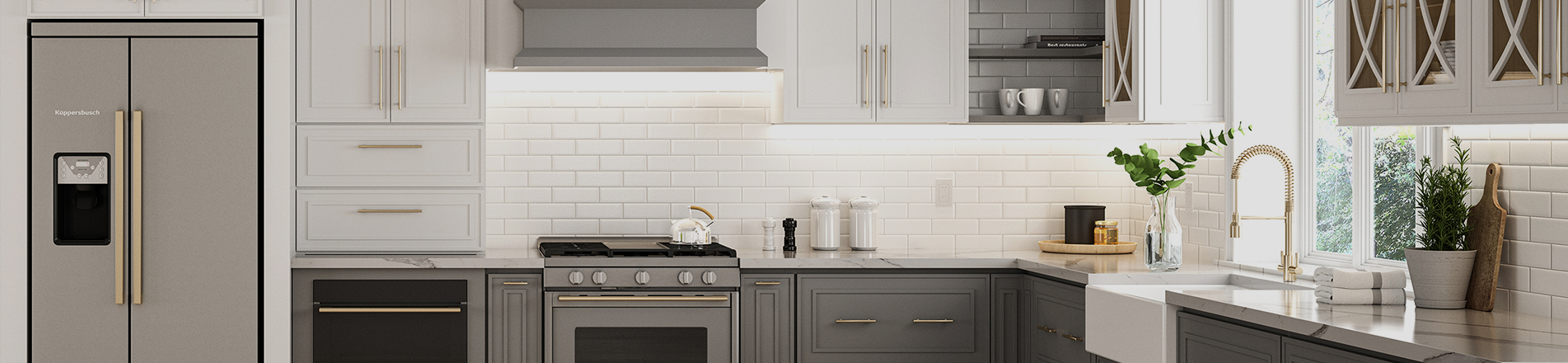
If you are planning a kitchen remodel, beyond cosmetic cabinet choices, one key structural decision is between in-frame and full overlay cabinets — two widely popular cabinet styles. There is also a partial overlay option, though it is far less common.
These cabinet styles deliver distinctly different visual results, require different manufacturing techniques, and directly impact budget, storage capacity and long-term maintenance. Many homeowners struggle to tell them apart, but the core distinction is straightforward: how doors and drawer fronts mount relative to the cabinet face frame.
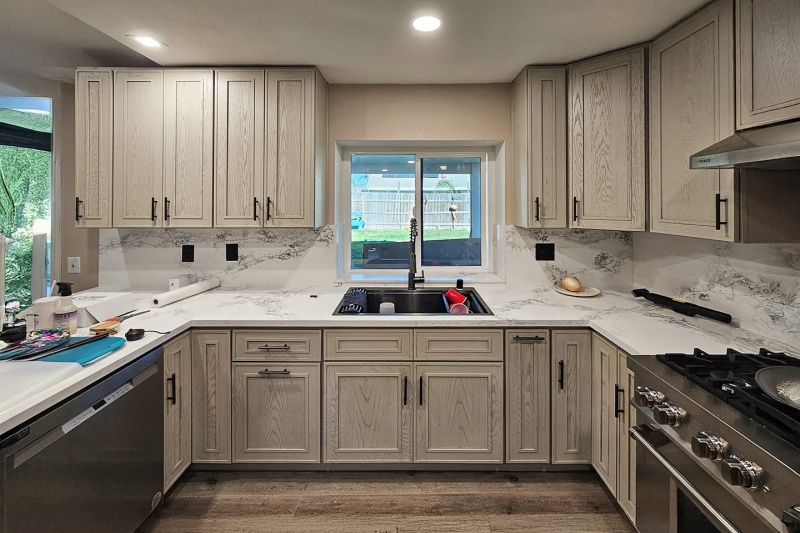
Quick Overview
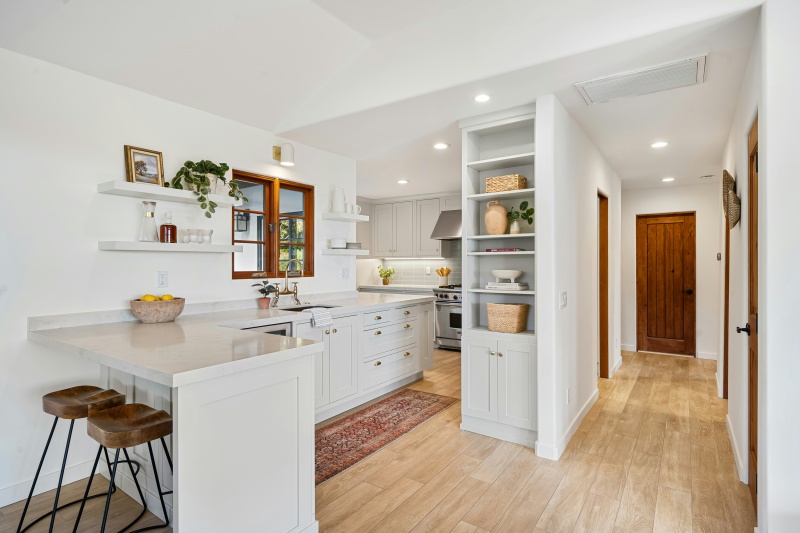
In-frame cabinets (commonly called inset in the US market): Doors and drawer fronts sit inside an exposed solid wood frame. Stiles and rails are visible around every panel, and doors sit flush with the frame surface when closed. Rooted in traditional cabinetry craftsmanship, this look is typical of British, farmhouse, cottage and vintage kitchens.
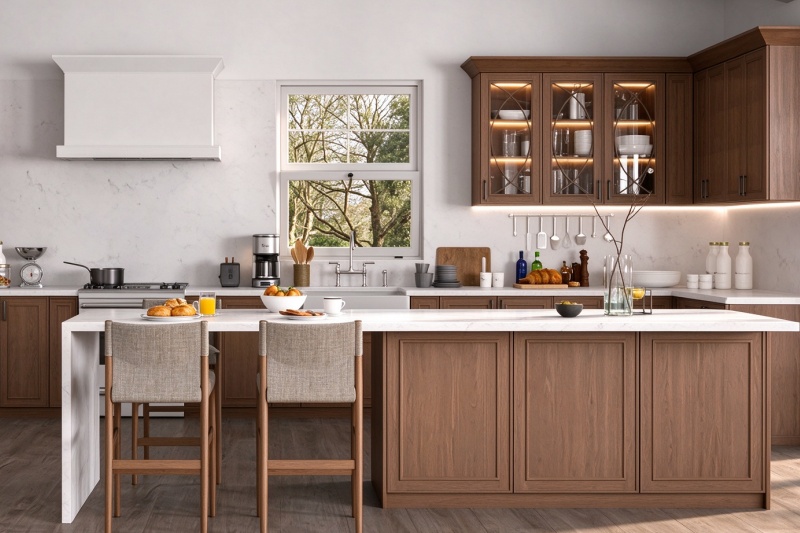
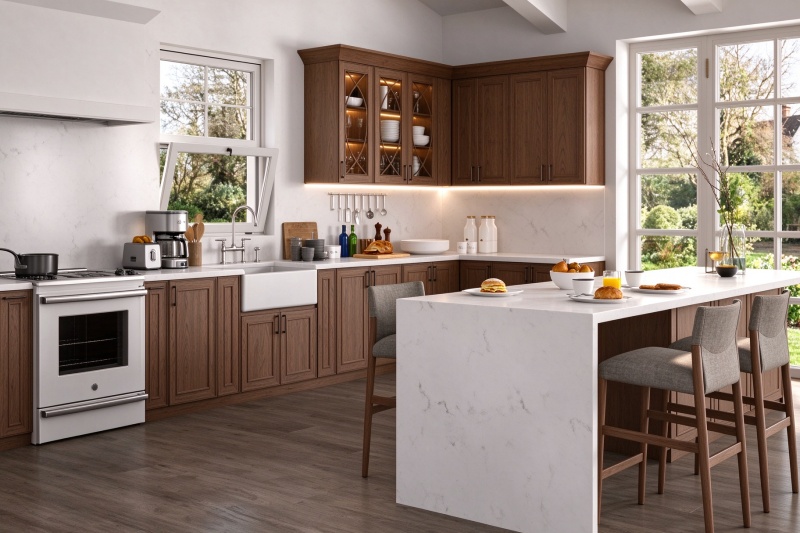
Full overlay cabinets: Doors and drawer fronts are sized larger to cover nearly the entire cabinet face frame, leaving only a thin reveal between panels for a continuous, flat visual plane. This is the dominant construction for contemporary and transitional American kitchens, RTA ready-to-assemble cabinets and stock cabinet lines.
| Comparison Item | In-frame / Inset | Full Overlay |
| Door Position | Recessed within the frame opening, flush with the frame when shut | Sits over the face frame / cabinet side panels, covering almost all of it |
| Exposed Frame | Fully visible frame border around every door and drawer | Frame is nearly concealed; only narrow gaps separate panels |
| Style Profile | Traditional, framed, furniture-like, vintage and farmhouse aesthetic | Clean, modern, transitional; strong cohesive look for shaker slab doors |
| Clear Interior Opening | Reduced by frame obstruction, narrower access opening | Wider opening; the door assembly does not intrude into the interior space |
| Precision Requirement | High: uniform, consistent gaps on all four sides are critical | Moderate; minor cabinet imperfections are easily hidden |
| Cost Tier | Higher premium due to extra frame lumber, fitting work, specialized hardware and labor | More economical; standard for stock and RTA ready-to-assemble cabinets |
What Are In-Frame Cabinets?
In-frame cabinets, also known as inset cabinets, originate from classic British and early American furniture-making traditions. A solid wood border is built around each cabinet opening, and doors and drawer fronts nest inside this frame, closing flush to the front plane of the frame rather than overlapping on top of it.
When doors are closed, an evenly spaced wood reveal shows around every door and drawer. This exposed frame is its signature aesthetic feature, delivering a refined, bespoke vintage character. Because panels must fit precisely inside the opening, in-frame cabinets demand extremely tight manufacturing tolerances and careful on-site adjustment during installation. Natural wood expands and contracts with humidity shifts; large swings in temperature and moisture can compromise smooth door operation, making precision workmanship essential.
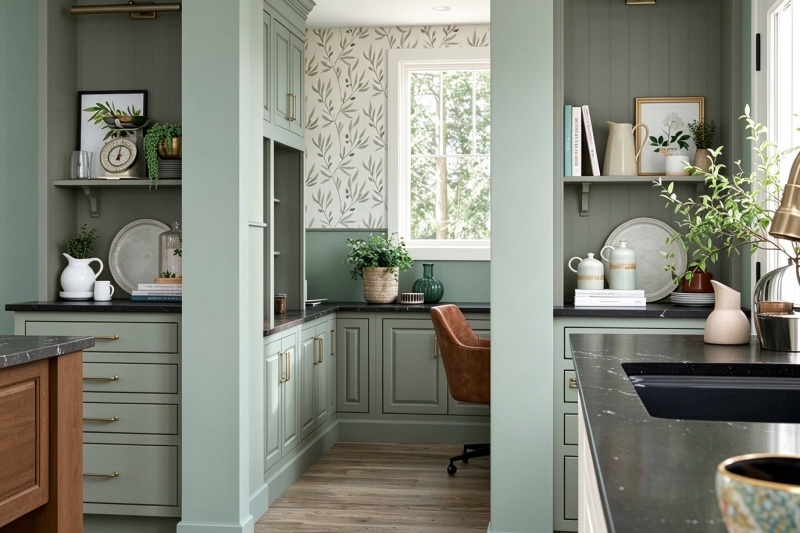
What Are Full Overlay Cabinets?
Full overlay is today’s mainstream modern cabinet construction. It works with both framed and frameless European-style cabinet boxes. Doors and drawer fronts sit on top of the cabinet face frame or box front, covering almost all of the cabinet structure. Only small, consistent gaps remain between panels, hiding the underlying frame almost completely.
The finished effect is a seamless, unified cabinet wall with a sleek, minimalist profile. Full overlay shaker plywood-framed kitchen cabinets represent the majority of stock, semi-custom and RTA ready-to-assemble cabinets sold across North America. This is the standard construction for wholesale cabinet orders, paired with concealed soft-close hinges hidden behind the door.
Core Differences Between In-Frame and Full Overlay Cabinets
Appearance & Style
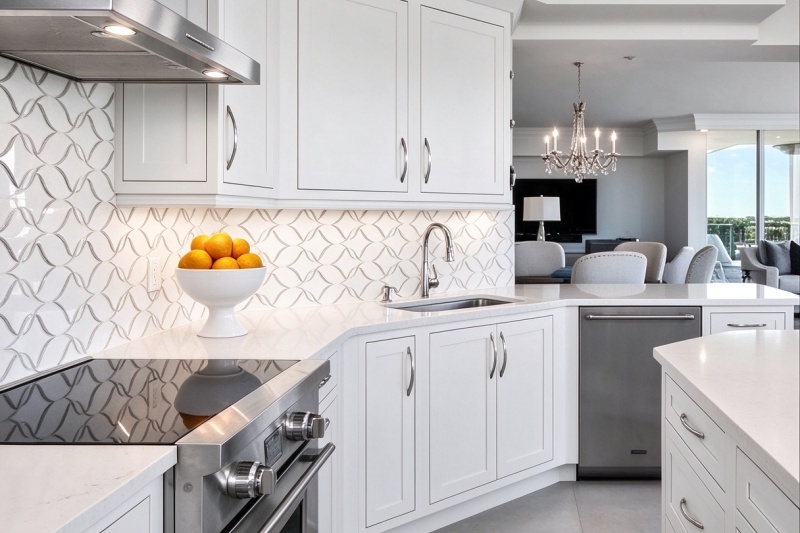
Construction & Tolerance
Storage Capacity
Cost
Maintenance & Humidity Performance
Hardware
Which Should You Choose: In-Frame or Full Overlay Cabinets?
Choose in-frame cabinets if you:
Choose full overlay cabinets if you:
Closing Summary
Neither style is inherently superior. The decision hinges on design vision, budget and kitchen environment. In-frame cabinets deliver timeless, furniture-level refinement centered on detailed frame lines. Full overlay cabinets optimize storage, simplify production and installation, making them a reliable, cost-effective modern option. For most homeowners balancing quality and budget, full overlay cabinets offer stronger practicality. In-frame cabinetry shines for projects chasing vintage sophistication and framing as a key design statement.


 Newsletter
 Español

 IPv6 network supported