
What Are You Looking For?
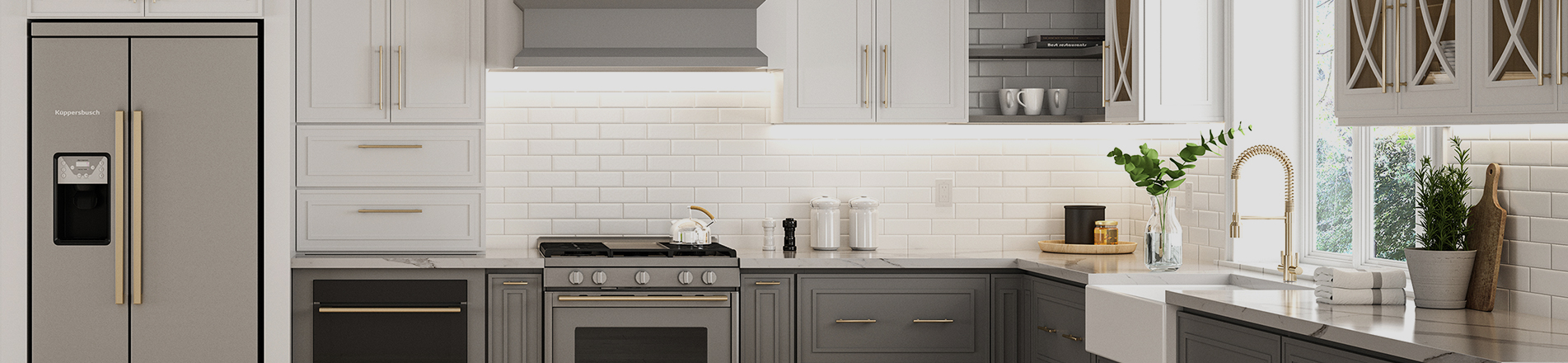
When planning kitchen, bathroom or custom cabinet renovation projects, cabinet door style is key to defining the overall aesthetic of the space. Among all cabinet styles, shaker and flat‑panel cabinets dominate the modern residential market. Both feature clean lines and work well with a wide range of interior design styles, yet they differ in structural craftsmanship, maintenance requirements and overall cost.
Everyone weighs different factors when selecting cabinet doors. There is no absolute “best” between shaker and flat‑panel cabinets — the right choice depends heavily on your application scenario and personal needs. The shaker style emphasizes timeless beauty and dimensional depth, while flat‑panel leans toward modern minimalism and easy upkeep. Make a well‑rounded decision based on kitchen size, budget and daily usage habits.
Structural Differences Between Shaker and Flat‑Panel Cabinets
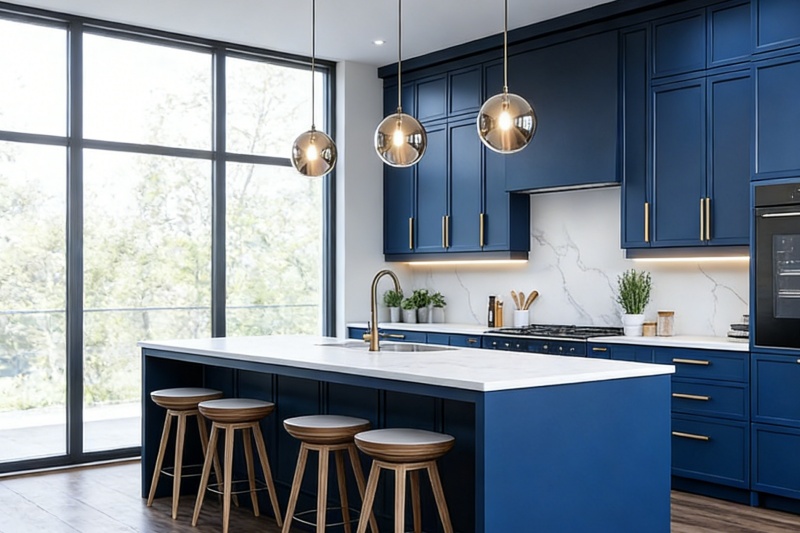
The core distinction between full‑overlay shaker plywood‑framed kitchen cabinets and flat‑panel kitchen cabinets lies in construction. Structural design underpins nearly all performance gaps, so we start here.
1. Shaker Cabinets: Five‑Piece Frame with Recessed Center Panel
The classic shaker cabinet door uses a five‑piece construction: four border stiles and rails frame a recessed central panel. This framed‑door design delivers distinct layering and richer visual texture. Beyond the traditional version, as a Vietnamese cabinet wholesaler, we also offer the modern‑updated Slim Shaker Collection. It features narrower frames for a lighter visual presence, preserving the iconic recessed detail while reducing bulkiness.
2. Flat‑Panel Cabinets: Solid Single‑Piece Slab Construction
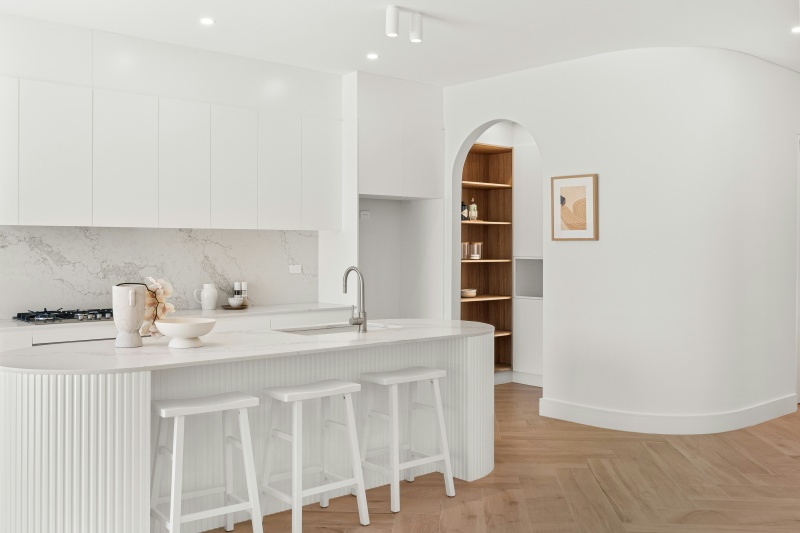
Plywood‑painted flat‑panel frameless kitchen cabinets consist of one continuous unadorned slab. There are no frames, recesses or protruding profiles. The smooth, seamless surface with ultra‑clean lines perfectly embodies modern minimalist cabinet standards. It is very often paired with handle‑less hardware to create uniform, flush facades, minimize bump hazards and eliminate hard‑to‑clean crevices.
Durability: Shaker vs. Flat‑Panel Cabinets
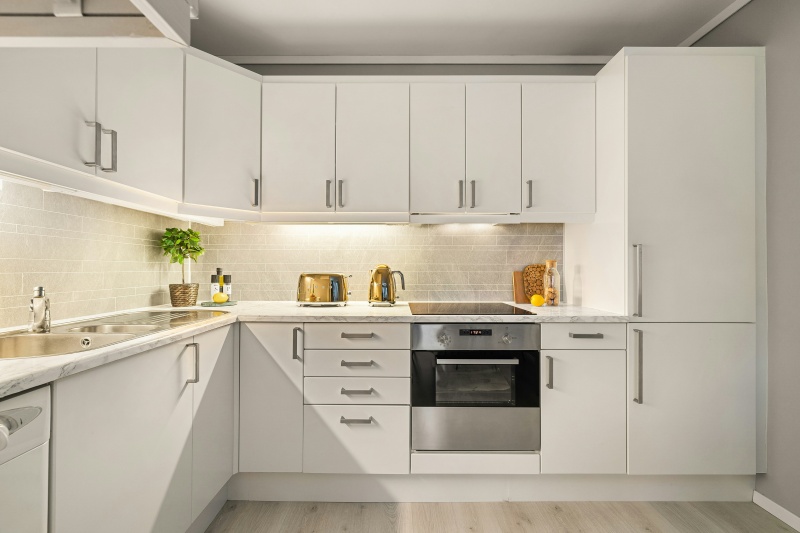
Structural design directly impacts resistance to warping, abrasion resistance and service life — critical for cabinets expected to perform reliably for 15‑30 years. Durability helps compare the performance of shaker versus flat‑panel options.
1. Durability of Shaker Cabinets
The five‑piece framed build in solid wood offers superior structural stability compared with solid‑slab doors. MDF center panels can naturally expand and contract with seasonal humidity and temperature shifts, fundamentally mitigating common cabinet failures such as deformation, cracking and warping. In high‑humidity spaces like kitchens and bathrooms, mortise‑and‑tenon constructed shaker doors maintain better flatness and consistent swing performance than flat‑panel cabinets. Furthermore, the framed cabinet body delivers enhanced overall rigidity and load‑bearing capacity, preventing frame loosening even under long‑term heavy‑item storage.
2. Durability of Flat‑Panel Kitchen Cabinets
Flat‑panel cabinets benefit from monolithic, seamless construction with zero joints, so joint separation and glue failure are not inherent weaknesses. Their limitations stem from slab‑material constraints. Large‑size doors for tall cabinets or oversized storage units may develop slight bowing or warping over time — this issue is especially noticeable with standard MDF and particle‑board substrates. Unlike the adaptive expansion‑contraction behaviour of shaker doors, solid slabs cannot flex in response to environmental changes and risk permanent deformation under extreme damp or dry conditions. For pure durability, shaker cabinets outperform flat‑panel cabinets.
Cleaning Difficulty: Shaker vs. Flat‑Panel Cabinets
Kitchen cabinets are constantly exposed to cooking grease, food residues, moisture and dust. Ease of cleaning and maintenance strongly influences buyer experience and represents one of the most practical real‑world differences between these two styles.
1. Higher Cleaning Effort for Shaker Cabinets
The recessed groove on shaker doors traps cooking grease, fine debris and dust; dirt buildup is particularly prominent on cabinets beneath cooktops and lower‑level units. Brushes and detailed scrubbing are required to clean the recesses, making shaker cabinets more labour‑intensive to maintain than flat‑panel alternatives.
2. Low‑Effort Cleaning for Flat‑Panel Cabinets
Flat‑panel cabinets are widely recognized as the optimum low‑maintenance style. Their joint‑free, smooth surface has no gaps to trap grime. Surfaces can be wiped down in one pass with no hidden dust‑ or grease‑collecting corners, cutting down cleaning time and physical effort. From a cleaning perspective, flat‑panel cabinets are superior to shaker cabinets.
Design Compatibility: Shaker vs. Flat‑Panel Cabinets
Aesthetic versatility and long‑term visual appeal determine whether cabinets can adapt to evolving interior trends and future remodels. Both styles enjoy sustained market popularity, yet they align best with slightly different design directions.
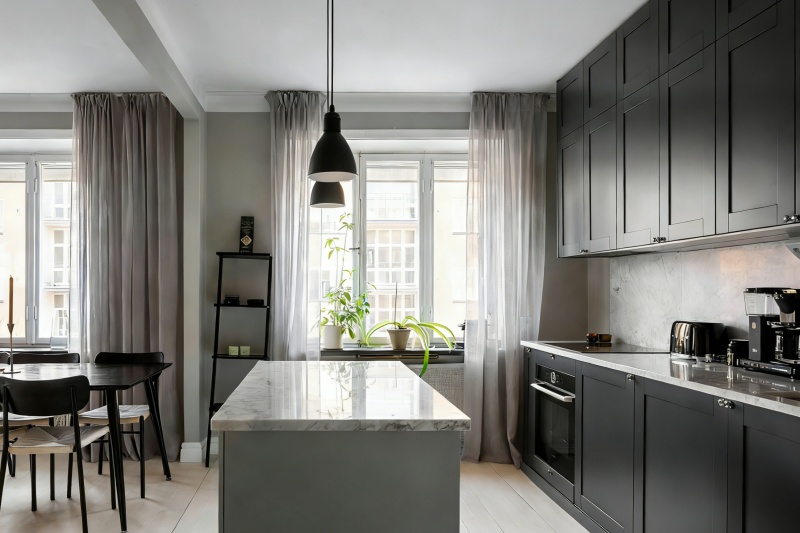
1. Shaker Cabinets: Timeless and Versatile
Shaker styling carries classic traditional charm and complements most interior themes including traditional American, farmhouse, vintage and light luxury styles. Framed doors add depth and dimensionality to plain wall surfaces, preventing kitchens from feeling stark, cold or lacking character. However, shaker doors can appear heavy and stylistically mismatched in ultra‑minimalist or pure European‑simple interiors.
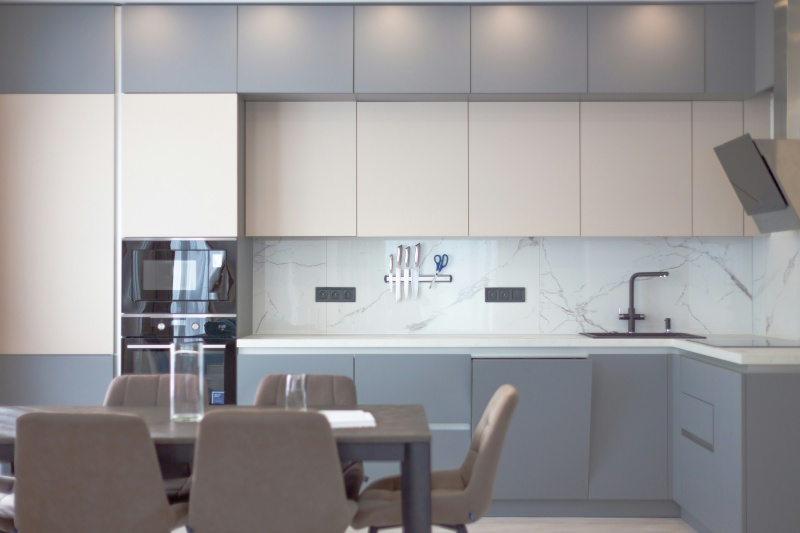
2. Flat‑Panel Cabinets: For Modern Minimalist Aesthetics
Flat‑panel cabinets suit modern minimalist, industrial and Nordic‑minimalist design schemes. Their plain slab surface highlights material grain, finish texture and hardware lines, yielding neat, uncluttered interiors. They are the mainstream choice for newly‑built modern residences. That said, they carry certain design limitations: they can look overly plain and out‑of‑place within French‑inspired or vintage‑themed homes.
Price Differences: Shaker vs. Flat‑Panel Cabinets
Based on wholesale and retail pricing benchmarks across the cabinet industry, varying manufacturing processes and material consumption create distinct cost profiles for the two styles.
Cabinet‑Selection Guidance
No style is universally superior; suitability depends entirely on project context, living habits and design objectives. Below is a practical selection guide.
Choose Shaker Cabinets if:
Choose Flat‑Panel Cabinets if:
Final Summary
Across the full spectrum of evaluation criteria, shaker cabinets represent an excellent pick for most residential renovation projects. Thanks to their unmatched stylistic flexibility, solid structural reliability and widely‑acknowledged property‑value preservation, they constitute a high‑return renovation investment for owner‑occupied homes and traditionally‑styled spaces.
Flat‑panel cabinets, by contrast, are the optimal solution for modern minimalist kitchens, heavily‑used cooking spaces, budget‑driven renovations and contemporary urban housing. Their low‑maintenance nature, cost‑effectiveness and streamlined lines fit modern‑minimalist design perfectly.
A middle‑ground alternative is also available: Slim Shaker cabinets. They retain the proportions, timeless appeal and broad compatibility of classic shaker doors while delivering the flatter slab‑like visual quality of flat‑panel styles. They simplify cleaning and balance rich texture with day‑to‑day practicality, combining the strengths of both flat‑panel and shaker cabinets.


 Newsletter
 Español
 IPv6 network supported