
What Are You Looking For?
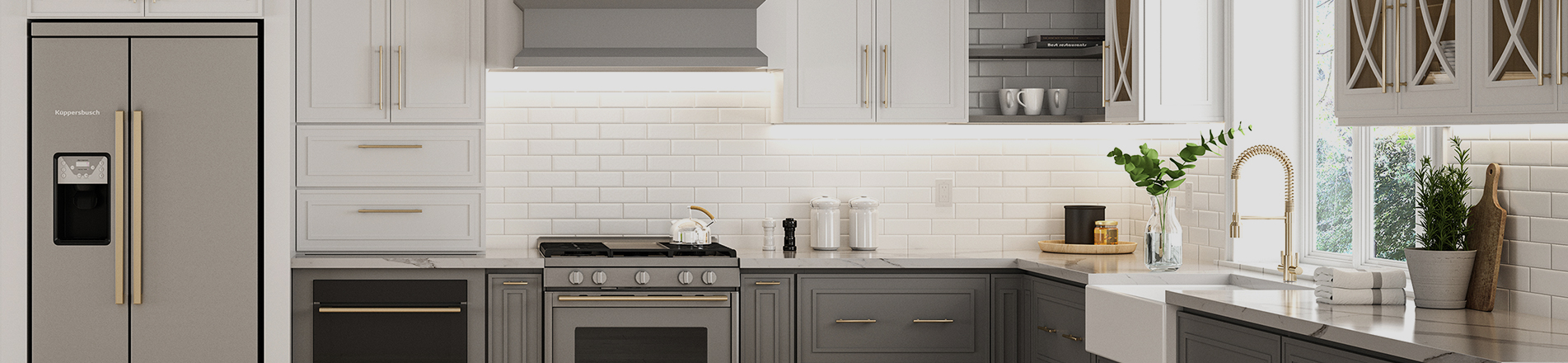
When renovating a kitchen, one crucial decision must be made: choosing the right cabinets. Cabinets are more than just storage furniture; they also influence home aesthetics, functionality, and even require consideration of long-term maintenance. Kitchen cabinets are generally divided into two categories: traditional framed cabinets and European-style cabinets. What is the difference between traditional and European cabinets? Let’s analyze them from multiple perspectives.
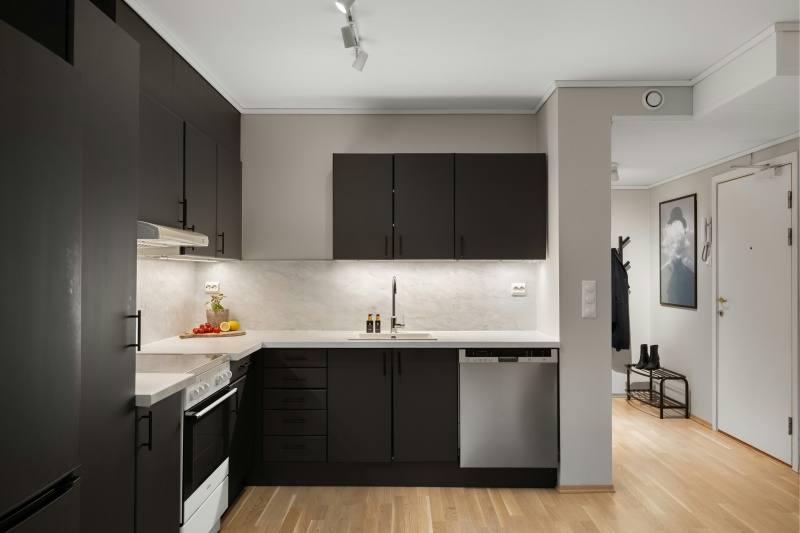
Design Concept: Classic Charm VS Modern Minimalism
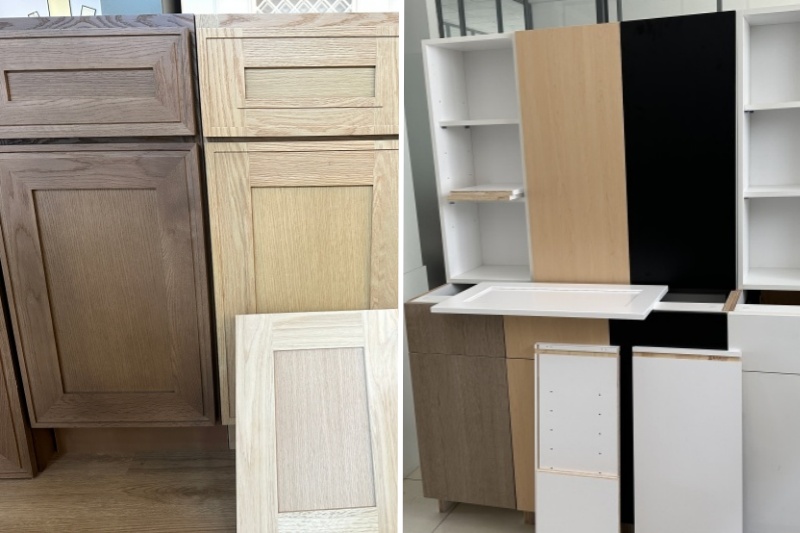
The biggest difference between traditional and European cabinets lies in their original design concepts. Traditional cabinets draw inspiration from classic aesthetics, with the Shaker kitchen cabinets being the most representative, emphasizing texture, detail, and historical heritage. European cabinets, however, follow a minimalist and practical design philosophy—originating from the need to maximize space in small European apartments, prioritizing clean and neat lines.
Features of Traditional Cabinets
Features of European Cabinets
Structure & Craftsmanship: Framed vs. Frameless
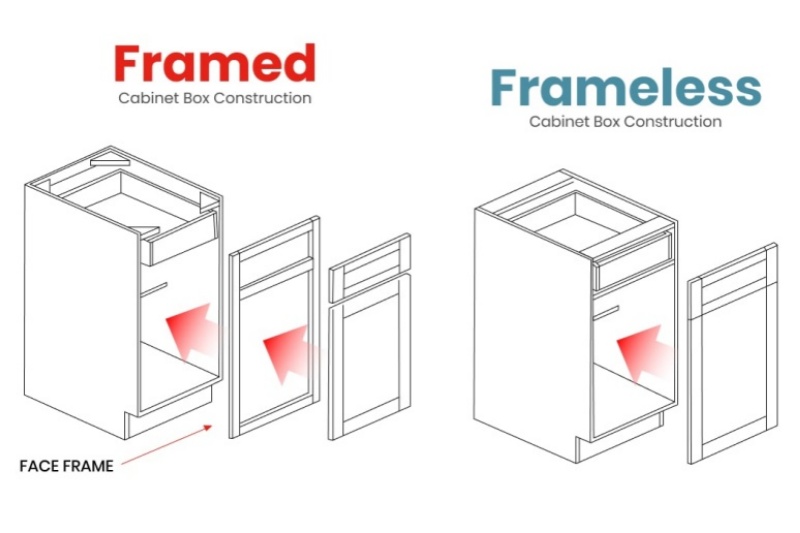
Traditional and European cabinets differ in cabinet structure, which affects not only overall stability but also storage space and installation difficulty. Therefore, when choosing between traditional and European cabinets, you should consider practicality rather than just appearance.
Traditional Cabinets: Framed Structure
Traditional cabinets adopt a framed structure: a wooden frame is attached to the front of the cabinet body, and the cabinet doors are directly mounted to the frame via hinges. With hundreds of years of history, this design offers multiple advantages:
European Cabinets: Frameless Structure
The core feature of European cabinets is the frameless structure. Unlike framed cabinets, the doors are directly mounted to the sides of the cabinet box for a cleaner design, with these notable benefits:
Materials & Finishes
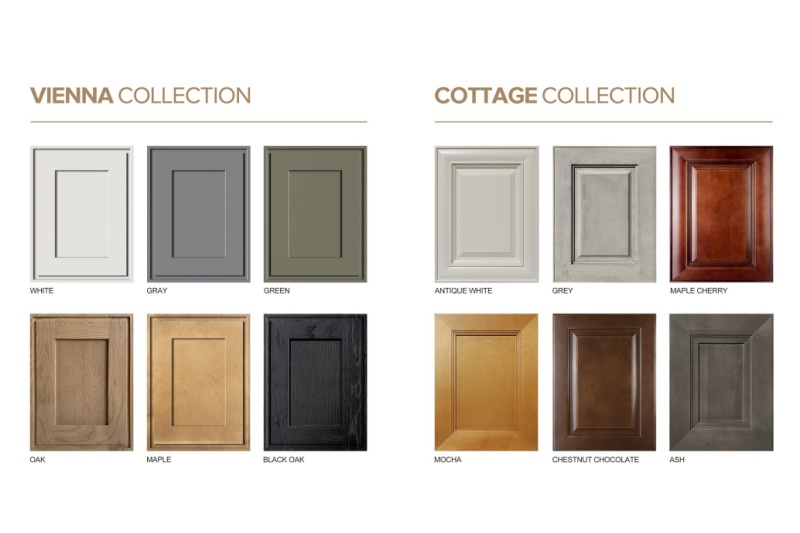
There is little difference in materials and finishes between traditional cabinets and European-style cabinets. Both allow you to choose cabinet materials according to your needs. Of course, traditional cabinets prioritize solid wood for an enhanced tactile feel, while European-style cabinets focus on durability and a minimalist appearance, generally using engineered wood.
As a Vietnamese kitchen cabinet wholesaler, Union Wood offers the following options for cabinet materials and finishes:
Wood for Traditional & European-Style Cabinets
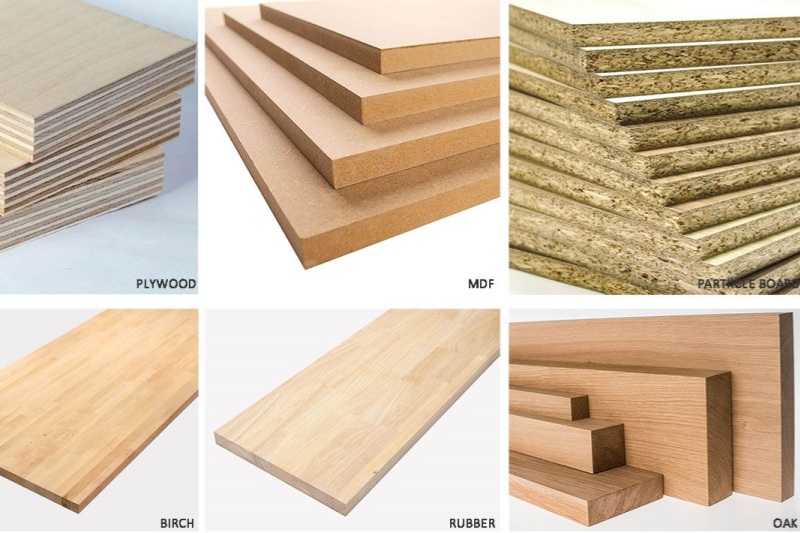
Oak, birch, maple and other natural solid woods are popular choices. Solid wood cabinets are highly durable, develop richer texture over time, and can be refinished multiple times, with a service life of decades. They are suitable for commercial projects with sufficient budgets.
The most commonly used cabinet body material. It performs similarly to solid wood but at a lower price, with a smooth and even surface that is easier to process.
Features high surface smoothness and strong screw-holding capacity. It is one of the most common substrates for high-gloss door panels, ideal for cabinets pursuing a high-gloss, delicate finish.
Low in cost, but slightly inferior to MDF in smoothness. It is usually used with melamine finishes; otherwise, its moisture resistance is poor.
Cabinet Finishes
| Items | Spray Painting | UV Coated | Melamine | ThermoFoil |
| Advantages | 1. High-end texture, high color saturation, customizable in semi-matt, matt, high-gloss. 2. Strong adhesion, excellent moisture resistance, seals wood pores. 3. Suitable for high-end custom, traditional and retro styles with rich visual layers. |
1. Ultra-hard, wear-resistant, scratch-resistant, anti-yellowing, impact-resistant, long service life. 2. Zero formaldehyde, high eco-friendly grade, no volatile substances. 3. Dense and smooth surface, oil-repellent, easy to clean. |
1. High surface hardness, acid & alkali resistant, scratch-resistant, highly durable. 2. Excellent cost-performance, high production efficiency, low cost. 3. Rich colors and patterns, realistically imitates wood, stone, metal. |
1. Strong formability, can make special-shaped and curved doors with obvious 3D effect. 2. Fully wrapped, excellent waterproof & moisture-proof performance, no exposed edges. 3. Some films have matt and skin-touch feel, suitable for retro and European styles. |
| Disadvantages | Prone to scratches; average paint hardness, easily damaged by sharp objects. | Easy to crack or peel under sharp impact; difficult to repair. | High requirement for edge banding; edges may peel or wear due to moisture. | Poor heat resistance; film may blister or deform near high-temperature areas like stoves. |
Cost and Maintenance
There is a cost difference between traditional and European cabinets, which is also one of the factors to consider when choosing a cabinet style. In addition, later maintenance should also be taken into account.
Traditional Cabinets
European Cabinets
How to Choose Between Traditional and European Cabinets?
There is no “best” choice — only the best choice for you. If you’re still unsure, here’s a quick guide to help you decide.
Choose Traditional Cabinets if you…
They are perfect for American traditional, rustic, and country-style interiors.
Choose European Cabinets if you…
They work wonderfully for modern, minimalist, open-concept spaces, and small apartments.
Final Note
Traditional and European cabinets each have their own unique charm and advantages.Whether you’re drawn to the elaborate craftsmanship of traditional designs, or prefer the simplicity and efficiency of European style, we can supply you at wholesale prices.
As a professional cabinet supplier, Union Wood offers a wide range of designs and colors for both traditional and European cabinets, all at factory direct prices — so you can get top-quality cabinets at the most affordable cost.


 Newsletter
 Español
 IPv6 network supported