
What Are You Looking For?
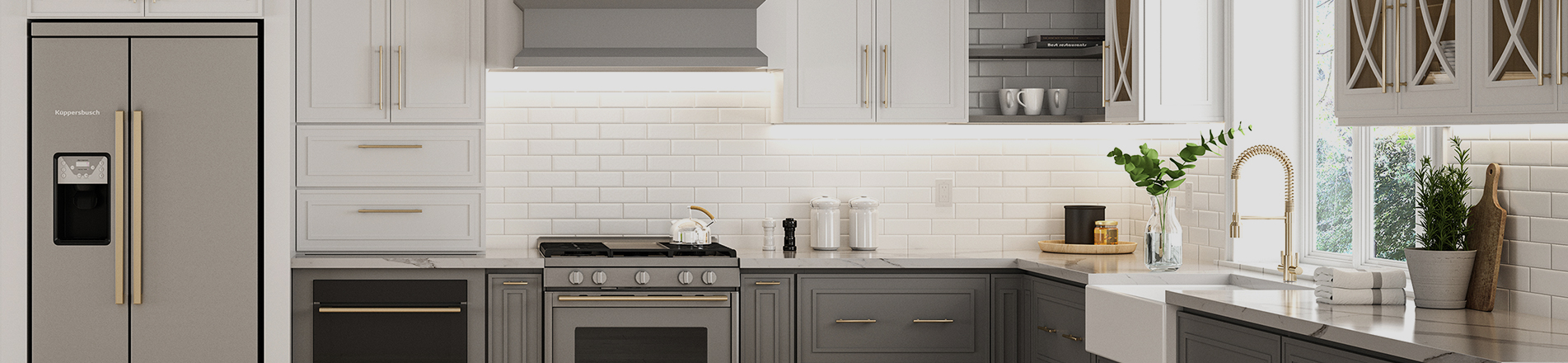
When planning a kitchen remodel or new cabinet installation, selecting the right material is one of the most critical decisions. Particle board is a widely‑used material for modern cabinets, yet the question “is particle board good for kitchen cabinets?” remains controversial.
Is particle board a viable cabinet option, or should you avoid it in favor of plywood, solid wood or other alternatives? Judging from its pros, cons and real‑world application considerations, particle board can be used for kitchen cabinets. However, it should be kept away from sinks or dishwashers due to its poor moisture resistance. It works best for dry kitchen zones, such as wall cabinets or non‑wet sections of base cabinets.
What Is Particle Board & How Is It Manufactured?
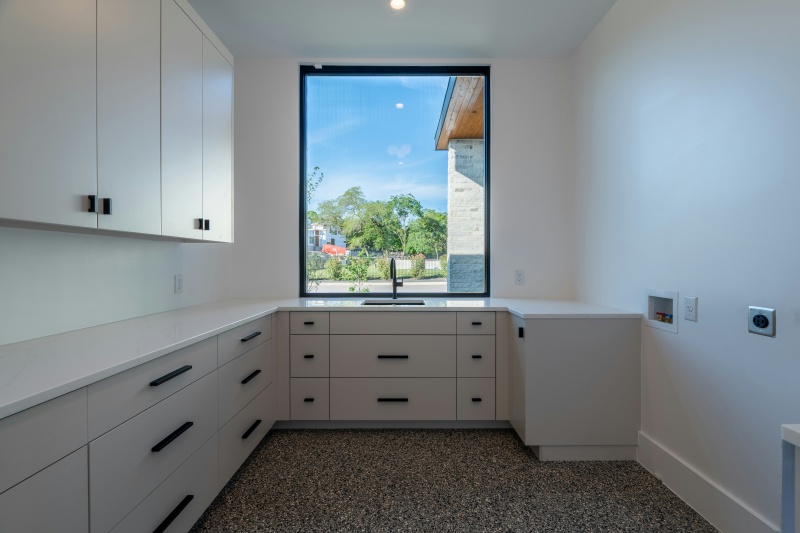
To evaluate whether particle board suits kitchen cabinets, you first need to understand its composition and production process. Particle board is an engineered wood product made from wood particles or wood fibers, mixed with resin binders and compressed under high temperature and high pressure. It features high density, uniform texture and a granular cross‑section structure.
Manufacturers classify particle board by density (low, medium, high) and grade. Cabinet‑grade particle board generally falls within medium‑to‑high density ranges. Many modern particle board products add special additives to improve performance, such as moisture‑resistant or flame‑retardant agents, making them better adapted to environments including kitchens.
Advantages of Particle Board for Kitchen Cabinets
Particle board has become a mainstream cabinet‑making material for solid reasons. Its unique physical properties deliver multiple benefits, making it an appealing choice for many kitchen projects balancing budget and practical requirements.
1. High Dimensional Stability
One of particle board’s most notable technical strengths is its resistance to warping, shrinking and swelling under normal temperature‑humidity fluctuations. Solid wood may expand and contract unevenly due to its natural grain structure. As an engineered wood, particle board features consistent composition across the panel, delivering reliable stability. This makes it ideal for large cabinet doors and drawer fronts. Warping would compromise cabinet alignment, function and appearance, which particle‑board substrates effectively mitigate.
2. Cost‑Effectiveness & Wide Availability
Particle board is among the most affordable engineered wood materials on the market. In most regions, it costs significantly less than solid wood and plywood, and even cheaper than budget‑friendly MDF. It is an economical pick for budget‑conscious property owners.
Additionally, particle board is globally accessible. Its readily‑available raw materials and relatively simple manufacturing streamline production and on‑site installation, cutting both production and labor expenses. Project managers and wholesalers can assemble RTA kitchen cabinets made in Vietnam without extensive professional experience.
3. Smooth Surface for Versatile Finishing
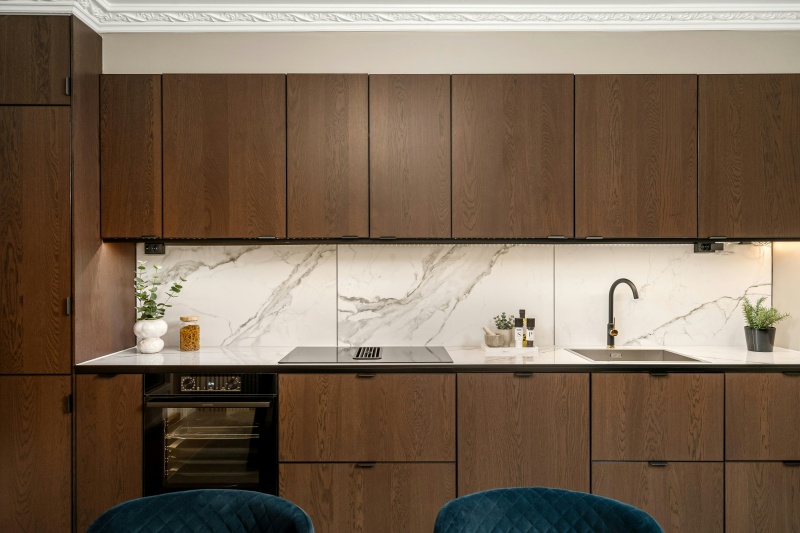
Its smooth, even surface makes particle board an ideal substrate for various finishes, including melamine and thermofoil. Unlike porous solid wood, it does not require heavy sanding or priming to achieve a uniform smooth surface, delivering excellent finishing results while reducing production time and labor costs. This flexibility unlocks broad design possibilities and supports color matching for custom kitchen cabinet door styles & colors. It accommodates fashionable modern matte solid‑color finishes as well as realistic wood‑grain veneers, fitting diverse kitchen aesthetics.
Limitations of Particle Board for Kitchen Cabinets
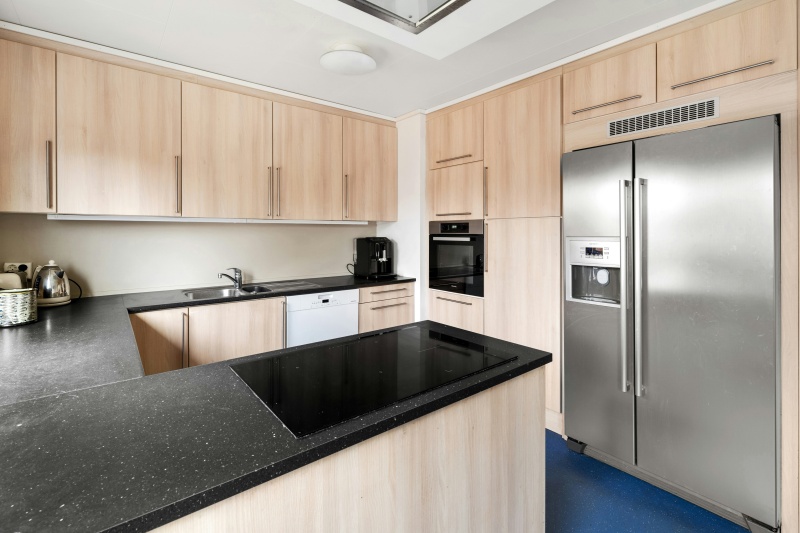
Despite its many strengths, particle board has drawbacks, especially in kitchens with high humidity and heavy wear. It shows clear gaps when compared with high‑quality plywood American standard kitchen cabinets.
1. Poor Moisture Resistance
Kitchens are among the most humid indoor spaces, where cabinets are regularly exposed to steam, water splashes and spills. Made of wood particles bonded by adhesives, particle board has relatively high water absorption. Prolonged moisture exposure — especially when water penetrates panel edges — causes irreversible swelling, deformation and even breakage, damaging structural integrity.
2. Limited Load‑Bearing Capacity
Particle board has lower structural strength than plywood and solid wood, with relatively weak transverse load performance. It is not ideal for supporting heavy items. Kitchen cabinets often hold large pots and heavy cookware; long‑term stress may cause particle‑board shelves to sag and deform, shortening cabinet service life and ruining appearance.
3. Reduced Screw‑Holding Power After Repeated Disassembly
A common pain point for particle‑board cabinets is weak holding power for screws and hardware. Its granular internal structure cannot form firm grip. Screws may gradually loosen from frequent opening and closing of cabinet doors and drawers. Repeated screwing and disassembly further degrade screw‑hole holding power, so particle‑board cabinets are not suitable for frequent reassembly.
4. Impact‑Prone Surfaces Hard to Repair
Thanks to its combined surface veneer and granular inner core, particle board easily dents upon sharp‑object impact. Unlike solid wood, it cannot be sanded for repair. You can only restore function via partial panel replacement, which harms aesthetics and service life.
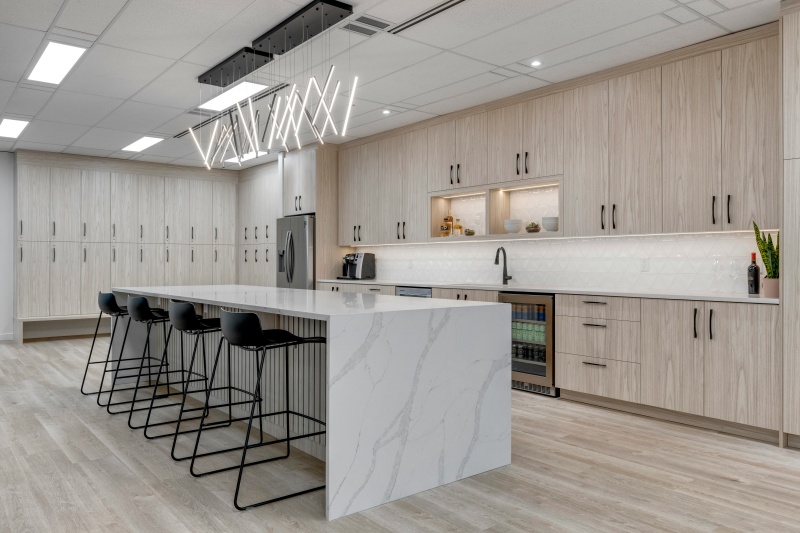
Suitable Scenarios for Particle‑Board Cabinets
Unsuitable Scenarios for Particle Board
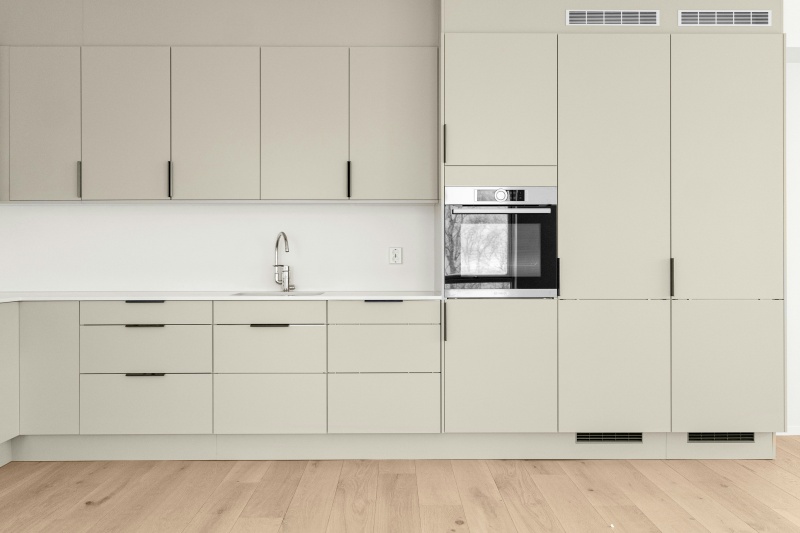
Methods to Improve Particle‑Board Cabinet Performance
If you select particle‑board cabinets, take these measures to offset limitations and extend service life:
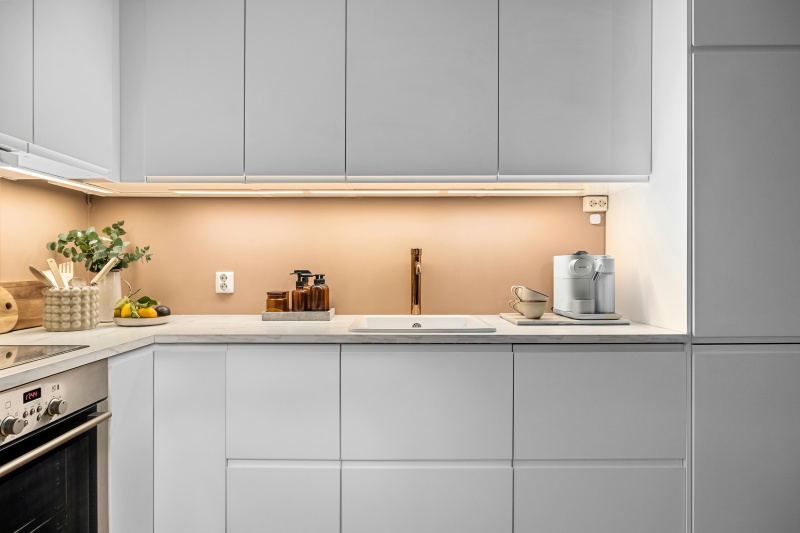
Substrate Comparison for Kitchen Cabinets
| Material | Moisture Resistance | Structural Strength | Cost | Best Application Scenarios |
| Particle Board | Poor (standard); Moderate (moisture‑resistant grade) | Low | Low | Budget‑limited projects, dry zones, temporary installations |
| Plywood | Good | High | Mid‑to‑High | High‑humidity areas, heavy‑duty usage, long‑term durability |
| Solid Wood | Moderate (varies by wood species) | High | High | Premium designs, traditional aesthetics, long‑term service |
| MDF | Moderate (better than standard particle board) | Moderate | Medium | Smooth finishes, painted cabinets, fine detailed designs |
Final Conclusion: Is Particle Board Good for Kitchen Cabinets?
The answer depends on your specific requirements, budget and kitchen environment. For budget‑focused projects, dry kitchen areas and temporary installations, particle board is an excellent option offering cost‑efficiency, dimensional stability and design flexibility. However, it is not recommended for high‑humidity zones, heavily‑used kitchens or permanent installations prioritizing long‑term durability.
If you opt for particle board, select high‑quality, moisture‑resistant, low‑emission panels and apply sealing & reinforcement measures to maximize performance. For high‑humidity, heavy‑use kitchens demanding long‑term durability, plywood or solid wood represent better long‑term investments despite higher upfront costs.
Ultimately, the best cabinet material aligns with your priorities, lifestyle and budget. By understanding particle board’s strengths and weaknesses, you can make informed decisions to achieve functional, attractive and long‑lasting kitchen cabinets.


 Newsletter
 Español
 IPv6 network supported