
What Are You Looking For?
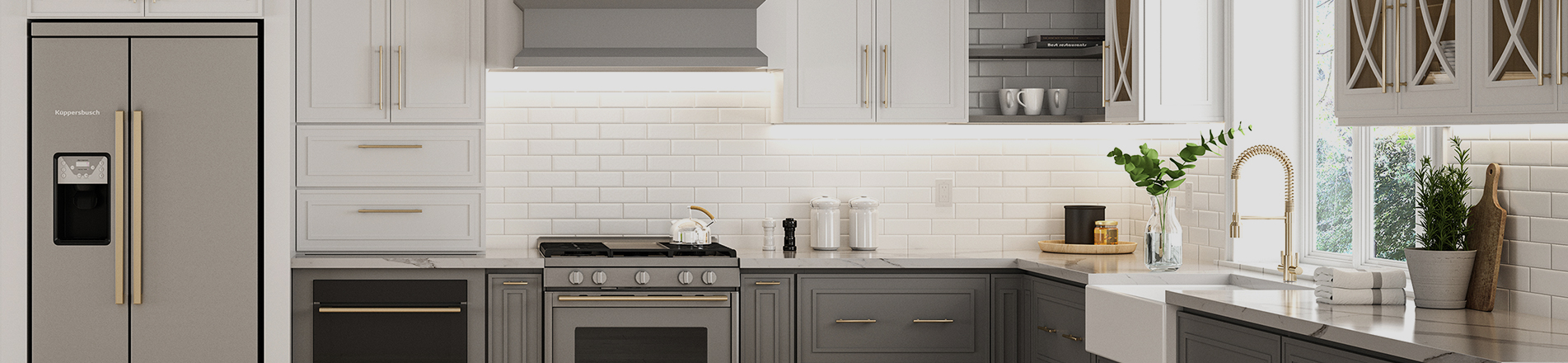
The kitchen is the highest-traffic and most heavily worn space in a residence. Subject to constant temperature and humidity fluctuations, as well as daily bumps, scratches from tableware, accidental water spills and grease buildup, cabinet materials are put to the ultimate test here.
For homeowners prioritizing long-term renovation value, the durability of kitchen cabinet wood outweighs aesthetics and price. Cabinets crafted from the most resilient hardwoods far outperform those made from ordinary lumber in service life, wear resistance and dimensional stability. This brings us back to the core question: what is the most durable wood for kitchen cabinets?
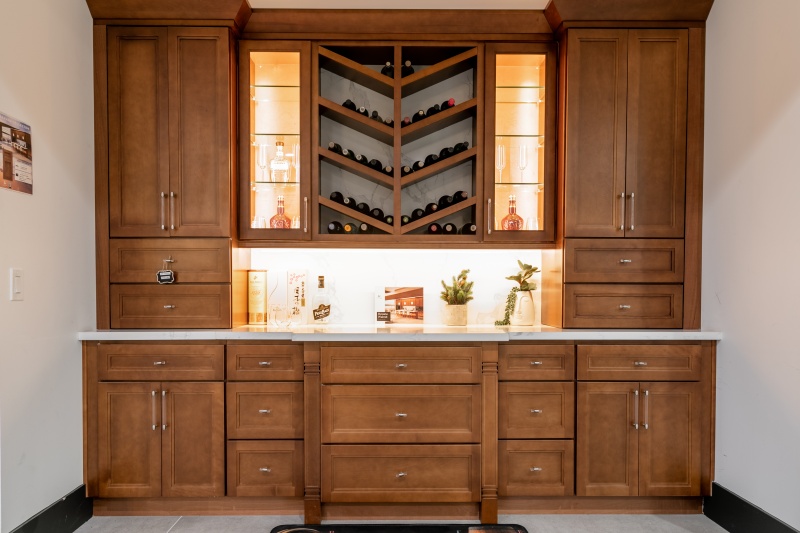
Metrics for Judging Cabinet Wood Durability
Before breaking down the most long-lasting cabinet woods, we first outline four core criteria that determine wood durability. These measurable benchmarks provide tangible indicators of wood hardness and serve as the industry standard for evaluating cabinet material performance.
1. Janka Hardness Rating
The Janka hardness test is a globally recognized standard for measuring a wood’s surface hardness. A higher Janka rating means superior resistance to everyday scratches, impact dents and abrasion — directly dictating how well cabinets hold up under heavy regular use.
Wood with a Janka rating above 1,200 lbf qualifies as highly durable, fully capable of withstanding routine knocks from cookware and tableware. Lumber scoring below 1,000 lbf falls into the medium-soft category, prone to visible scratches and dents after just 3 to 5 years of use.
2. Humidity Stability & Dimensional Retention
Kitchen relative humidity typically fluctuates between 40% and 80% year-round. Woods with poor humidity stability swell when damp and shrink when dry, leading to common defects such as warped cabinet doors, split seams and loose hinge gaps — all major threats to cabinet longevity.
Professional evaluation covers three key factors: shrinkage rate, expansion coefficient and equilibrium moisture content. Top-tier durable cabinet woods feature a low fiber saturation point, resulting in minimal deformation amid shifting humidity levels.
3. Natural Decay & Insect Resistance
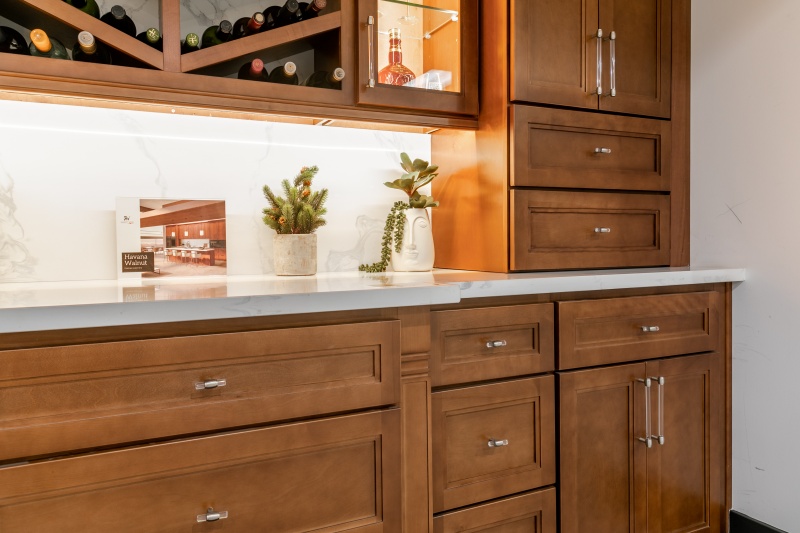
Standing water and grease often linger in hard-to-reach kitchen corners, which can trigger mold, rot and termite infestations without prompt cleaning. Premium durable hardwoods are rich in natural tannins and feature dense fiber structures that naturally inhibit fungal growth and repel pests. They do not rely solely on surface finish for protection; even minor finish chipping during daily use will not compromise the wood, drastically extending cabinet lifespan.
4. Structural Density & Fiber Uniformity
Wood density correlates positively with structural integrity. Lumber with consistent, tightly packed fibers contains no loose internal voids, delivering exceptional screw holding power and fastener stability. Cabinets built from high-density wood resist loose hardware, panel warping and edge delamination even after years of repeated opening, closing and weight-bearing use.
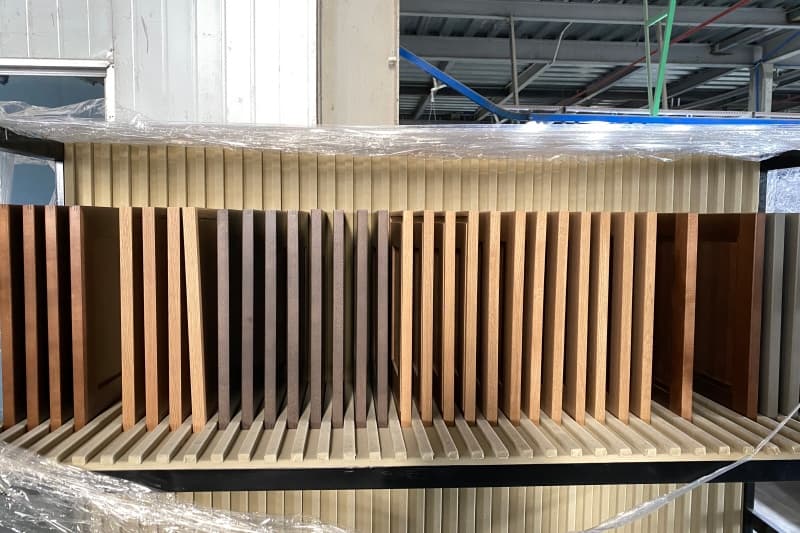
Breakdown of Top High-Durability Kitchen Cabinet Hardwoods
Drawing on the four durability metrics above and decades of cabinetry project data, we have shortlisted four mainstream hardwoods ideal for cabinet construction. Softwoods lacking sufficient hardness — such as cherry (995 lbf) and alder (590 lbf) — are ruled out for high-wear kitchen environments.
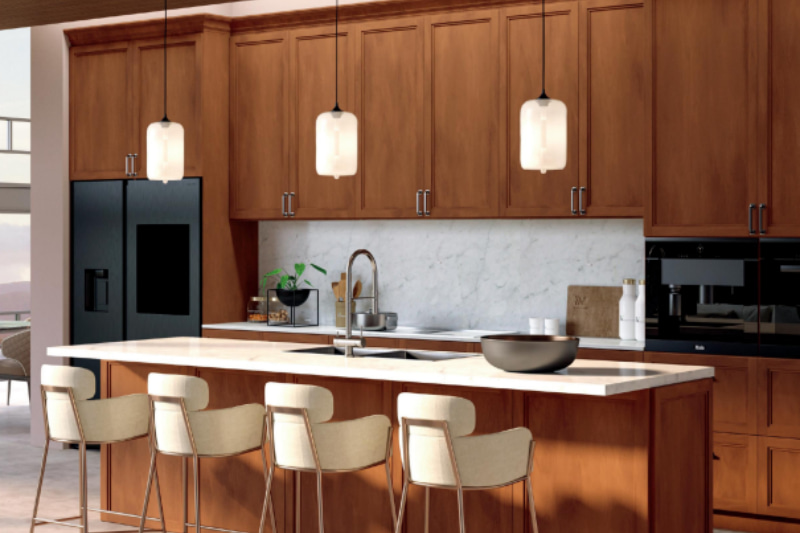
1. Hickory: North America’s Hardest Hardwood
Hickory claims the title of the most durable wood for kitchen cabinets, with a Janka hardness rating of 1,820 lbf — the highest among all standard cabinet lumber, widely acknowledged as one of the most structurally stable North American hardwoods.
Its tightly interwoven fiber structure contains virtually no loose internal voids, granting exceptional impact and dent resistance. It easily withstands heavy cookware collisions, cuts from sharp tableware and daily friction, retaining a smooth surface with barely noticeable wear even after decades of heavy use.
In terms of environmental stability, hickory has a low equilibrium moisture content and excellent dimensional retention. Though its thermal expansion coefficient is slightly higher than maple, its natural rot resistance surpasses most hardwood varieties. Abundant natural tannins within the wood defend against mold and termites triggered by kitchen moisture, delivering a natural service life of over 50 years.
Hickory features distinct grain layering, ranging from pale cream yellow to warm golden hues, with an innate rustic vintage aesthetic that complements American, cottage and light luxury kitchen designs. Its primary manufacturing drawback is high cutting resistance during machining, which demands precision cutting and sanding expertise and raises custom cabinet costs accordingly.
2. Hard Maple: Best All-Round Performance Wood
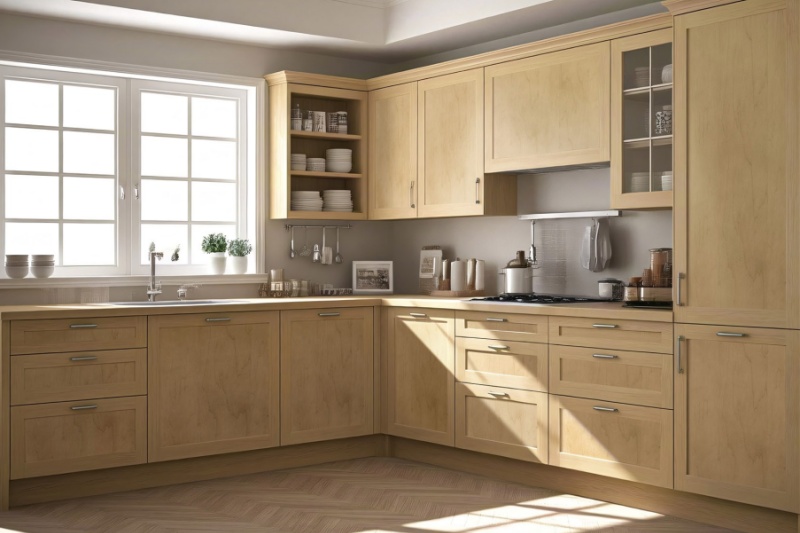
Boasting a Janka hardness rating of 1,450 lbf, hard maple is another exceptionally durable cabinet wood and one of the most popular materials for high-end custom painted cabinetry.
Among all high-hardness lumber, hard maple offers unmatched overall stability. Its ultra-fine, uniform fibers contain no coarse voids or raised grain patterns, yielding perfectly smooth, flat panels. It delivers a dimensional deformation rate of only 0.12% amid temperature and humidity shifts — the lowest of all mainstream cabinet woods. This means maple stain-framed kitchen cabinetry resists warping and splitting long-term in damp kitchen spaces, with firmly anchored hinges that rarely loosen.
While marginally softer than hickory, hard maple’s silky smooth surface effortlessly hides fine daily scratches, preventing minor abrasions from detracting from visual appeal. It also boasts outstanding screw holding power, making it ideal for cabinet doors opened frequently and drawers bearing consistent weight loads.
A standout advantage of hard maple is its superior finishing potential. Its even fiber structure ensures uniform paint and stain adhesion with zero color inconsistency or blotching, catering to demand for sleek, high-end kitchen aesthetics. Its only limitation is weaker natural decay resistance, requiring a high-quality protective finish to block moisture and grease. All-natural solid wood kitchen cabinets supplied by Union Woods utilize eco-friendly water-based paint, forming a dense film that effectively repels moisture penetration for reliable long-term protection.
3. White Oak: Superior Moisture & Rot Resistant Wood
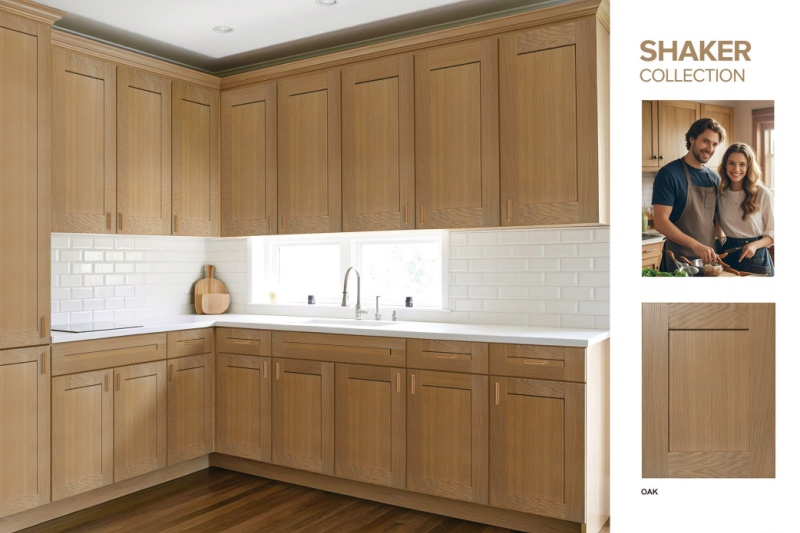
White oak carries a Janka hardness rating of 1,360 lbf, slightly softer than maple yet far superior to most hardwoods in moisture and decay resistance, cementing its status as a premium custom cabinet staple.
Unique tyloses fill white oak’s wood pores, creating a natural barrier against water penetration that reduces reliance on surface coatings. Its water absorption rate is 30% lower than red oak and 40% lower than cherry. In perpetually steamy, damp kitchens, white oak effectively prevents water seepage, panel bubbling and internal mold growth — solving the core durability pain point of moisture-damaged cabinetry.
For wear resistance, white oak features straight, fine grain with moderate flexibility. It resists scratches while absorbing mild impact force to avoid brittle splitting, paired with excellent natural anti-decay properties. Even if sections of the protective finish chip, the wood maintains structural integrity over time.
As one of the most durable woods for kitchen cabinets, natural white oak kitchen cabinets offer extraordinary design versatility, suiting modern, light luxury and transitional kitchen styles alike. Its drawbacks include minor color variation between raw lumber batches, requiring professional sorting during production, and slightly higher material waste due to its dense hardness.
4. Red Oak: High-Cost-Performance Hardwood
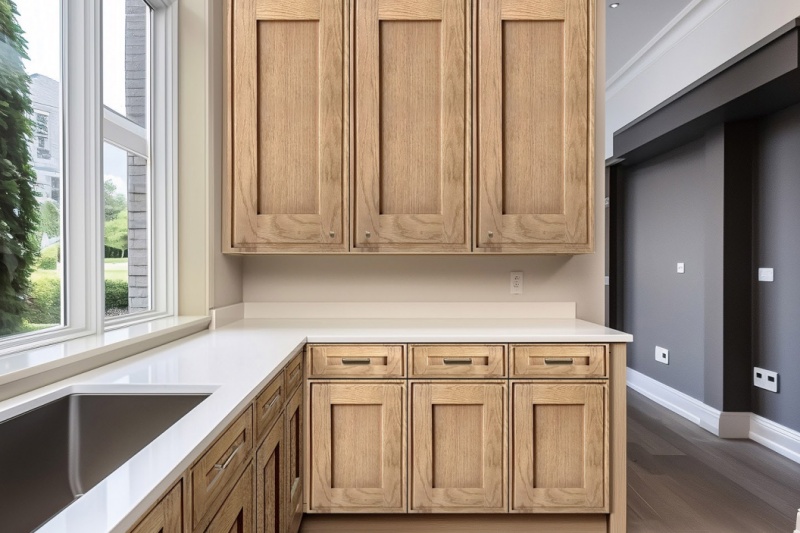
With a Janka hardness rating of 1,290 lbf that meets the industry threshold for high-durability lumber, red oak delivers balanced performance at an accessible price point, making it the top durable wood choice for mid-to-high-end residential cabinetry.
Its dense fiber structure delivers robust abrasion resistance, fully meeting daily household kitchen demands. Its prominent natural grain naturally masks fine scratches and wear accumulated over years, allowing red oak cabinet designs to retain an organic, well-preserved appearance without obvious signs of aging.
Environmentally adaptable, red oak exhibits moderate humidity stability and strong rot resistance once sealed with standard finishes. It is easy to machine, widely available and cost-controllable, pairing beautifully with traditional and cottage-style kitchens. Its main downside is larger pore structures compared to white oak, leading to higher water absorption — full surface sealing is mandatory for wet zones such as sink bases.
Tips to Extend the Service Life of Cabinet Wood
Even the most premium, durable hardwoods require standardized maintenance to retain optimal performance. Proper cabinet care can further extend their service life by 20% to 30%:
Final Verdict: A Roundup of the Most Durable Woods for Kitchen Cabinets
Hickory ranks as the wood with the best overall durability for kitchen cabinetry. Boasting an ultra-high Janka hardness rating of 1,820 lbf, it outperforms all mainstream cabinet lumber with unrivaled resistance to scratches, dents and impacts. Combined with outstanding natural rot resistance and stable dense grain structure, hickory cabinets maintain intact structure and flawless appearance for over 50 years under heavy daily household use, with barely any signs of aging or wear.
As a professional Vietnamese supplier, Union Woods provides targeted wood selection recommendations tailored to clients’ requirements:
All four species are top-tier durable hardwood options for kitchen cabinets.


 Newsletter
 Español
 IPv6 network supported