
What Are You Looking For?
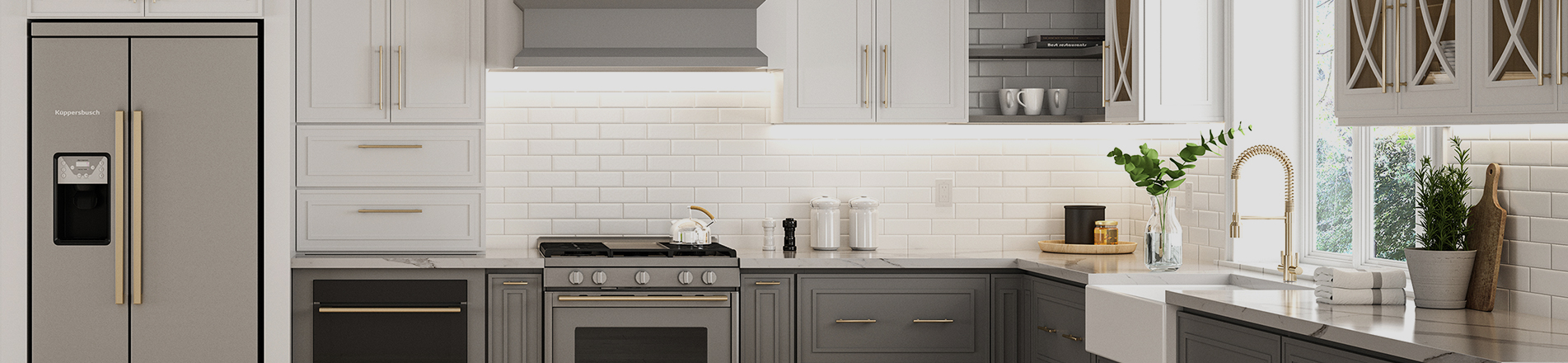
The base material of cabinet bodies determines the service life of kitchen cabinets. Nowadays, there is a wider selection of cabinet materials, including stainless steel and all-aluminum options. Even so, wooden cabinets remain the classic choice thanks to their diverse styles and wide applicability. Common wood-based substrates include solid wood, plywood, MDF and particleboard. Among them, plywood stands out for its excellent moisture resistance and stable structure, making it one of the most widely used materials for kitchen cabinets.
As a wholesale supplier of Vietnamese cabinets, we use plywood as the standard material for all cabinet bodies. Its unique structure adapts well to humid environments while offering great cost performance. We also provide customized material solutions, with options such as oak, maple and MDF available for cabinet bodies.
Definition of Cabinet-Grade Plywood
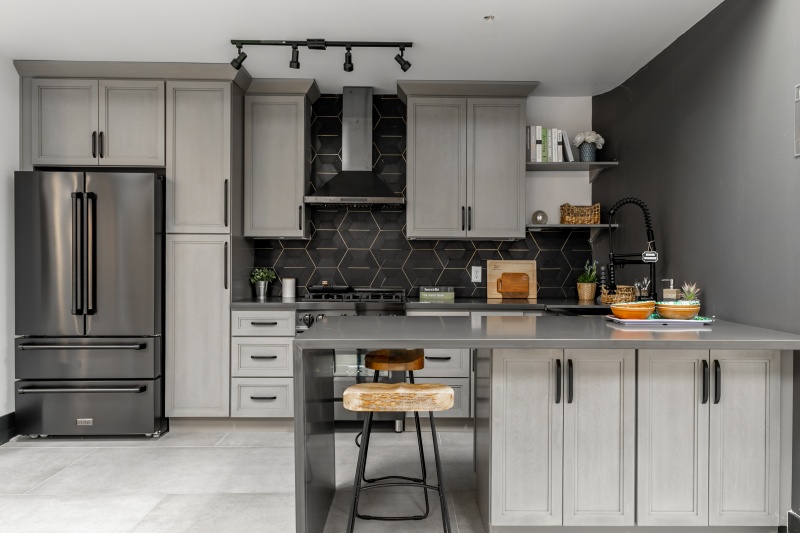
Cabinet-grade plywood is a type of cross-laminated engineered wood. It is manufactured by bonding thin wood veneers with structural adhesives, where the grain of adjacent veneers runs perpendicular to one another. This distinctive structure sets it apart from other engineered boards and lays the foundation for its superior structural stability. General construction-grade plywood is strictly prohibited for cabinet manufacturing.
1. Why Plywood Works Well in Kitchen Environments
Solid wood boasts strong load-bearing capacity and can extend cabinet service life, yet it expands and contracts noticeably with changes in ambient humidity. By contrast, standard cabinet-grade plywood has nearly zero dimensional variation under the same humidity fluctuations typical of kitchens.
Kitchens feature constantly changing conditions: moisture from sinks, exhaust from dishwashers, seasonal humidity shifts and recurring high temperatures from cooking all place rigorous demands on cabinet materials. The cross-laminated structure of plywood counteracts the unidirectional deformation stress of wood, effectively preventing common issues seen in solid wood and particleboard cabinets, such as warped bodies, stuck cabinet doors, misaligned drawers and cracked joints.
2. Classification of Plywood Types
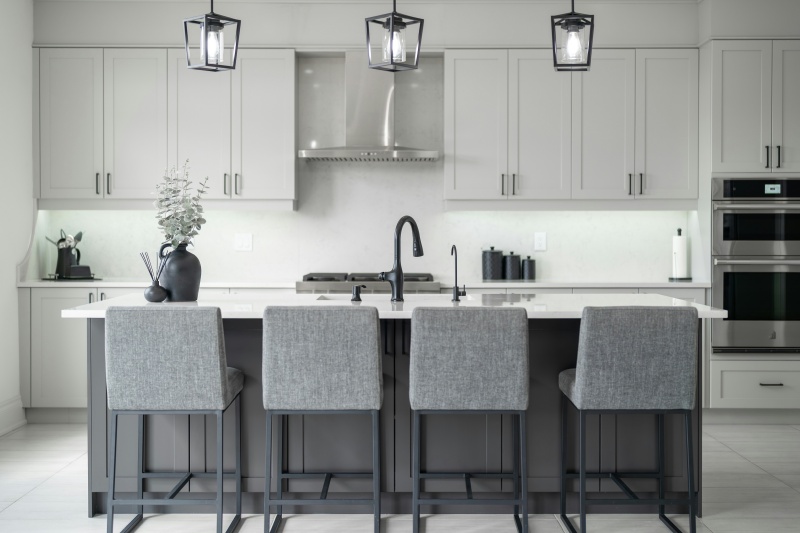
Not all plywood is suitable for kitchen use. In accordance with the official grading standards from the American National Wood Flooring and Cabinet Association, plywood is categorized into the following types:
3. Standard Thickness of General Cabinet-Grade Plywood
The required thickness of plywood varies by cabinet position and cabinet type, which falls into two main categories: framed cabinets and frameless cabinets.
Reasons Why Plywood Is the Top Choice for Kitchen Cabinets
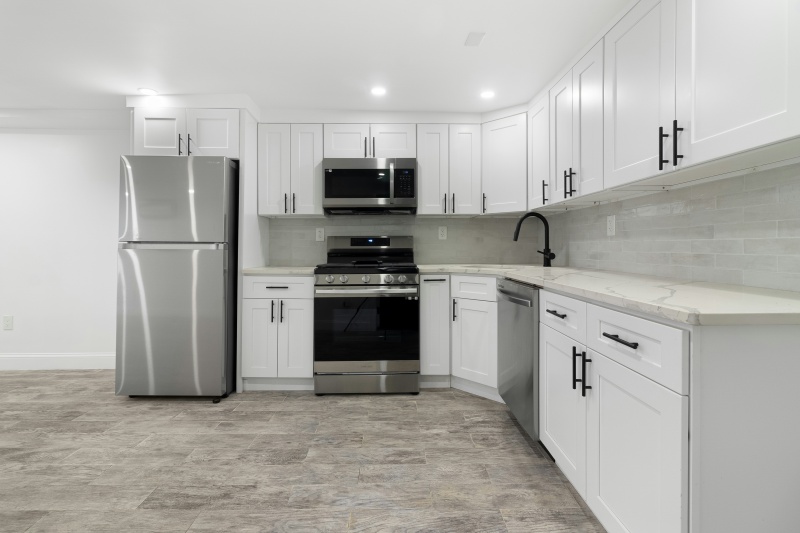
Plywood has become the preferred material for kitchen cabinets due to its outstanding performance and competitive pricing, along with multiple practical advantages:
1. Excellent Moisture Resistance
Kitchens are high-humidity spaces constantly exposed to water vapor and oil stains. Thanks to its special structure, plywood effectively resists moisture and rarely deforms or warps even in damp conditions. It is especially ideal for areas prone to moisture, such as under sinks and next to dishwashers.
2. High Strength and Load-Bearing Capacity
Cabinet durability is also related to hardware fittings. Plywood has strong screw holding power, ensuring firm installation of hinges, screws and shelf brackets with little risk of loosening. Its multi-layer structure distributes stress evenly, delivering great resistance to bending and cracking. It can easily support heavy items like cookware and kitchen appliances, keeping cabinet bodies stable and long-lasting.
3. Good Workability
Plywood is easy to cut, drill and sand, with minimal edge chipping. It is suitable for crafting complex cabinet components such as curved doors and irregular drawers, meeting diverse design requirements. Its easy processing also helps control production costs.
4. Higher Cost Performance Than Solid Wood
Plywood offers performance comparable to solid wood at a lower cost. While it is priced higher than MDF and particleboard, it delivers a longer service life and better overall performance, making it great value for money.
5. Eco-Friendly Properties
Premium plywood uses eco-friendly adhesives with far less glue content than MDF and particleboard. It features extremely low formaldehyde emissions, complying with U.S. CARB P2 and European E0 environmental standards. It is safe for household use, even for families with children and pregnant women.
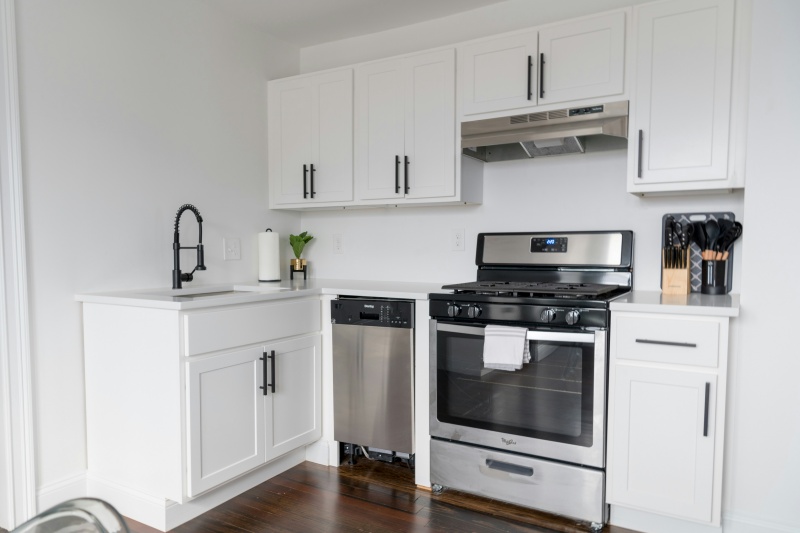
Drawbacks of Using Plywood for Kitchen Cabinets
The main downside of plywood is its relatively poorer surface flatness compared with MDF and particleboard, which may result in slight unevenness or inconsistent wood grain. When used for cabinet doors, this may affect the overall aesthetic. The issue can be resolved through surface veneering, painting and other finishing processes.
Plywood vs. Other Mainstream Kitchen Cabinet Materials
| Material | Moisture Resistance | Screw Holding Power for Hardware | Load-Bearing Capacity | Machinability | Cost |
| Hardwood Plywood | Excellent | Top-tier | High | Good | Medium-High |
| Particleboard | Poor | Weak | Medium | Average | Low |
| MDF | Very Poor | Medium | Medium-Low | Easiest to Machine | Medium |
| Solid Wood | Good | Top-tier | Very High | Relatively Difficult to Machine | High |
| Marine-Grade Plywood | Fully Waterproof | Top-tier | Above Average | Difficult to Machine | Medium-High |
Suitable & Unsuitable Kitchen Scenarios for Plywood
Kitchen Scenarios Where Plywood Is Preferred
Kitchen Projects Where Plywood Is Not Recommended
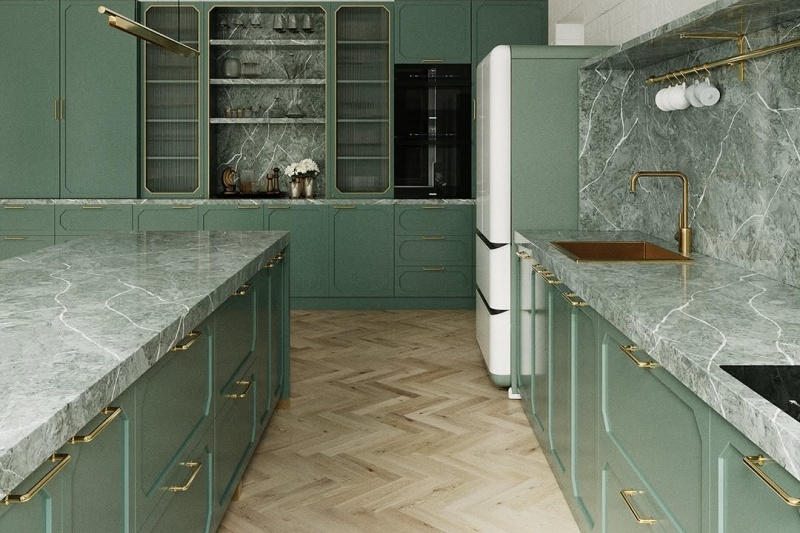
Selecting Plywood Cabinets for Different Kitchen Layouts
Small-Sized Kitchens: White flat plywood painted kitchen cabinets are the top choice. The white finish brightens the space, while the flat-panel design delivers a minimalist look without visual bulk or heaviness. Other light-colored cabinet styles are also acceptable. Dark matte plywood cabinets are not recommended.
Large Apartments & Open-Plan Kitchens: Options such as blue slim shaker plywood kitchen cabinets and double shaker white painted plywood framed kitchen cabinets are highly recommended. The layered door designs add depth to large spaces and prevent a dull look. There is no risk of a cramped feel regardless of the color chosen.
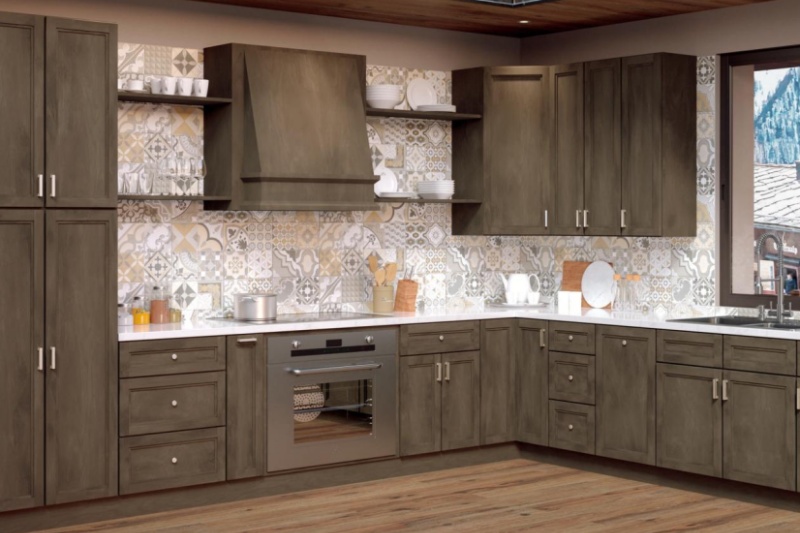
Summary: Is Plywood Suitable for Kitchen Cabinets?
Plywood stands out as the overall best engineered wood material for kitchen cabinets in residential homes. It balances structural stability, moisture resistance, durable hardware performance, eco-friendliness and reasonable cost. Its comprehensive advantages cannot be matched by solid wood, MDF or particleboard.
When sourced from qualified cabinet manufacturers with premium plywood, finished plywood cabinets far outperform economy-grade engineered wood products in durability. As a reputable Vietnamese cabinet wholesaler, Union Wood provides plywood products with a service life of over 20 years. For low-cost renovations or properties intended for short-term resale, particleboard serves as a more budget-friendly alternative.


 Newsletter
 Español
 IPv6 network supported