
What Are You Looking For?
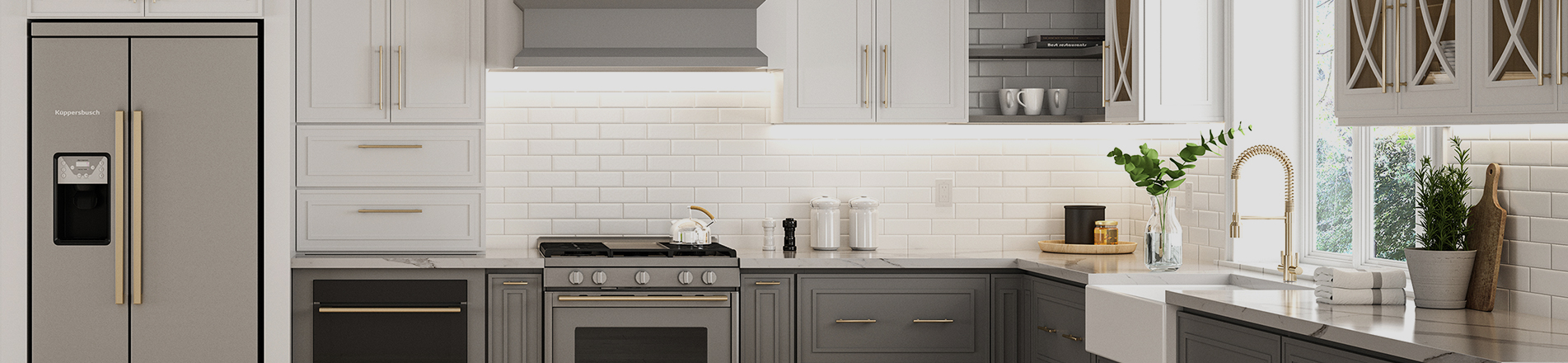
Classic Shaker cabinets and Slim Shaker cabinets are not separate, independent design styles, but rather two core branches within the same Shaker design system. Both deeply carry forward the Shaker philosophy of “clean lines, practicality, and understated quality,” inheriting the design principle of “simplicity and function first.” Redundant lines are removed, and value is expressed through the pure beauty of structure.
In kitchen design, there are few styles that can perfectly blend timeless tradition with modern design, yet Slim Shaker achieves exactly that. It retains the warm, tactile quality of the classic style while fitting current kitchen trends with its slimmer lines and minimalist spirit. This unique combination has made it highly popular—something that traditional Shaker does not offer.
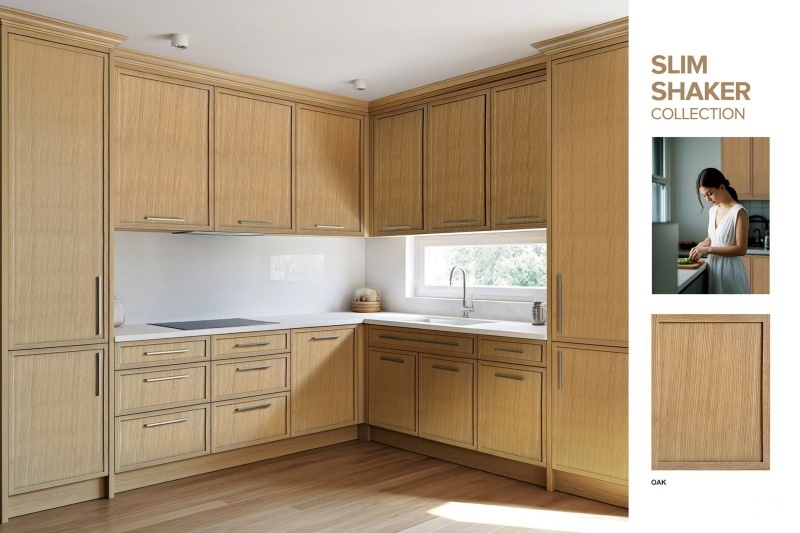
Core Difference: Frame Width
The most essential difference between Shaker and Slim Shaker lies in the width of the frame—the horizontal and vertical borders that form the outer edge of the cabinet door. Traditional Shaker frames typically range from 2.5 to 3 inches wide, while Slim Shaker frames are significantly narrower, usually measuring just 0.5 to 1 inch. This single detail directly determines the visual weight of the cabinets and their suitability for different design styles.
1. Classic Shaker Kitchen Cabinets: Substantial, Stable, and Full of Character
Traditional Shaker cabinets feature a wide-frame design, often 2.5 to 3 inches wide. This thick frame is the signature characteristic of the style, designed in strict accordance with original Shaker furniture principles. The wide frame gives these cabinets a medium to heavy visual weight, with a solid, stable, and distinctive presence. They are ideal for spaces that aim for warmth and a traditional, timeless atmosphere.
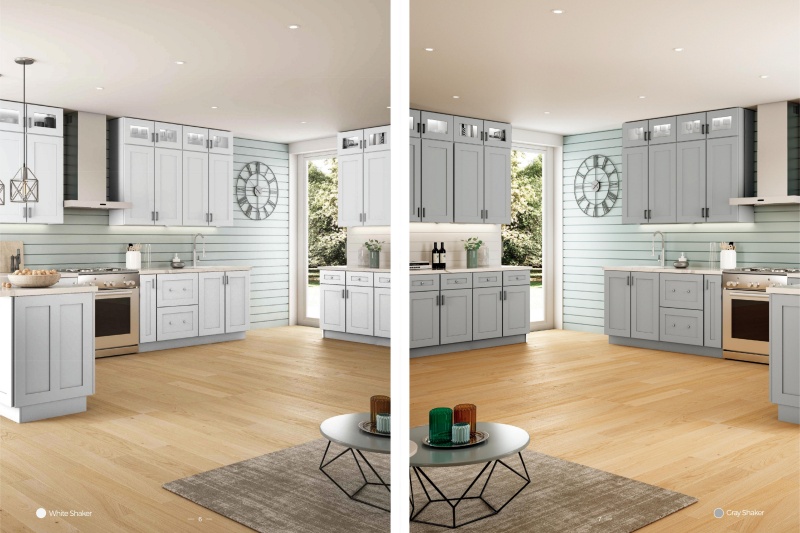
2. Slim Shaker Kitchen Cabinets: Sleek, Fluid, and Modern
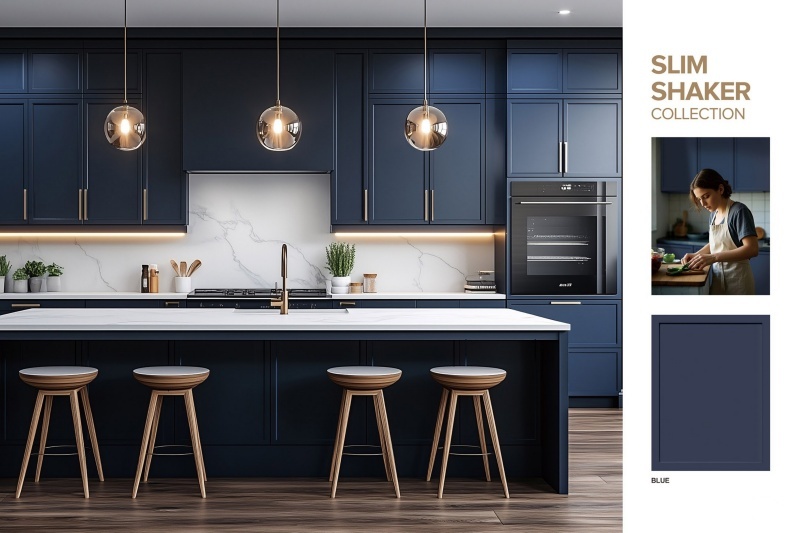
Slim Shaker kitchen cabinets—also known in the industry as “narrow-frame Shaker” or “micro-frame Shaker”—are modern innovations based on the traditional Shaker door design. With frame widths typically ranging from 0.5 to 1 inch, their slender profile creates a sleek, contemporary look. While retaining the durability of solid wood construction, they embody the essence of minimalist design, making them an excellent choice for modern-style kitchens.
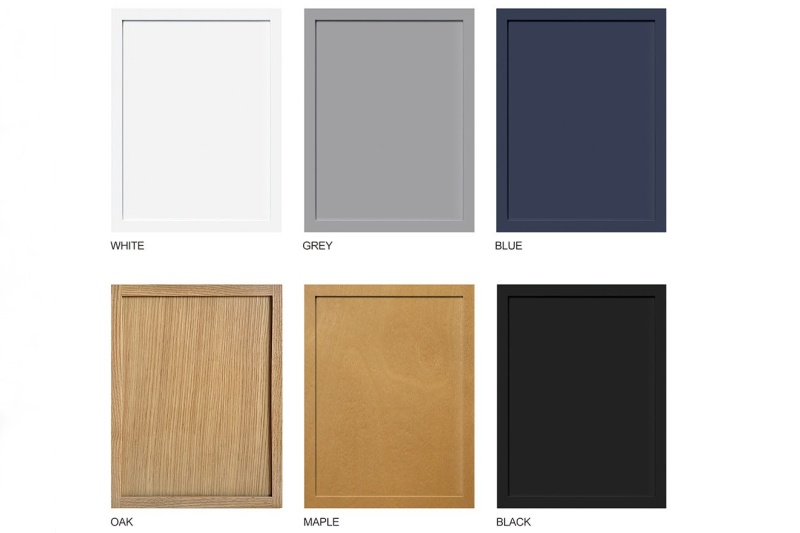
Slim Shaker: Core Feature Analysis
Sleek Profile:
Stiles and rails are kept to around 0.5–1 inch, giving a lighter, less bulky look.
Balanced Texture:
Cleaner and sharper lines than traditional Shaker; compared to slab doors, they add wood grain and more visual depth.
Versatile Style:
Works well with many styles. Different colors and hardware combinations can fit most kitchen décors.
Easy to Clean:
The center panel is less deeply recessed, so it collects less dust in daily use and is easier to maintain than standard Shaker doors.
Slim Shaker vs. Other Cabinet Door Styles
In addition to the differences between Slim Shaker and the traditional Shaker style, there are also significant distinctions when compared to other styles. Each style has its own unique advantages, and understanding these differences helps explain why Slim Shaker has become so popular. The following is a comprehensive comparison based on various factors.
| Feature | Slim Shaker | Shaker | Raised Panel | Slab Door |
| Frame Width | 0.5 - 1.5 inches | 2.5 - 3 inches | 2.5 - 4 inches | Frameless |
| Visual Weight | Light & Airy | Medium to Heavy | Heavy & Full | Ultra-Minimal & Light |
| Style Compatibility | Modern, Elegant | Traditional, Farmhouse | Luxury, Classical | European, Minimalist |
| Maintenance Difficulty | Simple | Medium | Complex | Simple |
| Price Range | Medium | Medium | High | Low to Medium |
Practical Differences Between Shaker and Slim Shaker Styles
Beyond the aesthetic differences, there are several practical factors to consider. What are the specific distinctions?
Slim Shaker is easier to maintain. Its narrow rails and shallow center panel are less prone to accumulating dust and grease compared to the wider frames of a standard Shaker. Cleaning simply requires a quick wipe, whereas Shaker demands more effort to clean the deeper grooves of the frame, making maintenance more difficult.
Hardware choices for Slim Shaker require more consideration. Oversized handles can compromise the delicate look of the narrow frame and disrupt the overall aesthetic. Therefore, it is best to choose compact hardware for a more harmonious appearance. In contrast, standard Shaker is more forgiving, accommodating a wider range of hardware sizes. Even highly decorative pieces rarely upset the overall balance.
Both Shaker and Slim Shaker fall into a mid-range price bracket. Although Slim Shaker uses less solid wood for the frame, this does not necessarily make it cheaper. The reason is that it requires a higher level of manufacturing precision, which offsets the cost advantage gained from using less material.
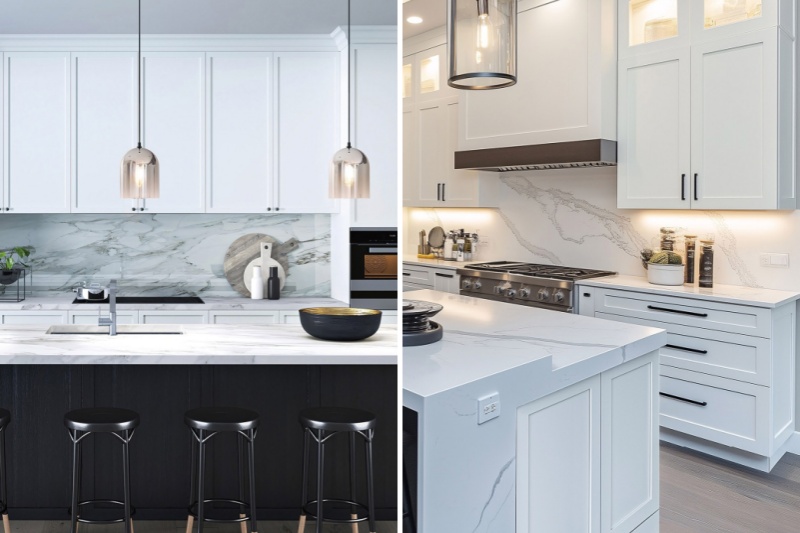
Material Selection for Cabinet Doors
The choice of materials directly determines the aesthetic quality and lifespan of Shaker and Slim Shaker cabinets. Different materials offer distinct advantages, and the decision should be based on budget, functional requirements, and design goals. While the cabinet doors wholesaled by our Vietnam factory adhere to a unified standard, customization is available for doors made from other materials.
Solid Wood Frames:
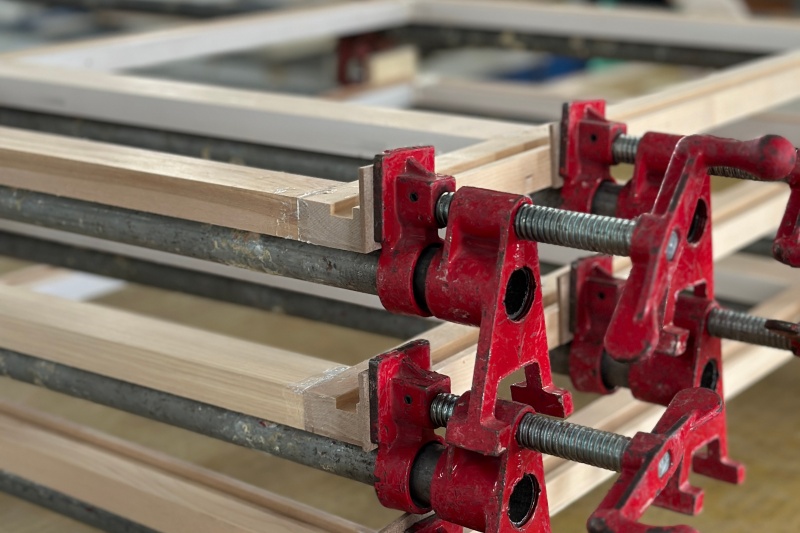
Solid wood is the preferred material for both Shaker and Slim Shaker styles. Therefore, the cabinet doors we supply feature solid wood frames, with maple and oak being the most widely used. Solid wood offers exceptional durability, and using it for the door frame significantly extends the overall lifespan of the cabinet door.
MDF Center Panels:
We uniformly use MDF (Medium-Density Fiberboard) for the center panels. MDF provides a smooth and flat surface, making it ideal for various finishing processes such as staining or painting. Furthermore, MDF is not susceptible to humidity-induced expansion or contraction, which effectively reduces the risk of paint cracking and joint loosening. It also offers excellent value for money, being more affordable than solid wood.
Common Pitfalls and How to Avoid Them
By avoiding common mistakes, you can ensure that Slim Shaker cabinets integrate better into your kitchen, maximizing both their aesthetic and practical value.
1. Hardware Size Imbalance (The Most Common Pitfall)
Oversized hardware can disrupt the delicate aesthetics of the slim frame, leading to a sense of disproportion and ruining the overall look. If you are unsure about the best choice, as a professional kitchen cabinet supplier, we offer expert design services. We can provide you with 3D renderings to give you a clear and intuitive preview of the final kitchen design.
2. Inferior MDF Causes Future Problems
Low-quality MDF is susceptible to kitchen humidity and temperature changes, often resulting in warping. It is crucial to choose a reliable kitchen cabinet supplier. At Union Woods, we use only high-grade timber for our kitchen cabinets, so you won't encounter such issues.
3. Ignoring Proportional Balance Creates Spatial Discomfort


 Newsletter
 Español
 IPv6 network supported