
What Are You Looking For?
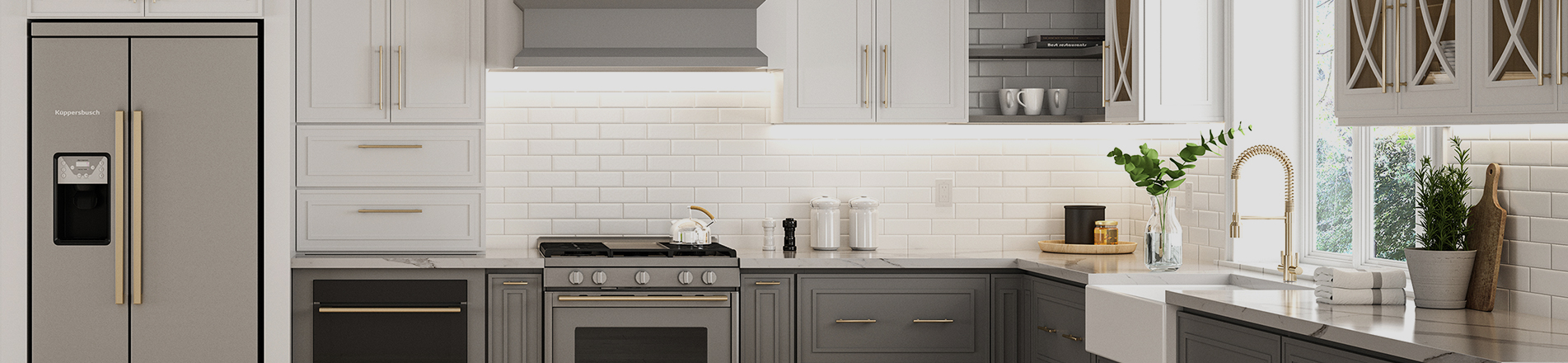
To create a practical and‑durable kitchen space, kitchen cabinets serve as the functional backbone of the kitchen and play a vital role. Material selection for cabinets is of utmost importance, as it directly determines structural durability, daily‑use experience and long‑term renovation value. Among mainstream cabinet materials such as solid wood, MDF and particleboard, plywood has long been the preferred option for cabinet construction.
Plywood’s layered structure effectively addresses numerous pain points arising from harsh kitchen conditions. It avoids the thermal‑expansion‑and‑contraction issue of solid wood, the poor screw‑holding power of MDF, and the weak moisture resistance of particleboard. Accordingly, plywood offers multiple advantages for kitchen cabinets, including outstanding structural stability, load‑bearing capacity, dimensional stability, strong screw‑holding performance, high environmental‑safety standards, and broad application adaptability.
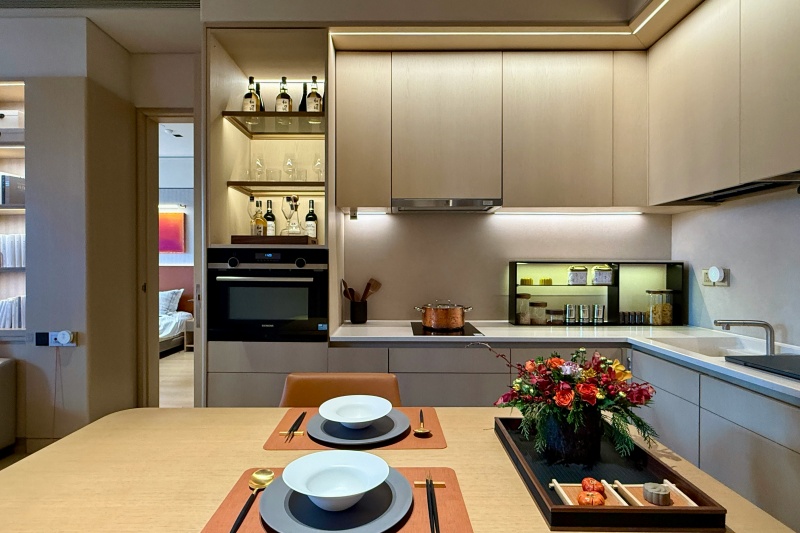
Cross‑Laminated Structure: Excellent Structural Stability and Load‑Bearing Capacity
Plywood’s core advantage stems from its distinctive cross‑laminated manufacturing process, which underpins its superior load‑bearing performance. It is assembled by gluing multiple thin solid‑wood veneers, with adjacent veneers stacked at a 90‑degree perpendicular grain orientation. This structure eliminates natural defects found in solid wood and single‑layer boards and delivers balanced stress distribution across all directions.
From a structural‑engineering perspective, solid wood exhibits strong anisotropy: tensile and compressive strengths differ drastically along and across the wood grain. Uneven stress frequently causes warping, twisting and cracking. In contrast, plywood’s cross‑laminated design counteracts directional wood stress, granting uniform tensile and bending properties plus high structural rigidity. When used for kitchen cabinets, plywood supports heavy loads effectively. Base cabinets and kitchen islands can reliably carry stone countertops and large‑size cookware without local deformation or long‑term sagging.
Compared with common low‑cost alternatives such as MDF and particleboard, high‑quality American‑standard plywood kitchen cabinets feature superior structural stability. MDF features a homogeneous single‑fibre structure and swells significantly upon water exposure. Particleboard is prone to internal particle delamination under compression. Plywood maintains stable structural performance under long‑term static loads and effectively prevents common failures including shelf bowing and cabinet frame twisting.
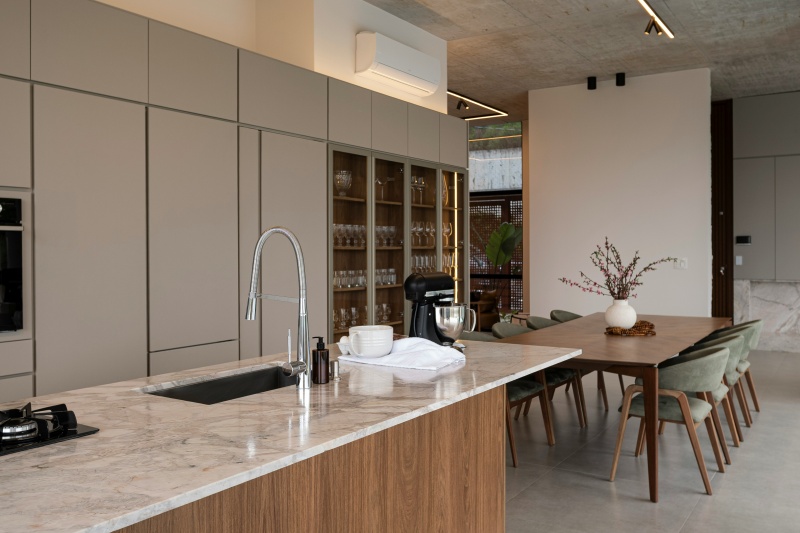
Superior Dimensional Stability for Fluctuating Kitchen Temperature and Humidity
The kitchen is one of the harshest indoor environments, featuring frequent temperature swings, high humidity and alternating dry‑wet cycles. Ordinary wood‑based panels are highly sensitive to environmental changes and tend to expand, contract, warp or grow mould, seriously shortening cabinet service life and spoiling appearance. Thanks to its optimised structural design and industrial gluing technology, plywood vastly outperforms conventional panels in environmental adaptability.
Its cross‑laminated layout delivers nearly identical expansion‑contraction ratios in both horizontal and vertical directions, greatly reducing overall dimensional‑change coefficients. Plywood kitchen cabinets therefore maintain tight door‑panel gaps, smooth‑sliding drawers and crack‑free panel joints even in humid kitchen conditions. Premium plywood also resists everyday kitchen moisture, water splashes and cooking fume degradation, sustaining long‑term structural integrity.
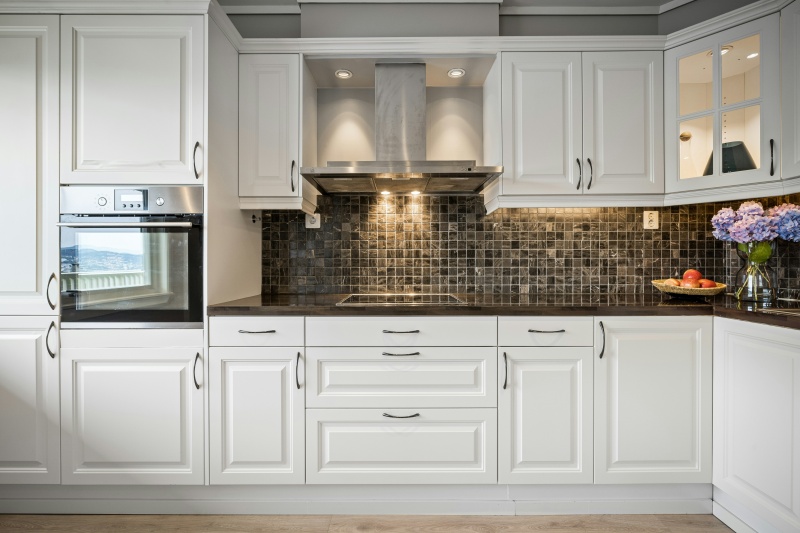
Exceptional Screw‑Holding Power for Secure, Long‑Lasting Hardware
Cabinet durability depends not only on panel quality but also on secure hardware connections. Hinges, drawer slides, shelf supports and fixing screws endure frequent stress in kitchen operation. Premature cabinet damage is often caused by loose screws and dislodged hardware. Plywood’s exceptional screw‑holding capacity fundamentally mitigates hardware loosening.
Plywood’s multi‑layer solid‑veneer structure enables deep, firm engagement between screws/hardware and interlaced wood fibres. Particleboard has loose internal particles and easily develops stripped threads after repeated disassembly and reassembly. MDF has fine, relatively soft fibres and weak screw retention. By comparison, plywood firmly holds hardware under prolonged frequent opening‑closing cycles and vibration. This is especially critical for flat‑panel plywood kitchen cabinets, where hinges mount directly onto side panels requiring robust screw‑holding performance — making plywood an ideal choice.
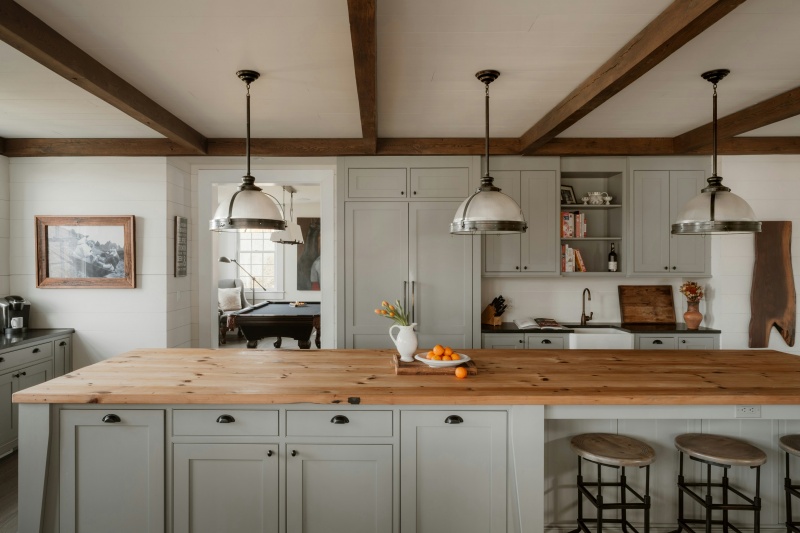
Low Formaldehyde Emission for Environmental Safety
Kitchens are often enclosed spaces, so cabinet material environmental grades directly influence indoor air quality and household health. Among all wood‑based panels, plywood delivers notable eco‑friendly benefits: it uses far less adhesive per unit area than MDF or particleboard. High‑grade plywood cabinets adopt environmentally compliant adhesives and meet internationally recognised standards such as E0 and CARB P2, yielding extremely low formaldehyde emissions to support long‑term household health requirements.
Long Service Life and Outstanding Total‑Cost Performance
Many consumers mistakenly believe plywood cabinets carry excessive upfront costs while overlooking their long‑term economic value. From a life‑cycle‑cost standpoint, plywood delivers far better overall value than substitute materials. Under normal conditions, high‑quality plywood kitchen cabinets can last over 15 years; with proper maintenance, service life extends to 20 years or more. By contrast, MDF and particleboard cabinets commonly suffer deformation, mould growth and hardware failure within less than a decade, requiring full replacement.
Although painted flat‑panel frameless plywood kitchen cabinets have slightly higher initial procurement costs than particleboard or MDF cabinets, they avoid hidden later‑stage expenses including repairs, hardware replacements, cabinet touch‑ups and complete renovations. For long‑term residential kitchens, plywood cabinets represent a low‑wear, high‑durability renovation investment. Versus all‑solid‑wood cabinets, plywood costs less while preserving natural wood grain texture and mechanical properties, and avoids solid‑wood drawbacks such as high purchase price and demanding maintenance. It serves as a highly cost‑effective premium cabinet substrate.
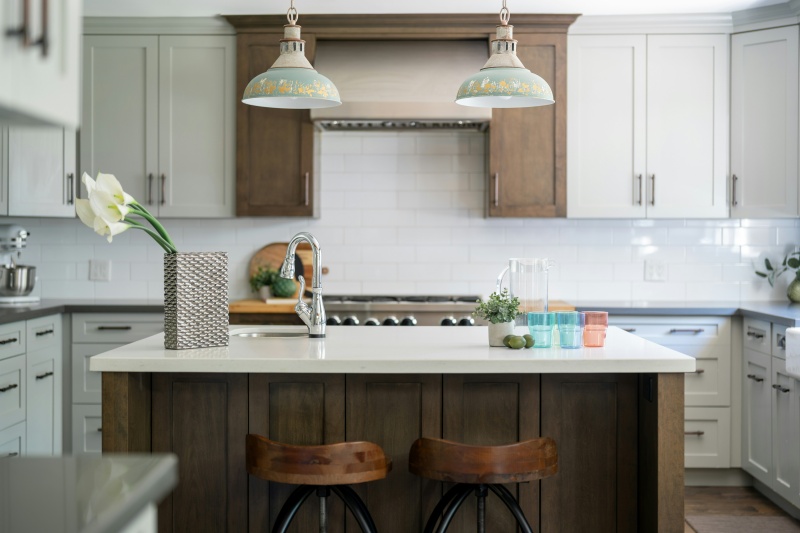
Wide Compatibility for All Kitchen Functional Zones
Thanks to its comprehensive performance strengths, plywood suits cabinet construction across every kitchen functional zone and is widely recognised in the industry as a versatile premium cabinet material. It is applicable for base cabinets, wall‑mounted upper cabinets, sink cabinets, kitchen islands, tall pantry cabinets and built‑in appliance cabinets — including load‑bearing and moisture‑prone areas.
For wall‑hung upper cabinets relying on hardware support, plywood safely bears stored weight and prevents detachment and deformation. For sink cabinets constantly exposed to moisture and splashes, moisture‑resistant plywood withstands humid conditions and stops mould and rot. For long‑span kitchen islands and open‑plan kitchen cabinetry, plywood’s anti‑sagging capability keeps countertops flat, stable and cabinet lines neat.
What Are the Benefits of Other Substrates for Kitchen Cabinets?
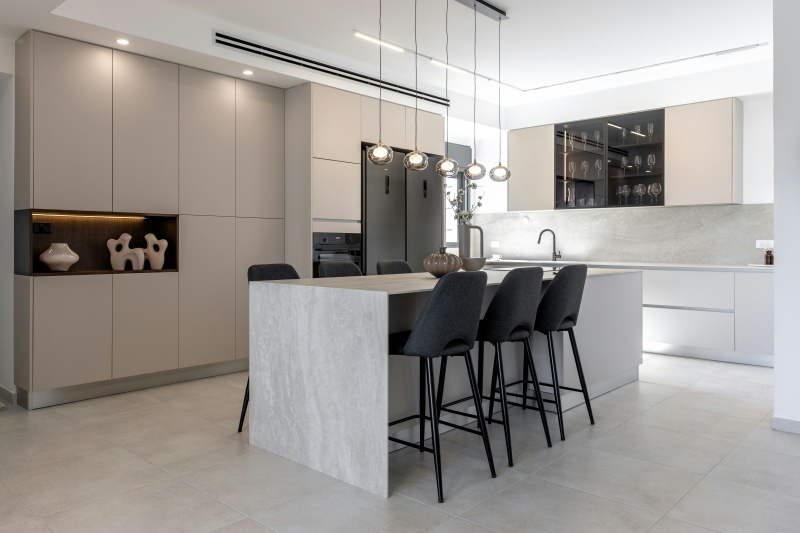
Conclusion
Kitchen cabinet materials must withstand complex operating conditions: high humidity, variable temperatures, heavy static loads and heavy‑frequency daily use. With its distinctive cross‑laminated construction, plywood perfectly matches cabinet functional requirements. It combines structural stability, moisture‑ and deformation‑resistance, hardware compatibility, environmental safety and long‑term durability. It is the preferred substrate for custom‑cabinet manufacturers and the most reliable material solution for long‑lived residential kitchens.
For homeowners pursuing high‑quality kitchen remodels, avoiding short‑service‑life low‑cost particleboard and MDF in favour of kitchen‑grade plywood from trusted wholesaler Union Woods is the key to building a durable, healthy and cost‑effective kitchen space.


 Newsletter
 Español
 IPv6 network supported