
What Are You Looking For?
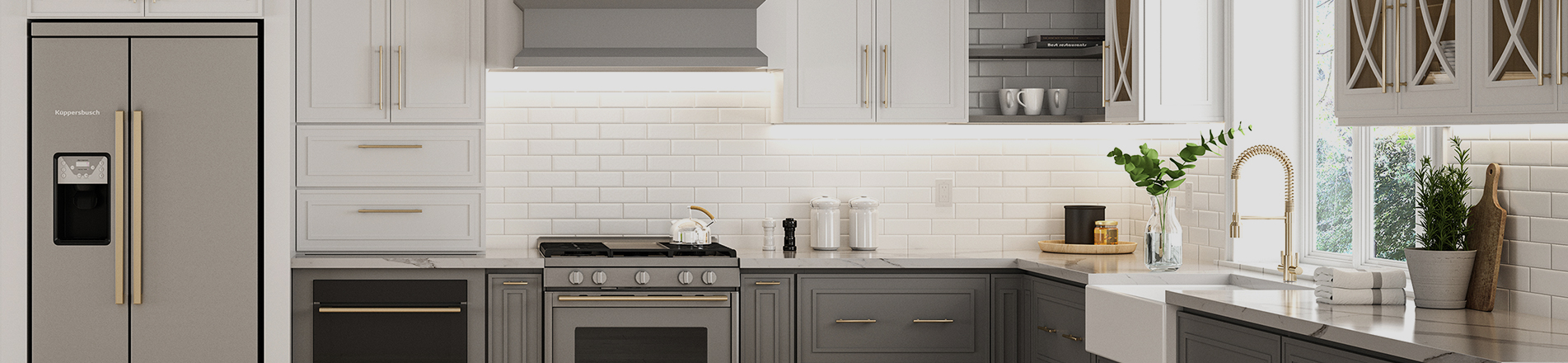
Oak is renowned for its distinctive grain, durability, and warm tones, making it a top choice for kitchen cabinets and furniture. However, oak’s price is as high as its quality. This leads many to ask: What wood looks like oak but is cheaper? They seek budget-friendly alternatives that retain oak’s iconic appearance.
Thanks to modern advancements, several hardwoods can be carefully processed to closely resemble oak visually while cutting costs. Additionally, engineered wood panels can mimic oak via veneering techniques. Woods with adaptable tones can also be stained to replicate oak’s classic hues and grain patterns. Thus, numerous viable oak substitutes exist.
Criteria for Evaluating Oak Substitutes
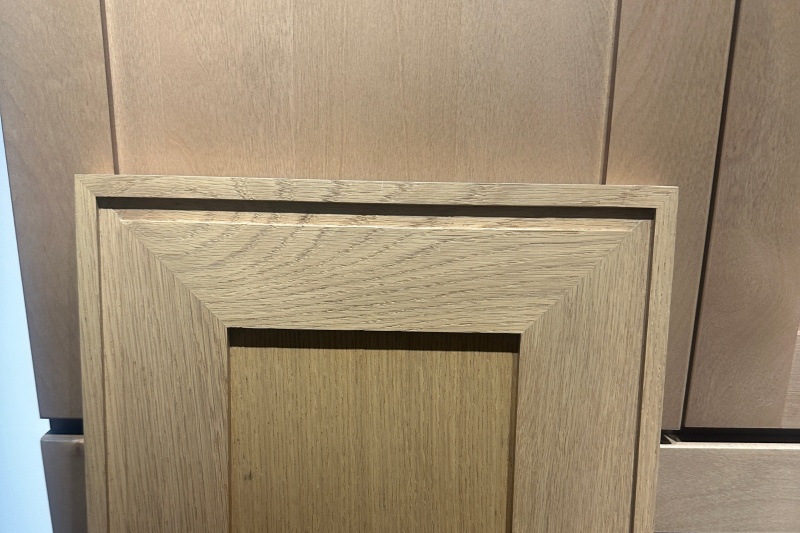
Before exploring which woods resemble oak, we first define oak’s key characteristics—and the specific traits substitutes must emulate—to help you assess suitable options:
Ash Wood: The Closest Hardwood Substitute for Oak
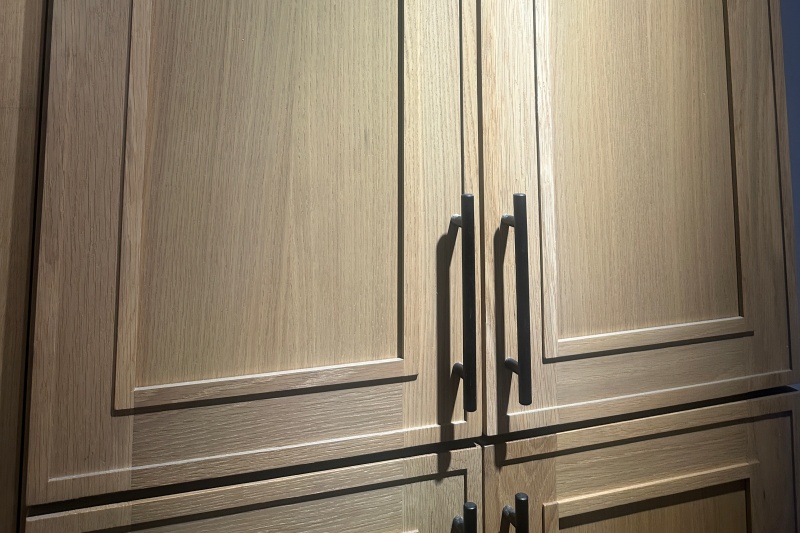
Ash is currently the hardwood that most closely matches oak in grain, texture, and practical performance. Native to North America and Europe, it costs less than oak and is the top choice for high-end custom projects as an oak alternative.
Appearance vs. Oak
Ash has a naturally pale tone with a fine, tight, and flowing grain—extremely similar to oak’s texture. Like oak, ash displays subtle medullary rays on quarter-sawn surfaces (though less prominent than oak). Its clear, fine grain absorbs stain evenly whether kept natural or tinted to oak’s creamy white, natural wood, or dark coffee shades. The warm base tone blends seamlessly with oak’s natural hues, producing a high-end finish without splotchy discoloration.
Durability & Workability
A durable hardwood, ash has a Janka hardness of 1,320 lbf—higher than red oak (1,290 lbf) and slightly lower than white oak (1,360 lbf). It is tough with excellent bending resistance, suitable for kitchen cabinets, furniture, flooring, and even sports equipment (e.g., baseball bats). Ash cuts, sands, and machines easily, with exceptional stain and paint adhesion. Professional staining can precisely replicate red and white oak’s color and grain.
Price Comparison
Choosing ash over white oak saves 30–50% in costs, with larger discounts for bulk purchases.
Soft Maple: The "Blonde Twin" of White Oak
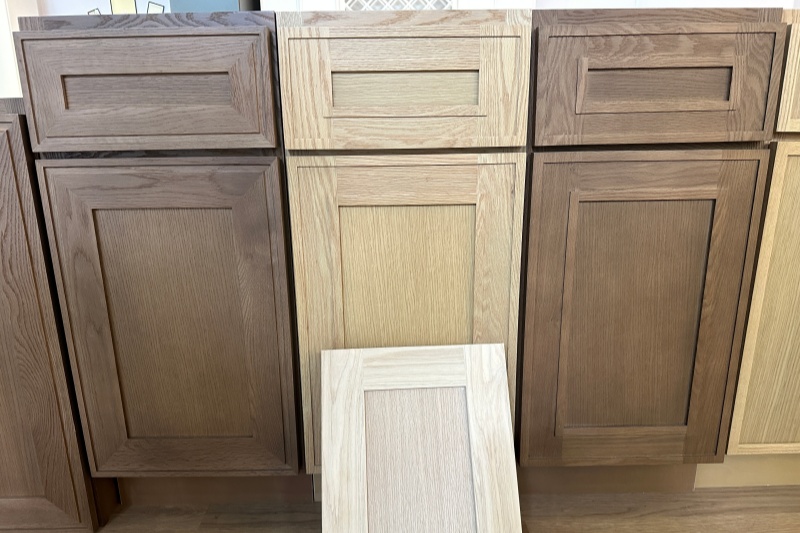
Soft maple is a hardwood with a pale creamy color, fine straight grain, and subtle texture—less pronounced than white oak’s grain. When stained or finished, it closely resembles white oak, though it lacks oak’s signature medullary rays. Durable enough for furniture, cabinets, and moldings, soft maple is easy to work with, widely available in North America, and 20–30% cheaper than white oak—making it an affordable oak-look option.
Birch: A Versatile Light-Colored Substitute
Birch is a hardwood with a light golden tone and a fine, straight, uniform grain (more consistent than oak). It lacks oak’s medullary rays but can be stained to mimic white oak’s fine texture. Its tight, smooth grain is ideal for projects requiring a clean, modern look—an all-purpose white oak alternative.
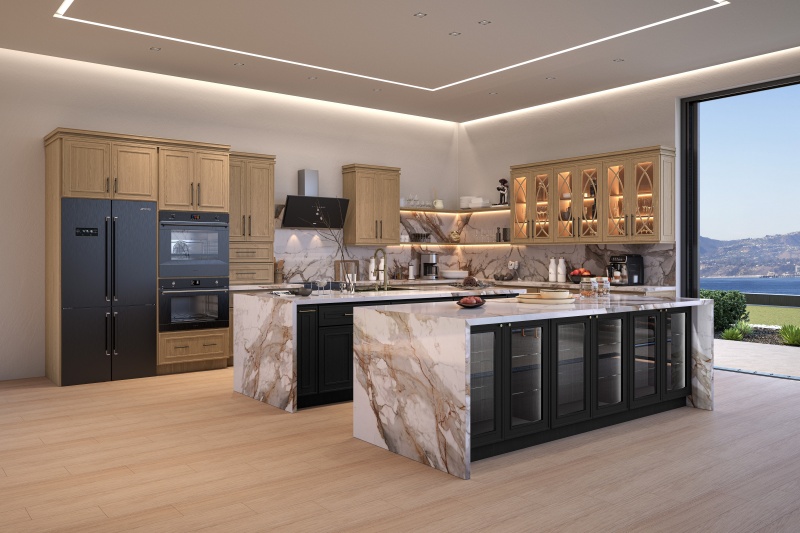
Birch has a Janka hardness of 1,260 lbf—very close to red oak (1,290 lbf) and slightly lower than white oak (1,360 lbf). Durable and scratch-resistant, it works well for furniture and cabinets. Its excellent workability ensures clean cuts, smooth sanding, and strong stain/paint adhesion—reliable for wholesale projects. Birch is widely available and 25–35% cheaper than white oak. Union Wood supplies lower-cost oak-look wood kitchen cabinets as an affordable alternative to white oak cabinets, with competitive pricing as a Vietnam-based cabinet wholesaler.
Poplar: The Budget-Friendly "Workhorse"
Poplar has a straight, uniform grain, consistent texture, and moderate density—one of the cheapest oak substitutes (up to 50% cheaper). It offers exceptional paint and glue adhesion, making it a cost-effective mainstream hardwood for whole-home customizations and cabinet frames. At roughly half the hardness of oak, poplar is one of Europe’s fastest-growing deciduous trees, reaching maturity in 10–20 years. An eco-friendly sustainable wood, it also sequesters carbon effectively during growth, aiding emissions reduction.
While its natural appearance differs significantly from oak, poplar’s straight, fine grain makes it an excellent base for staining. With veneering, it can replicate oak’s grain pattern and tone (though less convincingly than premium substitutes). Lightweight and easy to machine, poplar lowers transportation, installation, and processing costs. Its abundant, sustainably harvested supply avoids oak’s scarcity and high price—ideal for cabinet frames and door substrates as an oak alternative.
Engineered Wood: Plywood
When seeking affordable oak-look options, engineered plywood is a top choice. Unlike natural hardwood substitutes, plywood is man-made but offers outstanding performance. Using veneering, oak veneer is bonded directly to a plywood core—resulting in an identical appearance to solid oak.
Oak veneer is ultra-thin wood sliced or rotary-cut from natural logs, typically bonded to stable composite cores like plywood, particleboard, or MDF. Plywood is preferred for mimicking oak’s performance. More affordable than solid wood, engineered cores also offer greater stability—resolving solid wood’s issues with expansion, contraction, and cracking. Our factory direct supply of flat pack plywood kitchen cabinets is highly popular for these reasons.
Tips to Make Wood Look More Like Oak
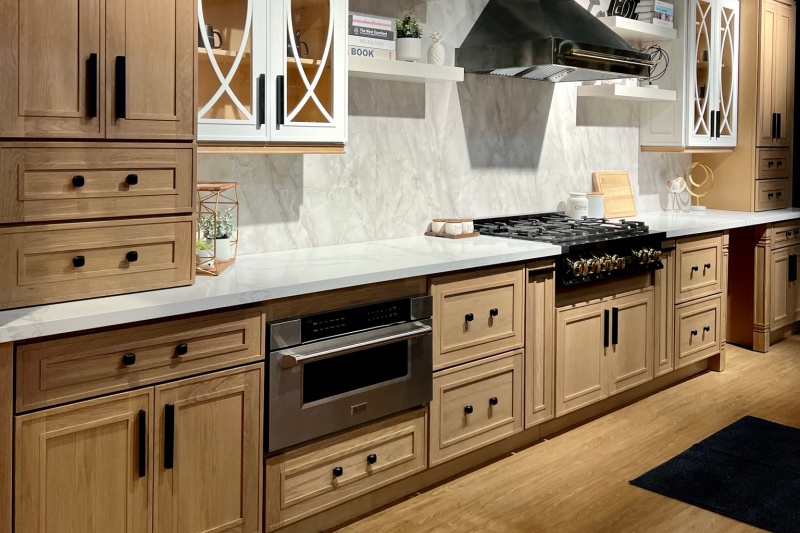
Even woods that naturally resemble oak require professional finishing for optimal results. Leveraging years of production experience, our Vietnam factory achieves exceptional oak replication with these key steps:
Final Verdict: Which Wood Is Right for You?
The best oak-look wood depends on your project, budget, and desired aesthetic:
Oak’s popularity is well-deserved—but it’s not the only wood with a timeless, classic look. Any of these alternatives let you save costs without compromising style or quality. Whether crafting dining tables, installing cabinets, or adding decorative moldings, these woods balance oak-like aesthetics with affordability. For high-budget projects, oak cabinets remain recommended. We offer oak slim shaker kitchen cabinets, oak shaker kitchen cabinets, oak double shaker painted framed kitchen cabinets, oak inset style kitchen cabinets at factory-direct prices.


 Newsletter
 Español
 IPv6 network supported