
What Are You Looking For?
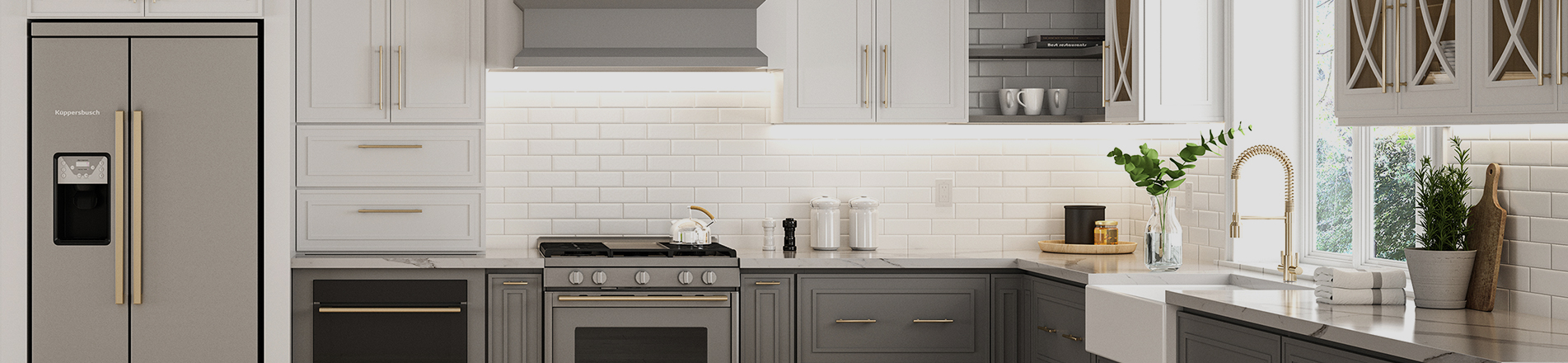
Both the kitchen and the bathroom are essential parts of a home, and they share one thing in common: both are relatively humid spaces. Cabinets used in these two areas are not just storage solutions, but also functional cores adapted to the unique needs of each space. So, is there a difference between kitchen and bathroom cabinets? The two do differ, yet they also have much in common.
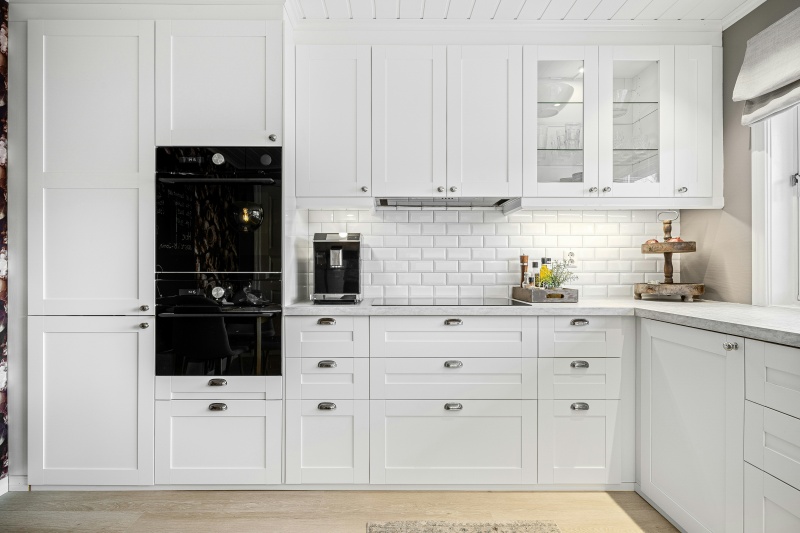
Differences in Storage Needs and Functions
The most fundamental difference between kitchen and bathroom cabinets lies in their purposes. The kitchen is a high-traffic, multi-functional space, so its cabinets need to store a wide variety of items, from small tableware to large appliances. In contrast, bathroom cabinets only need to hold toiletries and some small electrical appliances, resulting in functional differences tailored to these needs.
Kitchen Cabinets
As the heart of the home, kitchen cabinets endure daily wear and tear, given the high frequency of opening and closing doors, pulling out drawers, and placing cookware. This gives rise to several key requirements for kitchen cabinets:
Bathroom Cabinets
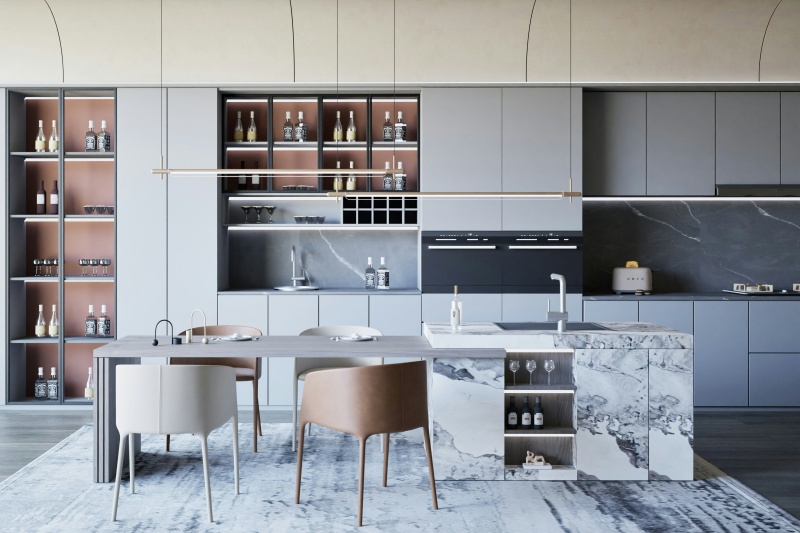
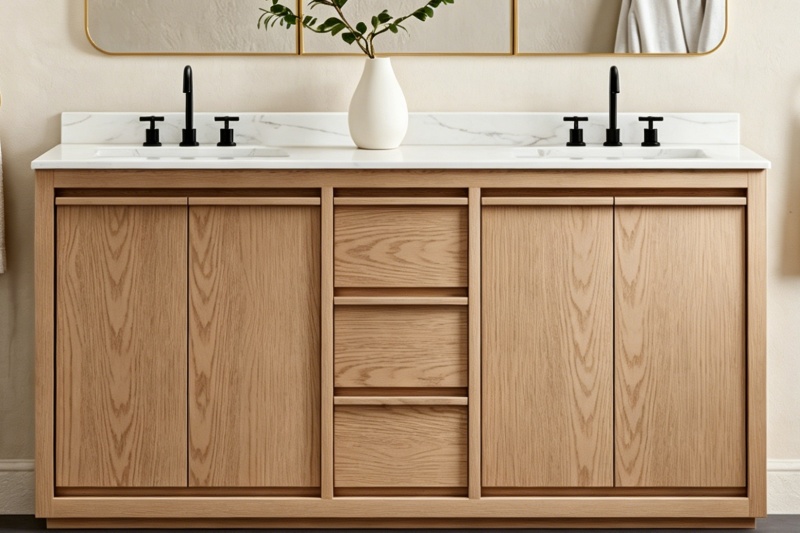
Bathrooms are smaller and more humid, so priority is given to storage and moisture resistance rather than load-bearing capacity, as the items stored are lightweight. It is necessary to maximize vertical space without occupying excessive visual space. The elegant wood floating bathroom vanity with sink is recommended, as it not only enhances the style of the bathroom space but also makes it appear more spacious, while the suspended underside provides extra storage space.
Differences in Structure and Hardware
The manufacturing process and hardware selection also vary greatly between kitchen and bathroom cabinets. Kitchen cabinet designs focus on load-bearing capacity and service life, while bathroom cabinets emphasize moisture resistance and convenience.
Kitchen Cabinet Structure and Hardware
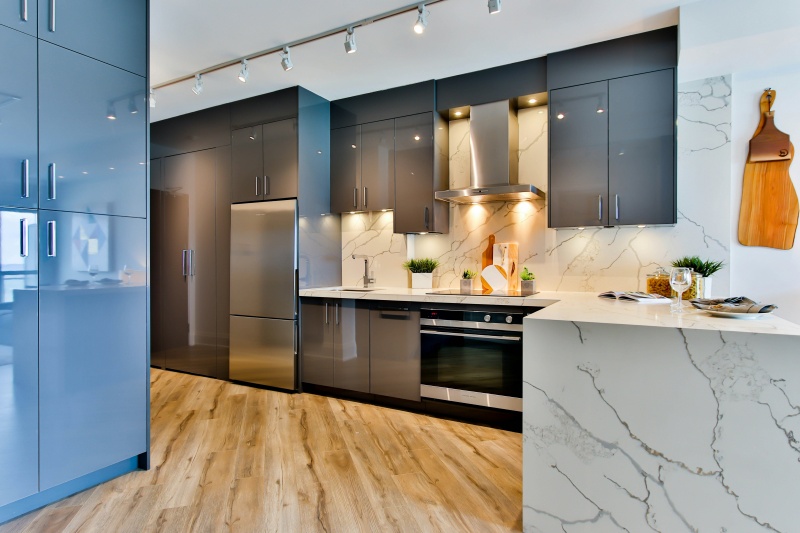
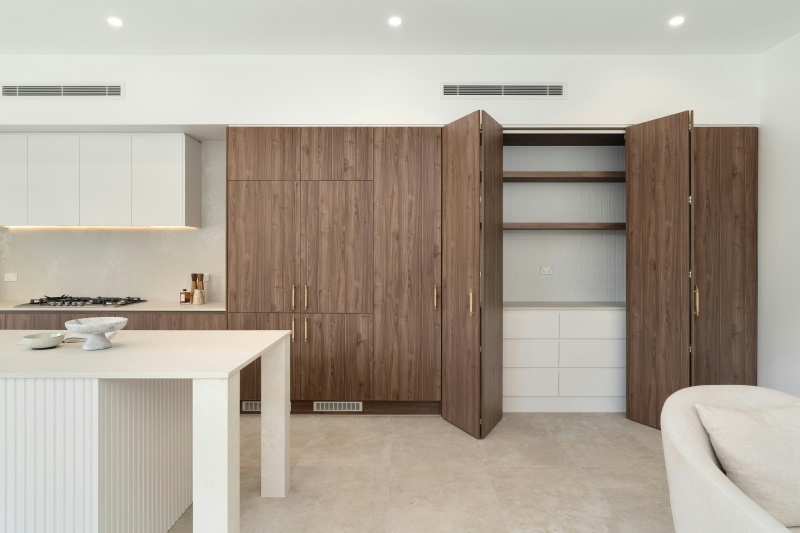
Kitchen cabinets feature thicker frames and sturdier partitions to support heavy loads. Cabinet structures are divided into framed and frameless styles: framed cabinets are more traditional and robust, while frameless cabinets offer larger internal storage space, with a more modern and convenient design.
Internal partitions of kitchen cabinets are made of 3/4-inch thick plywood to support heavy items, and are equipped with supports to prevent sagging. Drawers feature dovetail joints, with solid wood drawer boxes and full-extension slides for easy access to items at the back. Most hardware is heavy-duty for long service life.
Bathroom Cabinet Structure and Hardware
Bathroom cabinets have a lighter structure, with distinctive designs including floating and inset-style vanities that create an airy visual effect. They also have a higher number of drawers, as most stored items are small, and drawers allow for categorized storage and easier retrieval. Since load-bearing requirements are low, hinges and slides with basic moisture resistance are sufficient.
Differences in Dimensions
Standard base kitchen cabinets are larger than bathroom cabinets. In addition to base cabinets, kitchens can also be installed with wall cabinets, corner cabinets, and tall cabinets, which are rarely used in bathrooms, making them an inconsistent reference for comparison.
Differences in Plumbing and Electrical Reserve
Except for kitchen sink cabinets, most other kitchen cabinets generally do not have pre-cut openings or reserved space for water supply and drainage lines. In contrast, bathroom cabinets are designed with dedicated spaces for these pipelines.
Differences in Cost
Costs also differ between kitchen and bathroom cabinets, mainly due to variations in materials, dimensions, and quantity. Kitchens require more cabinets, while bathrooms typically have only one main vanity, plus at most small wall-mounted cabinets. Greater material consumption and longer installation times for kitchen cabinets lead to higher overall costs.
Although kitchen cabinets and bathroom cabinets differ in terms of storage needs and functions, structure and hardware, dimensions, plumbing and electrical reservations, and cost, they also share many similarities. This leads some people to ask: Can kitchen cabinets be used in the bathroom? The answer is yes! Many households use exactly the same style for kitchen and bathroom cabinets, as this approach offers several benefits:
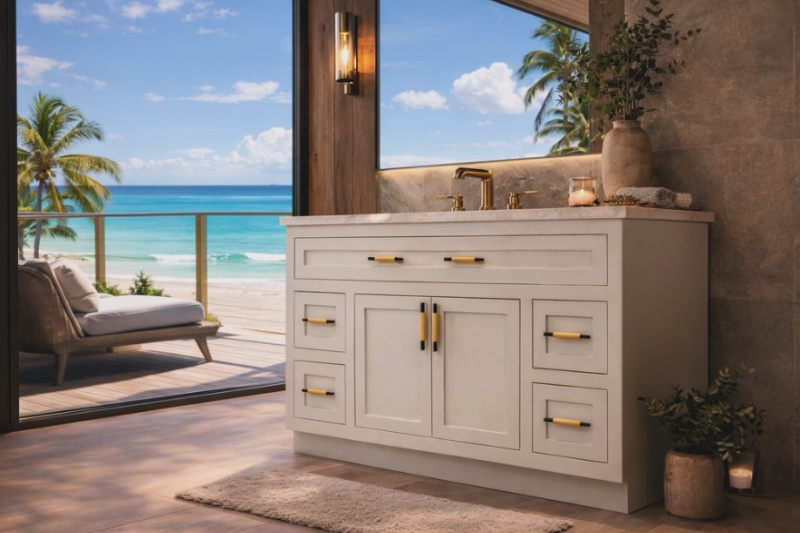
However, if you plan to use kitchen cabinets as bathroom vanities, some modifications are needed to compensate for their differences.
First, more floor space must be reserved, since kitchen cabinets are deeper than standard bathroom vanities, and the countertop should match this depth.
During installation, adjustments to drainage and electrical wiring may be required. Most of these issues can be avoided in advance by stating your needs at the time of purchase, so a customized plan for bathroom conversion can be created.
Union Wood designs based on your floor plans to create the most suitable cabinet solutions for your kitchen and bathroom. As a professional cabinet wholesaler, we also offer the most competitive prices for your projects to meet various requirements.
Conclusion: Choose the Right Cabinets for Your Space
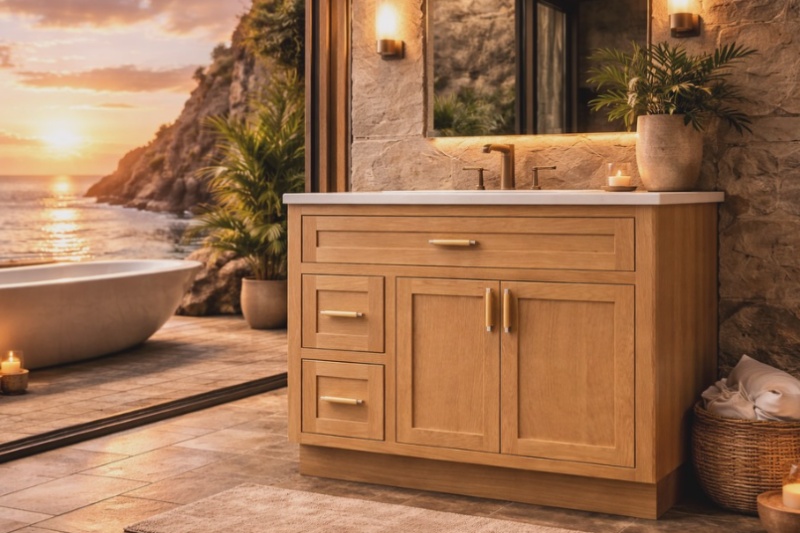
Ultimately, the differences between kitchen and bathroom cabinets mainly stem from environmental adaptability. They are designed for distinct usage needs. For kitchens, a wide range of cabinet series and styles are available based on function and aesthetics, among which Slim Shaker cabinets have become a popular choice for keeping up with modern trends. For bathrooms, moisture resistance is the key priority. An oak floor-standing bathroom vanity is an excellent option, offering great moisture resistance, a sturdy structure, and exceptional durability. Choosing the right cabinets enhances the overall beauty and comfort of your home.


 Newsletter
 Español
 IPv6 network supported