
What Are You Looking For?
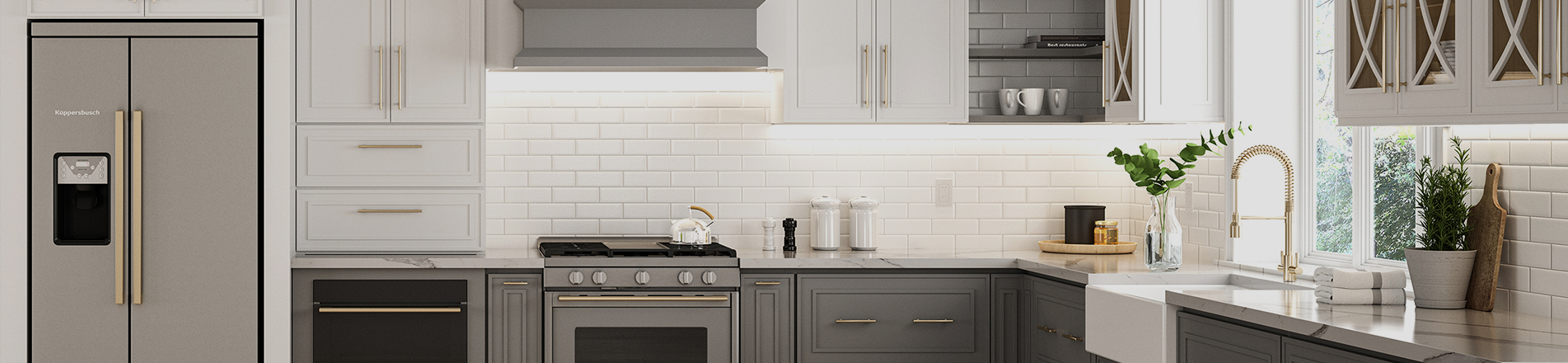
When you look into the base materials for kitchen cabinets, you will find that most kitchen cabinets are wood-based. There is a wide variety of wood species to choose from. Cabinets are also named differently based on manufacturing processes, surface finishes and door panel profiles, which can easily cause confusion and make selection difficult.
As an essential part of the kitchen, the material of door panels and cabinet boxes directly affects overall aesthetics, durability and user experience. What are the different types of wooden cabinets? Each material comes with unique performance, price range and application scenarios. We will analyze wooden cabinets from the perspectives of base material, cabinet construction, door overlay style and door panel profile.
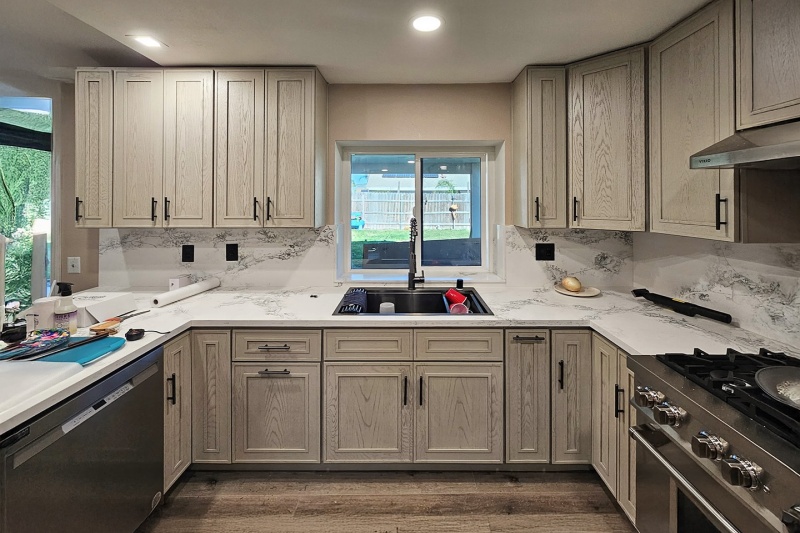
Classification by Base Material: Materials for Cabinet Boxes & Door Panels
This is the most common classification method for wooden cabinets. The type of a cabinet is defined by the core material of its cabinet box and door panels. In the engineering sector, the base material (the core substrate beneath paint, veneer or laminate film) determines the cabinet’s core performance.
1. Solid Wood
Solid wood panels are cut directly from raw logs, dried to a stable moisture content (typically 6%–8% for the North American market), and then processed into stiles and rails for door frames. It is the only substrate that can be repeatedly sanded, repainted and re-stained for renovation, making it the primary material for high-end cabinetry. Its main drawback is expansion and contraction caused by humidity changes, so MDF is often adopted for center panels.
Common wood species for cabinets and their characteristics:
| Wood Species | Grain Features | Typical Applications | Relative Cost |
| Oak | Hardwood, sturdy and durable with fine grain and olive-brown tone; naturally rot-resistant and moisture-resistant | Traditional Shaker, farmhouse, American retro styles | High |
| Hard Maple | Fine, uniform grain with pale color; takes paint evenly, ideal for spray finishes | Painted cabinets, modern minimalist kitchens | Medium-High |
| Cherry | Smooth grain with reddish-brown base tone; darkens gradually with light exposure | Traditional light luxury, formal finished spaces | Very High |
| Hickory | Strong grain contrast with alternating light and dark streaks, high hardness | Rustic styles, feature island profiles | High |
| Birch | Fine pale grain with good stability, suitable for painting | Painted door panels, mid-to-high transition lines | Medium |
| Rubberwood | Dense texture with fine pale grain; plantation timber, easy to obtain eco-certifications | Painted / stained mid-range doors, export RTA production lines | Medium-Low |
| Black Walnut | Rich chocolate-brown hue with layered grain patterns | High-end modern, luxury custom kitchens | Very High |
| Mahogany | Reddish-brown tone, durable, low shrinkage and good stability | European classical cabinetry, furniture | Medium-High |
2. Plywood
Plywood is an engineered wood product made of an odd number of thin wood veneers stacked crosswise and bonded under high pressure. Its cross-laminated structure largely counteracts warping and swelling, making it the most stable substrate for wide panels such as cabinet sides, bottoms and shelves. It performs especially well in kitchens and bathrooms. It boasts strong screw holding power, far better stability than solid wood, superior moisture resistance compared with MDF and particleboard, and low risk of deformation.
3. MDF (Medium-Density Fiberboard)
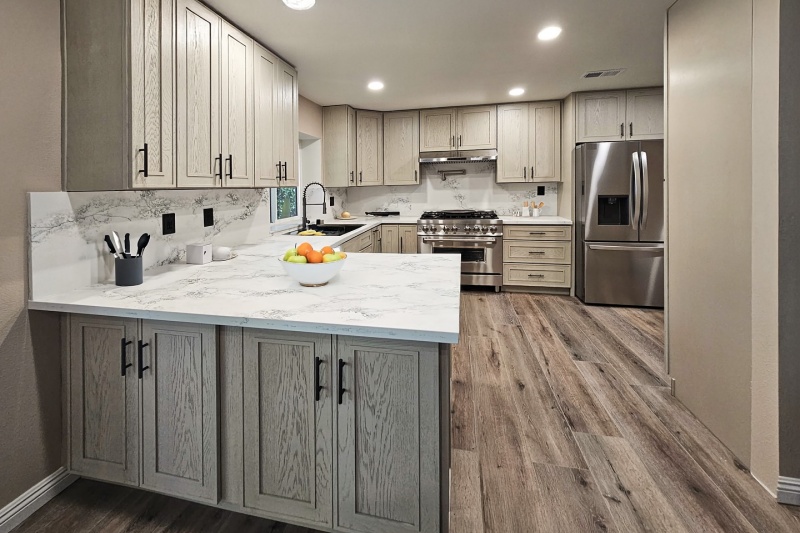
MDF is formed by hot-pressing wood fibers mixed with resin. It has a non-porous interior and an ultra-smooth surface that delivers crisp, clean machining results. It is the mainstream substrate for painted door panels in the industry. It does not warp like solid wood, and its paint finish will not show underlying grain. It is priced lower than solid wood and plywood. CNC machining works perfectly for center panels and flat doors, though its screw holding strength is weaker than plywood.
4. Particleboard
Particleboard is compressed from wood chips, shavings and resin binders. It uses less resin than MDF and is the lowest-cost engineered wood, ideal for large-volume project orders. Most affordable ready-to-assemble cabinets on the market use CARB P2 or E0 grade particleboard, usually surfaced with melamine paper or heat-transfer film. It is not recommended for applications requiring a service life longer than 15 years.
Classification by Cabinet Construction: Framed vs Frameless
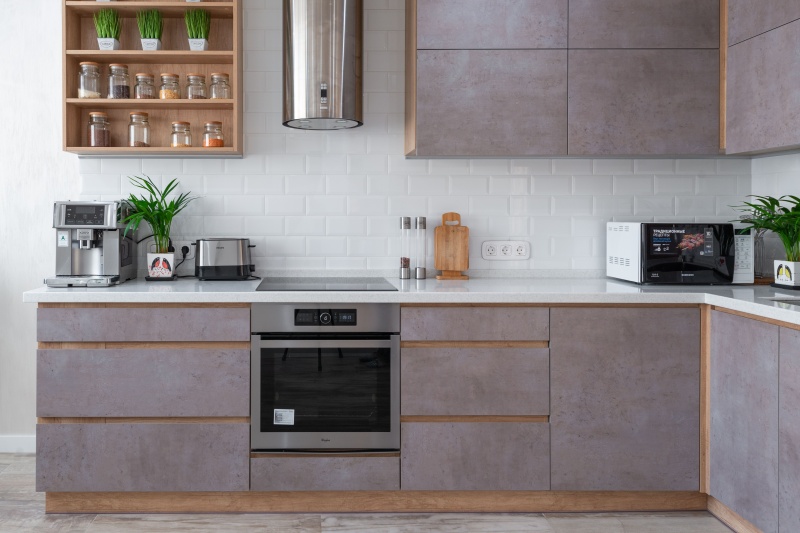
Besides base material, wooden cabinets can also be grouped by cabinet structure: framed wooden cabinets and frameless wooden cabinets. The core difference lies in whether a fixed solid wood face frame is fitted to the front of the cabinet opening.
1. Framed Construction (Traditional American Style)
American framed kitchen cabinets feature a solid wood face frame fixed around the cabinet opening, similar to a door frame. Doors and drawers are mounted onto this frame. It delivers a classic American, retro aesthetic with abundant door style options. The front frame boosts cabinet rigidity and reduces twisting or sagging. However, the frame occupies internal width and reduces the storage opening.
Framed cabinets are also easier to level, offering greater tolerance for uneven walls and old-home renovations to hide minor gaps. Hinges attach to solid wood, so door panels stay aligned over long-term use and are more durable than frameless cabinets.
2. Frameless Construction (European Style)
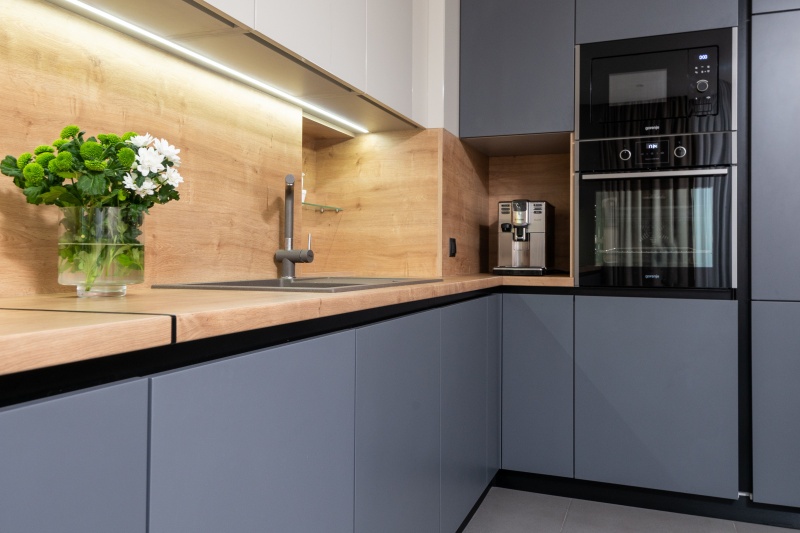
European frameless kitchen cabinets have no front face frame. Cabinet panels are typically thickened to 3/4 inch to compensate for lost rigidity. Doors and drawers mount directly to the thick cabinet box, creating a clean, minimalist European look favored for modern, Nordic and minimalist designs.
Removing the face frame gains roughly 10% extra interior space. On the downside, without a face frame for rigidity and gap concealment, frameless cabinets rely heavily on flat walls. Uneven walls or misaligned installation can lead to warped doors or inconsistent gaps. Precise leveling by experienced installers is mandatory, making installation tolerance much tighter.
Classification by Door Overlay: Assembly Relationship Between Door Panels and Cabinets
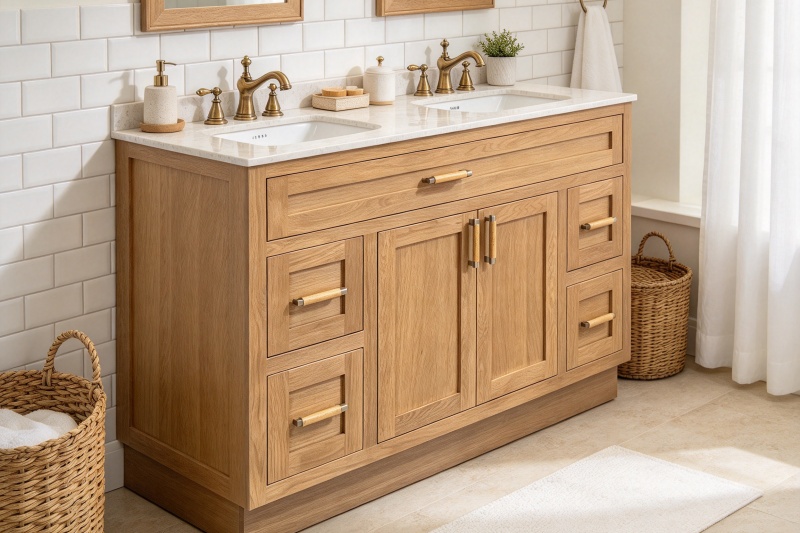
Wooden cabinets can also be categorized by door overlay. While this classification is less commonly used, the mounting style affects visual appearance. The three types are full-overlay doors, half-overlay doors and inset doors. Full-overlay cabinets are the most popular and compatible with both framed and frameless boxes. Half-overlay and inset doors are only fitted to framed cabinets.
Classification by Door Panel Profile: Front Door Styles
Door profile is the most intuitive way to differentiate wooden cabinets. Different profiles create distinct visual effects, and many buyers select cabinets based on personal preference. Popular styles include Shaker wooden cabinets, flat panel wood cabinets, slim Shaker wooden cabinets, raised panel wooden cabinets, plus our Vietnam cabinet factory’s exclusive Iris door panel design.
Classification by Space & Functional Application
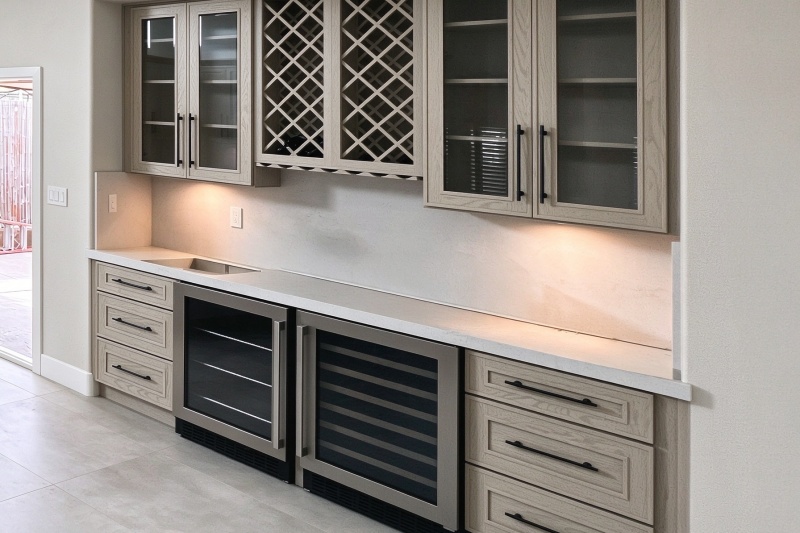
Different environments impose different performance requirements on panels:
Conclusion
When selecting wooden cabinets, evaluate from multiple dimensions instead of focusing solely on door style. Pay close attention to base material and cabinet construction: the substrate determines long-term durability, while construction and door overlay define appearance and installation difficulty.
Wooden cabinets vary widely in performance and price. Your final choice should align with your budget and requirements. Given the broad range of wooden cabinet options, you may reach out to a reliable supplier — Union Wood from Vietnam. Its professional design team can assist with cabinet design and material selection tailored to your needs.


 Newsletter
 Español

 IPv6 network supported