
What Are You Looking For?

According to data from Vietnam’s Ministry of Agriculture and Environment, Vietnam’s timber and wood product exports reached USD 1.62 billion in September 2026. The cumulative export value for the first three quarters neared USD 13.43 billion, representing a 7.3% year-on-year increase. The United States remained Vietnam’s top overseas market for forest products, accounting for 50.1% of total export revenue.
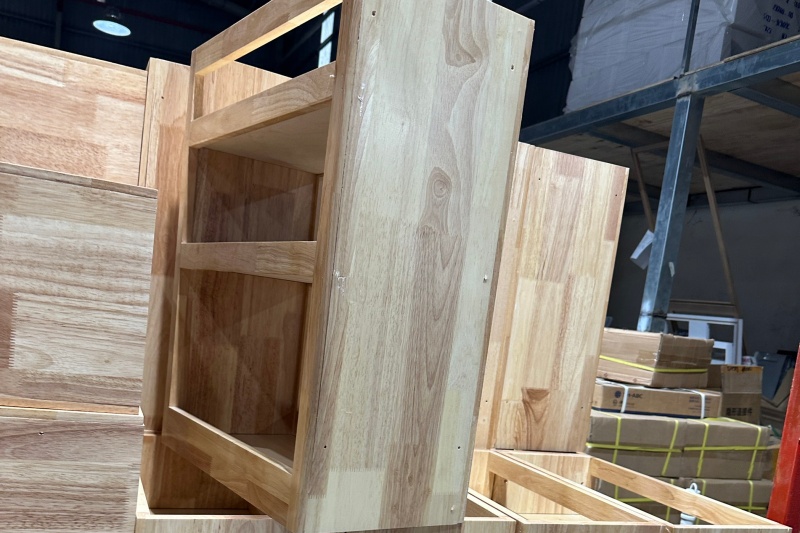
Performance varied widely across overseas markets. In the first three quarters, Vietnam’s wood product exports to the US fell 4.6% year-on-year, while other markets saw modest growth. Among the 15 major export destinations, Belgium posted the most dramatic growth, with export volume surging 2.4 times. India recorded the sharpest contraction, down 25.9% year-on-year.
Plantation forest resources and harvesting supply underpin the growth of Vietnam’s timber industry. In Q3 2026, around 70,600 hectares of new contiguous plantation forests were established, a slight 1.2% year-on-year decline. Some 19.9 million seedlings were planted in scattered sites, unchanged from the same period last year. Total timber harvest volume hit 7.0894 million cubic meters, up 6.0% year-on-year.
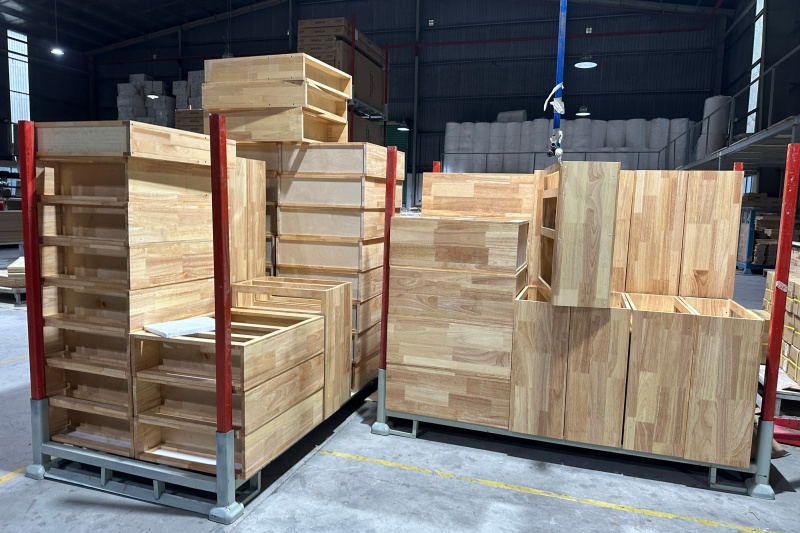
For the first nine months, total contiguous forest planting reached 215,800 hectares, a 3.0% year-on-year drop. The main cause was large-scale replanting across multiple regions in 2025 after Typhoon Mujigae, which depleted available land reserves for afforestation. Quang Ninh reported a steep decline of 55.4%, with decreases also recorded in Lai Chau, Cao Bang and Lang Son. Meanwhile, 71.3 million seedlings were planted in scattered sites, rising slightly by 1.6%.
Total industrial timber harvest in the first nine months stood at 18.901 million cubic meters, an increase of 5.3% year-on-year. Raw timber prices remained high and stable, incentivizing farmers to accelerate harvesting of mature stands. By region, Lang Son’s harvest volume rose 11.9%. Quang Ngai, Quang Tri, Da Nang and Ca Mau registered growth rates of 7.9%, 7.7%, 7.3% and 7.2% respectively.
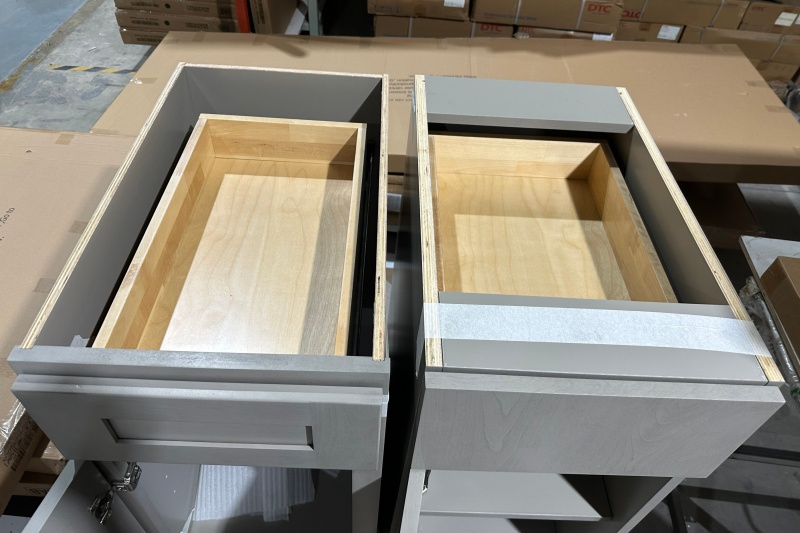
Domestic raw materials are reshaping the competitiveness of Vietnam’s timber sector. Industry advantages no longer rely solely on manufacturing capacity, but are gradually evolving into an integrated ecosystem covering raw materials, production and markets. Expanding domestic plantation forests reduce manufacturers’ reliance on imported logs and improve supply chain transparency to meet tightening compliance verification requirements worldwide.
Forest inventory data from the Ministry of Agriculture and Environment shows that Vietnam’s total plantation forest area expanded from 3.08 million hectares in 2010 to 4.89 million hectares in 2025. Commercial timber forests grew from 2.28 million hectares to approximately 4.16 million hectares. Between 2012 and 2021, annual commercial timber output jumped from 11.8 million cubic meters to 37.9 million cubic meters, more than tripling. Meanwhile, imported timber’s share of raw material consumption dropped from 26% to 16%.
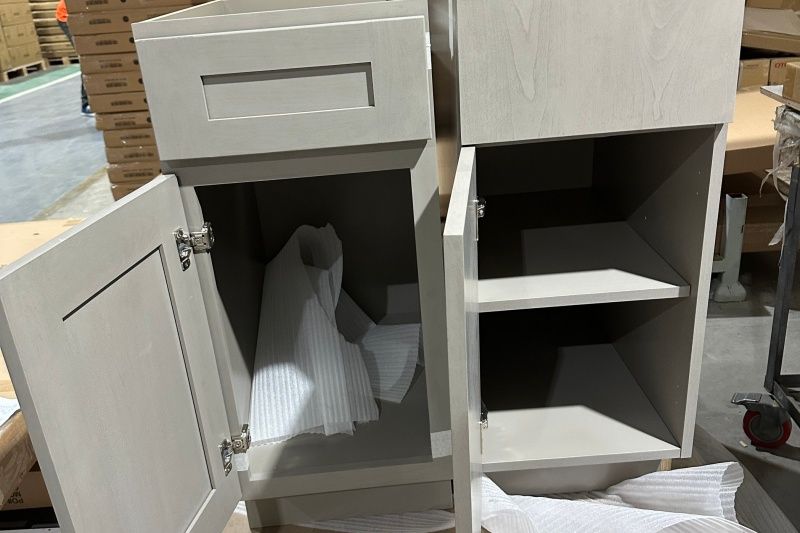
Forestry experts note that domestic plantation forests form the foundation enabling Vietnam’s timber industry to upgrade from simple processing advantages to full-chain competitiveness spanning raw materials, manufacturing and markets. Global buyers now attach greater importance to the legality and traceability of timber sources. Domestic raw materials with complete traceability records have become a key asset for Vietnamese timber enterprises competing internationally.
As a Vietnamese kitchen cabinet manufacturer, Union Wood uses cabinet panels with complete traceability documentation and has built a transparent, traceable supply chain system. Over the coming years, we will focus on responsible raw material sourcing, end-to-end transparent data and efficient production processes. Combined with product design, technical R&D and brand strength, these will serve as our core competitive assets.


 Newsletter
 Español









 IPv6 network supported