
What Are You Looking For?

In recent years, Vietnam’s wood industry has maintained robust growth with rising export revenue, hitting USD 17.2 billion in 2025. Vietnamese wood and wood‑based products are now sold to more than 140 countries and territories worldwide, establishing the country as a key wood‑processing hub within global supply chains. Its major markets include the United States, Japan, the European Union and others.
As global requirements for sustainable development keep tightening, the Vietnamese wood sector faces growing challenges. In particular, the shortage of raw materials for deep processing has become a bottleneck holding back high‑quality industrial development, calling for urgent solutions.

Vietnam boasts approximately 4.9 million hectares of planted forests, representing a considerable base of wood resources. Nevertheless, most domestic wood‑processing enterprises struggle to source raw materials for deep processing and manufacture high‑value premium goods. A large volume of domestic timber is exported directly in the form of wood chips and wood pellets instead of being turned into high‑value deep‑processed goods.
Statistics released by the Vietnam Forest and Forest Products Association (VIFOREST) show that total raw‑material demand for four major categories of exported wood products reached 59.5 million cubic metres in 2025. Wood chips and wood pellets accounted for as much as 78.1 percent (around 46.5 million cubic metres), while raw materials for deep‑processed items such as engineered wood panels and furniture made up merely 21.9 percent (roughly 13 million cubic metres). These figures demonstrate that although Vietnam possesses substantial wood resources, its export mix remains tilted toward low‑end commodities, and the added value of its resources has not been fully unlocked.

Resolving the raw‑material bottleneck is critical for the Vietnamese wood industry to achieve sustainable development and hit its 2026 export target of USD 19 billion. Processors are in urgent need of timber that delivers consistent quality, large log diameters, traceability and compliance with international standards. However, most forest farmers still adopt short‑cycle operation models. There is a clear mismatch between corporate requirements and farmers’ production decisions, which necessitates systematic, long‑term solutions.
To tackle this situation, multiple wood enterprises have proposed that authorities consider introducing policies to restrict raw‑material exports. Suggestions include raising export taxes on wood chips, strengthening oversight and rectification of wood‑chip mills, collection depots and weighing stations, and shutting down non‑compliant sites. For long‑term viability, the wood industry must pivot toward manufacturing products with high technical content, high labour input and high added value.
Mr. Ngo Sy Huai, Secretary‑General of VIFOREST, pointed out that four core issues must be addressed simultaneously to ease the raw‑material constraint: fragmented land parcels and small‑scale production; insufficient economic incentives for growing large‑diameter timber; mismatched tree species and cultivation techniques for long‑rotation forestry; and loose cooperation between processing factories, forest growers and cooperatives.
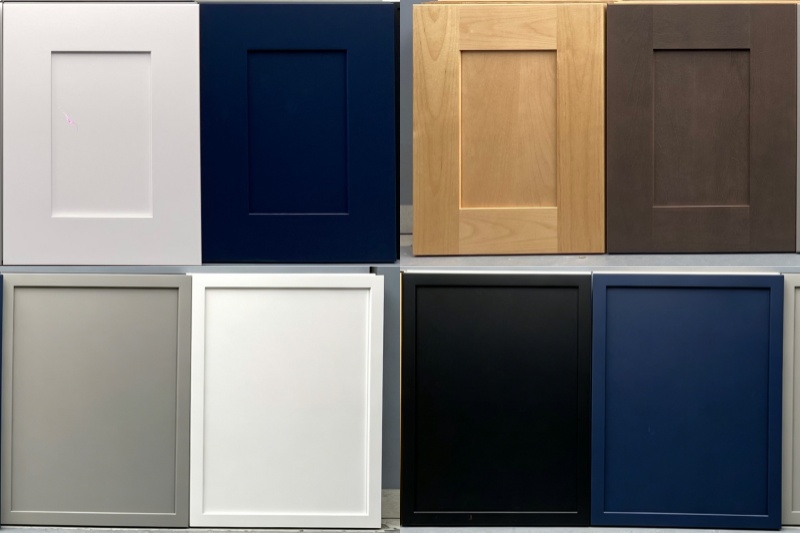
For forest growers, shifting from conventional management to sustainable forest management practices constitutes a vital step toward resolving the dilemma. Mr. Nguyen Van Dien, Deputy Director of the Forestry and Forest Products Inspection Agency under the Ministry of Agriculture and Environment, stated that Vietnam’s wood sector should shift its focus from export volume to export value. Timber raw materials must satisfy five criteria: legality, traceability, zero deforestation, sustainable forest certification and low‑carbon emissions.
Moving forward, the agency will roll out a series of initiatives: develop large‑scale timber supply zones; lift the productivity, quality and value of planted forests; expand the area of forests holding valid sustainable‑forest certifications; build a digital traceability system covering every forest plot; foster partnerships between forest owners, cooperatives and processors to build stable raw‑material supply chains; and refine policy instruments covering credit, investment, forest insurance, forest environmental services and carbon‑credit markets to deliver comprehensive support for industrial transformation.

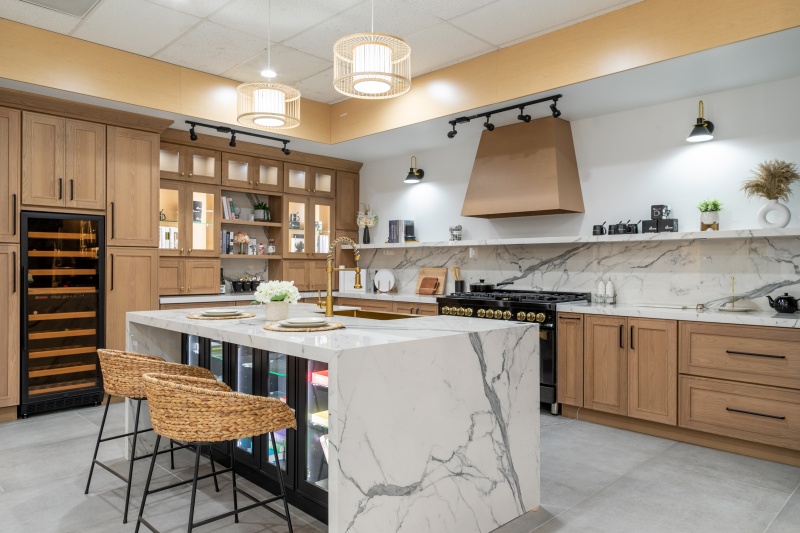
As a Vietnamese cabinet wholesaler, Union Wood has aligned itself with these policy shifts. Supported by stable, sustainably sourced timber supplies, the company manufactures premium‑grade cabinets that meet international environmental standards. Its product portfolio also includes bathroom vanities and wardrobes. Union Wood offers project‑specific customisation, large‑volume wholesale and direct‑from‑factory pricing.


 Newsletter
 Español







 IPv6 network supported