
What Are You Looking For?

According to the latest updates from Vietnam, the country is fully advancing the development of its National Forest Database, scheduled to be completed and launched in 2026. This initiative is of decisive significance to the growth of Vietnam’s timber industry. Led by the Forestry and Forest Protection Administration under Vietnam’s Ministry of Agriculture and Environment, the project is primarily designed to help the timber sector comply with the EU Deforestation-free Products Regulation (EUDR). It aims to implement the philosophy of sustainable forestry development while ensuring timber exports meet international standards.
This national-level initiative will conduct comprehensive surveys and archiving of forest resources across all Vietnamese provinces, providing precise detailed data on high-risk deforestation areas. It will create a clear and feasible pathway for Vietnamese enterprises to maintain and expand their access to international market permits.

Significance of the National Forest Database
The European Union has enacted the EU Deforestation-free Products Regulation (EUDR), which sets extremely strict market access requirements for imported bulk commodities linked to deforestation and forest degradation. For Vietnamese export enterprises, compliant exports require transparent and traceable information covering the entire supply chain from timber harvesting to final export.
Bulk commodities covered by the EU Deforestation-free Products Regulation include:
Vietnamese authorities have emphasized that any products associated with illegal deforestation committed after December 31, 2020, may be refused import by the EU in accordance with relevant regulations. It is evident that establishing a comprehensive National Forest Database is a critical prerequisite for Vietnamese enterprises to accurately trace supply chains and uphold their reputation in the international market.
Core Objectives of the Industry Plan
To fully align its forestry sector with international standards, the Vietnamese government has formulated clear targets:
The implementation of the above measures will lay a solid foundation for forest resource management and export compliance inspection.
Six Key Implementation Priorities
To ensure the smooth execution of the plan, Vietnam’s Forestry and Forest Protection Administration will focus on six priority work areas:
1. International Cooperation
Collaborate with the European Union and its Joint Research Centre to unify monitoring methodologies and certification standards.
2. Monitoring System Upgrade
Adopt new technologies and EU benchmark indicators to dynamically monitor deforestation risks.
3. Multi-stakeholder Coordination
Guide enterprises and local competent authorities to effectively implement EUDR requirements.
4. Legal System Reform
Revise and improve regulations to align with international standards and adapt to sustainable forestry development.
5. Infrastructure & Technology Upgrade
Build a unified platform integrating forest surveying and mapping, traceability tracking and certification management functions.
6. Law Enforcement Capacity Building
Carry out professional training to enhance capabilities in database operation and maintenance, compliance inspection, and transparent information management.
Core Supporting Role of Digital Technology
Digital innovation serves as the core driving force behind the construction of the National Forest Database. By integrating advanced spatial data systems, Vietnam strives to achieve the following goals:
With the upgrading and improvement of technologies, regulatory authorities, enterprises and relevant stakeholders will have real-time access to forest resource data, enabling more efficient and accurate decision-making and management.
Positive Impacts on Vietnam’s Timber Exports
An official from Vietnam’s Forestry and Forest Protection Administration stated that the National Forest Database is not only built to meet compliance requirements but also acts as a vital gateway for Vietnam to enter high-end global markets.
Implementation Timeline of the EU Deforestation-free Products Regulation
This means Vietnamese timber export enterprises must provide compliance certificates to maintain market access to the EU and other high-end international markets.
Deepen International Cooperation to Enhance Global Competitiveness
Vietnam is currently engaged in close cooperation with the European Union to unify standards for forest surveying, mapping and monitoring. Key cooperation areas include:
Through such international cooperation, Vietnamese timber products will comply with the world’s highest standards, comprehensively improving export compliance and international market recognition.
Future Outlook
By prioritizing sustainable forestry development, improving forest boundary mapping, and building a full-chain traceability system, Vietnam will realize coordinated development between forest resource conservation and the timber export industry, steadily consolidating its core share in international markets.
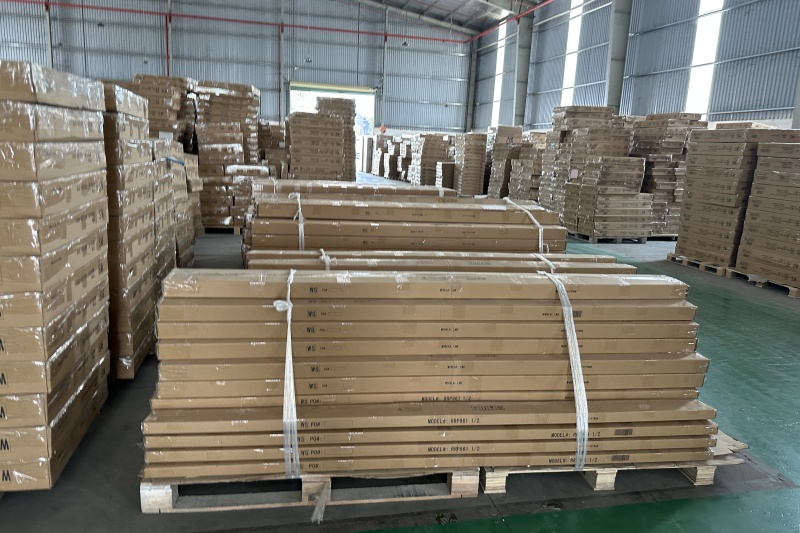
As a wholesale supplier of kitchen cabinets in Vietnam, Union Wood actively complies with national policies. All its manufactured cabinets hold FSC certification, meet sustainable development requirements, boast strong market competitiveness, and are widely popular among American consumers.
*** Source from Travelandtourworld ***


 Newsletter
 Español








 IPv6 network supported