
What Are You Looking For?

A recent ruling by the U.S. Supreme Court blocking the "reciprocal tariff" mechanism has temporarily shielded Vietnamese exporters from the direct impact of tariff shocks in the short term. However, the U.S. government has swiftly introduced countermeasures, imposing a 15% tariff on Vietnamese goods for 150 days while launching relevant investigation mechanisms. This means that the trade risks faced by Vietnamese enterprises have entered a new, more complex and unpredictable phase.

On February 22 local time, the U.S. Supreme Court issued a key ruling, explicitly invalidating the authority to impose tariffs under the International Emergency Economic Powers Act (IEEPA). This law served as the legal basis for the Trump administration's previous imposition of retaliatory tariffs on imports from countries with large trade surpluses with the United States.
Nevertheless, this ruling did not truly alleviate tariff pressures. Shortly after the Supreme Court's decision, the White House announced additional tariffs on various imported goods from major trading partners. Initially set at 10%, the rate was quickly raised to 15%. Implemented pursuant to Section 122 of the Trade Act of 1974, these tariffs officially took effect on February 24, U.S. Eastern Time, with a validity period of 150 days.
In terms of differences in legal basis, IEEPA targets U.S. national security emergencies, while Section 122 is specifically designed to address the U.S. long-term trade deficit. Even more impactful is Section 301 of the same act, which initiates investigations into what the U.S. deems "unreasonable trade practices" across multiple sectors. The consultation and tariff procedures under this section will advance over the long term, with impacts far exceeding those of short-term tariffs. This shift in legal foundation underscores the greater flexibility and aggressiveness of U.S. trade policy. The Supreme Court ruling is not the end of tariffs, but rather a reconfiguration of the legal basis for taxation by the Trump administration.
A representative from the Foreign Trade Department of Vietnam's Ministry of Industry and Trade stated that the cancellation of reciprocal tariffs has temporarily allowed enterprises to avoid the 20% high tariffs scheduled to take effect in 2025, providing short-term relief to the cost pressures on orders. However, the 15% short-term tariffs, combined with the investigative scope under Sections 232 and 301, mean that trade risks remain unabated. High-value goods are particularly vulnerable to heightened risks due to suspicions of origin fraud.
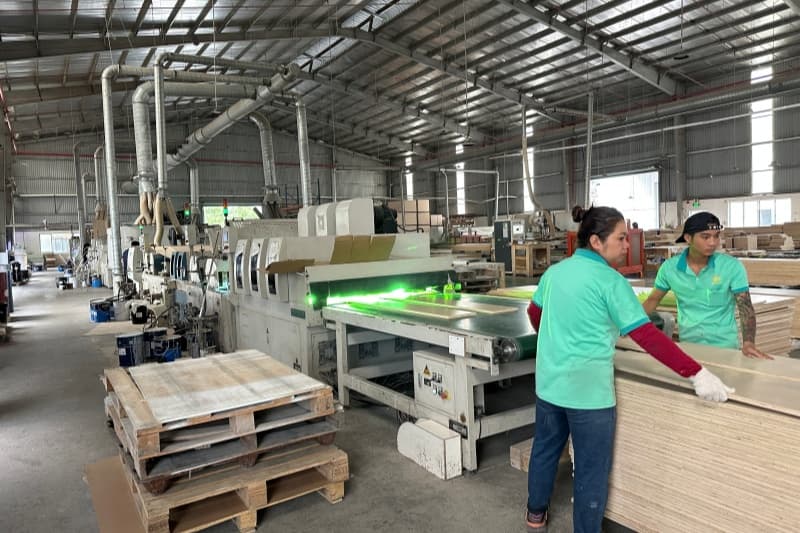
The representative advised that Vietnam's exports to the U.S. reached $153.1–153.2 billion in 2025, a year-on-year increase of over 28%, accounting for 32.2% of total exports. The U.S. remains Vietnam's largest export market. Vietnam's main exports to the U.S. are dominated by high-value products, including consumer electronics, components, wood products, footwear, and agricultural goods—categories that are precisely the key focus areas of U.S. tariff and investigation measures.
Notably, on the morning of February 20 U.S. time, General Secretary of the Communist Party of Vietnam To Lam met with Donald Trump. Trump pledged to remove Vietnam from the strategic export control list as soon as possible and reaffirmed that Vietnam is an important U.S. partner in the region. During the visit, Vietnam and the U.S. reached cooperation agreements worth $37.2 billion, injecting vitality into bilateral economic and trade cooperation and providing certain room for Vietnamese enterprises to cope with U.S. tariff pressures.


 Newsletter
 Español








 IPv6 network supported